
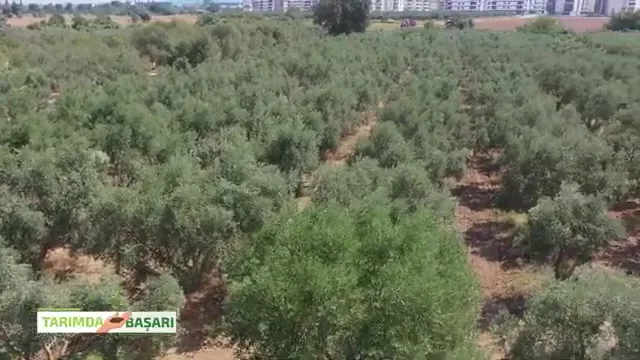
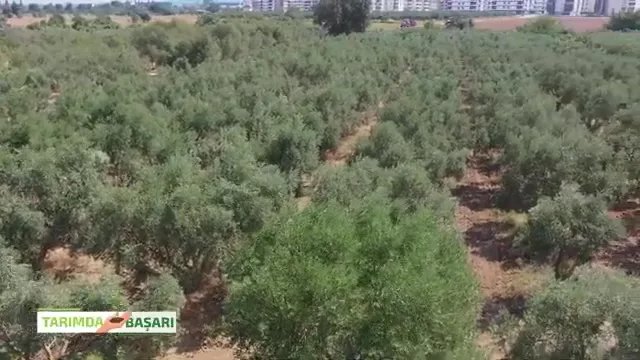
In this episode of the Success in Agriculture program, we are at a 100-acre table olive orchard in the Bayındır district of İzmir. Together with the AgroTroia team, the regional dealer, and the farmers who have worked the orchard for years, we address in the field the subtleties of care and nutrition in olives and what needs to be done before and after harvest. While the trees showed dense set in early August, when the filming was done, a marked yield difference compared to previous years has emerged with a correct olive nutrition program.
An exemplary olive orchard in Bayındır
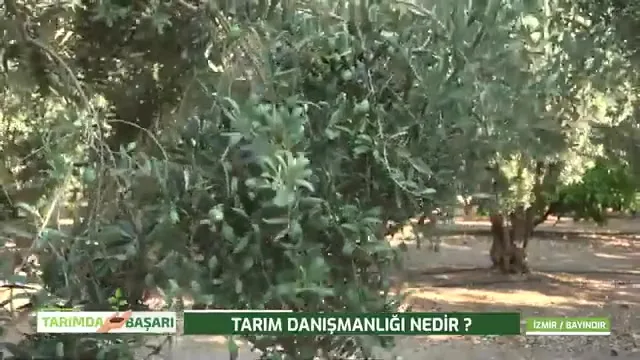
AgroTroia board member Umut Dönmez explains that the company has been in the sector for eleven years and provides free agricultural support and consultancy to farmers with more than seventy dealers across Turkey. This orchard is the largest of the lands continuously monitored in the region. Orchard owner Cihangir Türkan explains that he applied to the program after seeing the difference obtained from the roughly twenty trees in front of his house, and that last season he obtained from these few trees a crop so dense the branches would break. Neighboring farmer Halil Sabancı, impressed by this result of his, took the same path; he says the difference between sprayed and unsprayed trees in his orchard is evident even from the outside. Another producer, Ömer Çıtak, who has used AgroTroia products for many years, emphasizes that the result repeats itself every season. These producers, who for years could not prevent leaf drop with traditional products, report that this season they experienced a visible improvement in the color of the trees and in the fruit load. The regional dealer notes that they go to a producer with five trees with the same care, and that they do not recommend a product without seeing it on site.
Combating peacock spot and leaf drop
One of the most common problems in olives is leaf drop linked to peacock spot disease. The farmers note that in the past they could not bring this problem under control with copper- and zinc-based pesticides. Applications against this disease ideally need to be done in late October and November; although the orchard started a bit late, leaf drop largely stopped as a result of three applications. The improvement in the color of the trees and the strong development of shoots before flowering shows that both disease control and correct nutrition work together. Healthy shoot development before the flowering period is one of the fundamental determinants of yield in olives.
Correct irrigation methods in olives
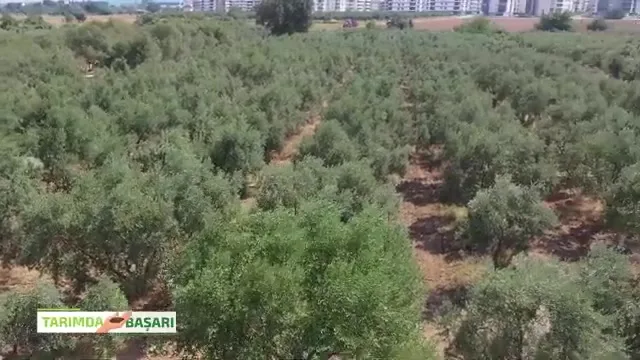
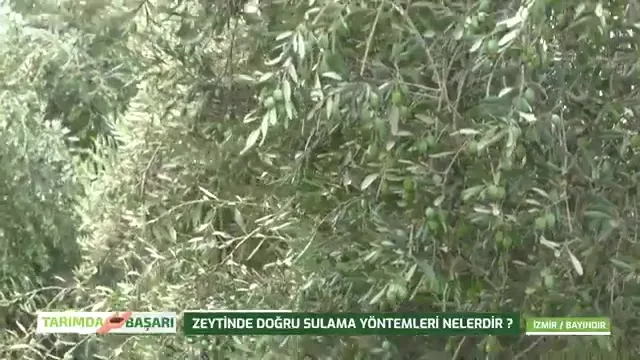
Agricultural engineer Simge, drawing attention to the water scarcity experienced across the country, emphasizes that unnecessary irrigation should be avoided. The most objectionable method in olive trees is flood irrigation, because it can carry pathogens from a diseased tree to another. A sprinkler system is used in the orchard, and this, although not ideal, has not adversely affected yield. The method actually recommended is drip irrigation: it both ensures a more homogeneous distribution of fertilizer and offers water savings. Although the olive is not a species that needs water as much as the walnut, continuing with the existing irrigation system in a period when rainfall is decreasing is considered reasonable. Cutting off water at certain intervals during disease periods and droughts is also an important detail.
The olive fly and pre-harvest nutrition
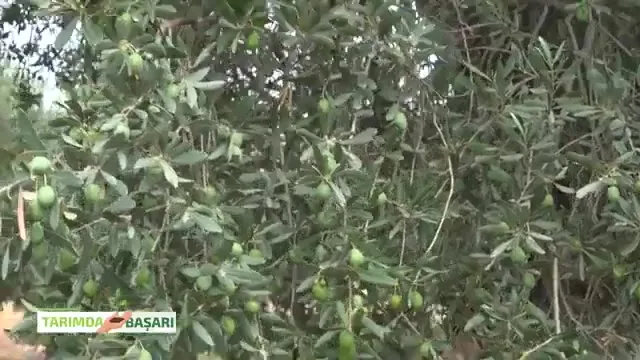
Agricultural engineer Yusuf reminds that in this period, when the pit hardens, the olive fly begins to cause damage. August, September, and October are the months in which one must be most careful in the fight against the olive fly; if not controlled, serious fruit drop and yield loss can occur, and the acid level in oil olives can rise. He notes that a message was sent to producers regarding the eighth application of the season, and that intervening with a licensed olive fly pesticide will help get through August without trouble and provide protection until September. He adds that the fly can multiply faster especially in periods when dew falls and rainfall begins, so monitoring must not be skipped. He also reminds that on days when wind is an obstacle, spraying can be done at night or in the early morning. Because the orchard's pruning and ventilation are done well, anthracnose disease is also not seen. Since in such densely set orchards the separation of the fruit from the stem and ripening can become difficult, a full-dose Copperas application is recommended fifteen days before harvest; this application both contributes to the fight against peacock spot and facilitates harvest.
Post-harvest and new-season preparation
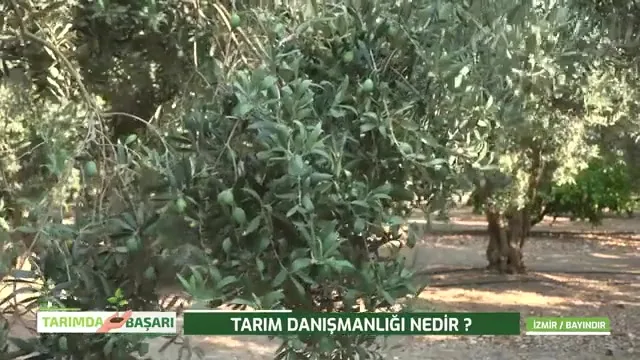
It is emphasized that preparations for the new season should begin after harvest, and that the engineers and consultants who monitor the orchard will provide guidance on the nutrition program. Umut Dönmez notes that showing the same attention to one tree as to a thousand trees is the company's most important approach. The fact that this orchard, which could not obtain the right crop last year despite it being an on-year, became exemplary this season with correct care and nutrition shows the value of the regular monitoring done in the field.
AgroTroia products featured in the episode
- Copperas — support for the fight against peacock spot and facilitation of harvest with a full-dose application 15 days before harvest
This exemplary orchard in Bayındır shows that success in olives depends not on a single application, but on carrying out correct irrigation, timely disease and pest control, and periodic nutrition together. When fundamental problems such as peacock spot and the olive fly are brought under control, both the color and the fruit load of the trees improve markedly. You can receive free consultancy from AgroTroia dealers and engineers on the most suitable program for the orchard in your region.
Source: AgroTroia – "Success in Agriculture" program, sponsored by AgroTroia.