
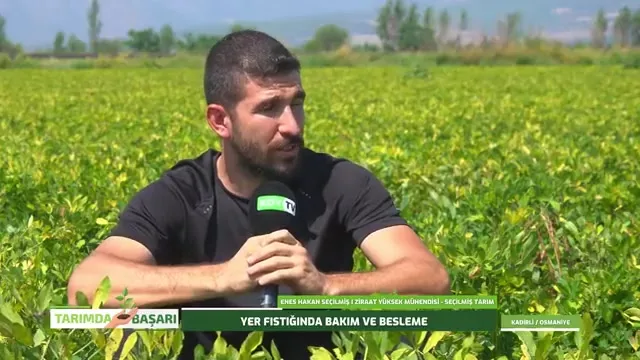
In this episode, AgroTroia's "Success in Agriculture" program was a guest in the peanut field of farmer and veterinarian Arda in the Sumbas-Alibeyli area of Osmaniye. With the participation of AgroTroia board member Umut Dönmez, the Kadirli dealer, senior agricultural engineer Enes Hakan Seçilmiş, agricultural engineers Cemal and Nuh, and peanut contractor Mehmet, care and nutrition in peanuts were addressed within the framework of the AgroTroia nutrition program.
Soil Preparation and Seed Coating
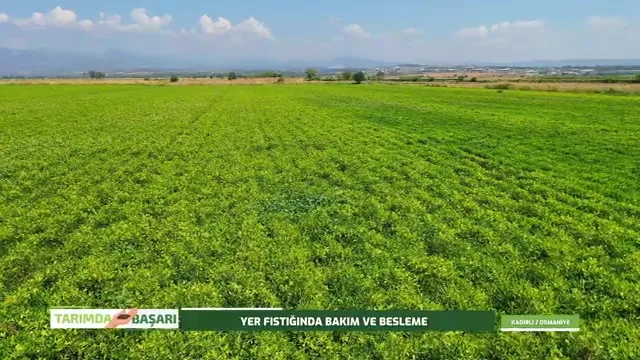
Dealer Enes emphasized that the foundation of the work is correct soil preparation. So that harvest does not coincide with rain, growers rush sowing and can work muddy soil; yet this causes serious problems at emergence. This season too, root collar rot and fusarium were seen excessively in fields where sowing was rushed. Another critical point is seed treatment. Against root rots, Aminado is added alongside the coating chemical; this way the seed germinates quickly without waiting long in the soil and forms a stronger root structure.
Sowing, Spacing, and the Importance of Hoeing
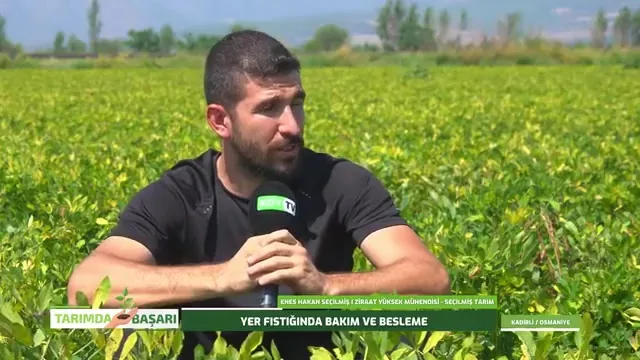
In the region, sowing is done in late March-early April; the distance between furrows is on average 70 cm. Due to diseases, growers have somewhat tightened sowing in recent years. The peanut is a plant that loves hoeing very much, because it sets its fruit inside the soil through organs called gynophores that strike from the branches into the ground. For this reason the soil must be kept loose and hoeing must not be neglected; as the field saying goes, "two hoeings are better than one watering." The two most-planted varieties in the region are Masal and NC. Rising labor costs have brought flood irrigation to the fore; this in turn has spread the Masal variety, which is more suitable for flooding.
Fighting Pests and Diseases
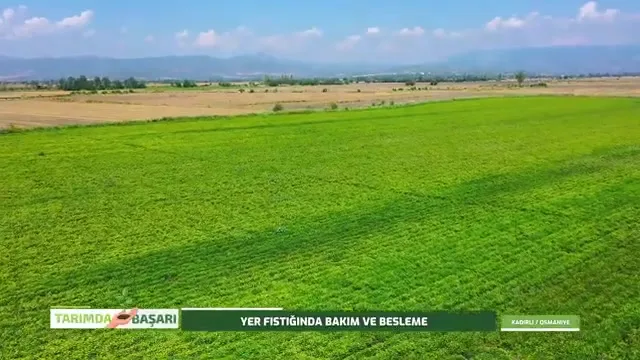
The peanut is a plant very sensitive to crop rotation. Root rots, aspergillus, and early and late leaf spots multiply rapidly when peanuts are sown over and over. In the AgroTroia approach, nutrition comes to the fore instead of fungicides at the three-leaf stage: with 100 cc of Copperas and 100 cc of Aminado per decare, the plant's condition and resistance are kept high, preventing it from catching disease. It is strongly emphasized that Copperas is not a fungicide but a nutrition product that works through the copper in its content. Among pests, the repellent property of sulfur in the form of Liquid S80 is used against red spider mite; wireworms and green worms are fought with products containing the active ingredient emamectin benzoate. In addition, thrips and aphids (called "püsüron" in the region) affect yield by reducing the plant's condition through sucking.
Strong Root, Strong Fruit, and Harvest Loss
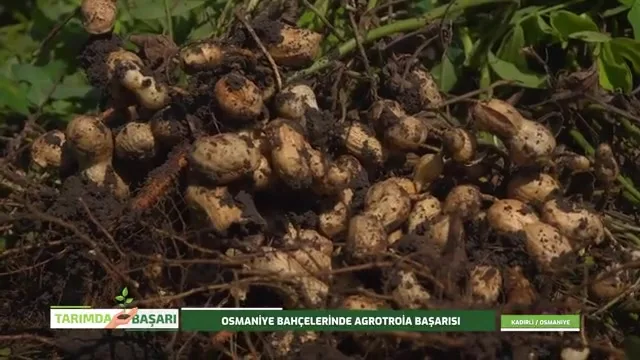
With the application of Copperas, zinc-boron, and Aminado made at planting and during the first hoeing period, fibrous root activity is increased. Strong fibrous roots carry the organic matter and macro-micro elements in the soil to the main root, supporting both the physiological and morphological development of the plant. With increased cell division the stem thickens; a thicker stem means faster transport and more homogeneous, full fruit. This in turn lowers the proportion of empty seeds called "hernia seed." Because peanuts are harvested from the soil by machine, excessive drop can occur and losses can reach as high as 30-40%. Moreover, the fruit left in the field paves the way for soil-borne diseases such as fusarium to carry over to the next year; this is why sound and homogeneous fruit is critical for both this year's and next year's earnings.
AgroTroia products featured in this episode
Copperas - copper nutrition, condition, and resistance to root rot
Aminado - amino acid support for seed coating and a strong root structure
Liquid S80 - repellent effect on red spider mite with liquid sulfur
Correct soil preparation, seed coating, regular hoeing, and balanced nutrition starting from the three-leaf stage mean both a disease-free plant and reduced losses at harvest in peanuts. In the program, the focus was on increasing the yield taken per unit area with specific products that lower the per-decare cost, instead of the usual urea and compound fertilizer.
Source: AgroTroia - "Success in Agriculture" program, sponsored by AgroTroia.