
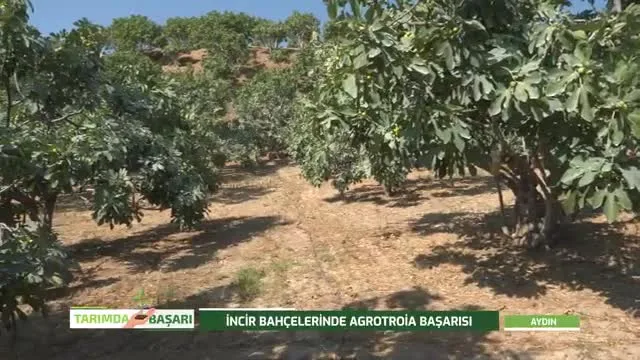
In this episode of the Success in Agriculture program, the team visited a fig orchard in the Güvenlik Neighborhood of the Sultanhisar district of Aydın. In the Sarı Lop fig area of orchard owner farmer Erol Güven, Aydın Köşk dealer Tuncay Aytekin (Aytekin Tarım), İzmir dealer Cihan Öztoğlu, and AgroTroia agricultural engineers Yusuf and Simge came together to discuss care in figs, the main pests and diseases, and the effect of a properly designed nutrition program on quality. The main message of this broadcast was that Sarı Lop, the leading variety in dried fig production in the Aydın region, requires a different approach from other fruits.
Sarı Lop figs in Aydın Sultanhisar
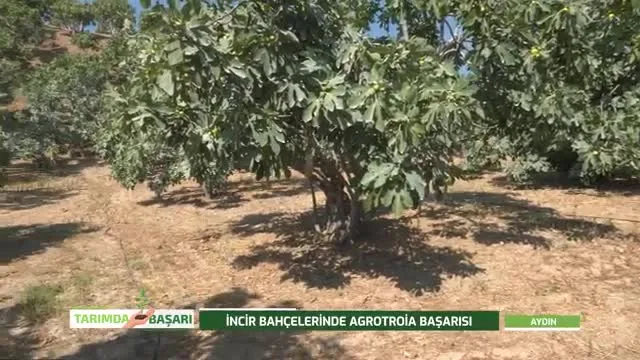
Sarı Lop is a dried variety produced in considerable quantities in the Aydın region. Figs alone provide the livelihood of many mountain villages; the producer's entire season passes with harvesting and drying. An important advantage of figs is that even low-quality produce that the merchant rejects can find value as scrap and, after drying, gain shelf life and be stored. In this respect, figs are a sensible and high-value alternative crop for the producer. Orchard owner Erol Güven has also converted most of his old olive grove to figs; it was discussed that there has similarly been a shift from olives to figs in the region, and that unplanned uprootings have even occurred. Since Sarı Lop is a heat-sensitive variety, the effect of care and nutrition on quality becomes decisive under summer conditions reaching 45 degrees.
Main pests and diseases in figs
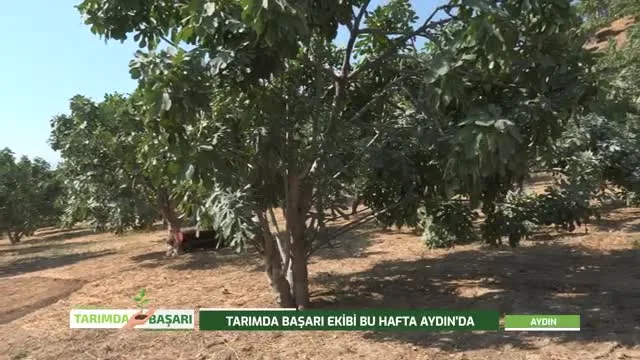
The fig hopper, which has increased in figs in recent years, is an important pest that can lead to branch dieback if not controlled. In the summer months when temperatures rise, red spider mite pressure increases and directly harms both yield and quality. In addition to these, the fig black fly, which has spread over the last few years, is a serious problem. The fly first comes to the caprifig (ilek) trees and infects the pollinating wasps in the caprifig; when the infected caprifigs are brought to the orchard and disrupt pollination, fruit drop occurs. In control, traps, organic, and cultural methods come to the fore. On the fungal disease side, the most challenging in the region is fig blight; a kind of cancer-like disease that can dry out the tree. The control of rust disease, which can start on the leaf and spread to the fruit, is relatively easier. In all of these, a timely and regularly conducted nutrition program provides indirect protection by strengthening the tree's immunity.
Intervention against fig blight, root scab, and frost damage
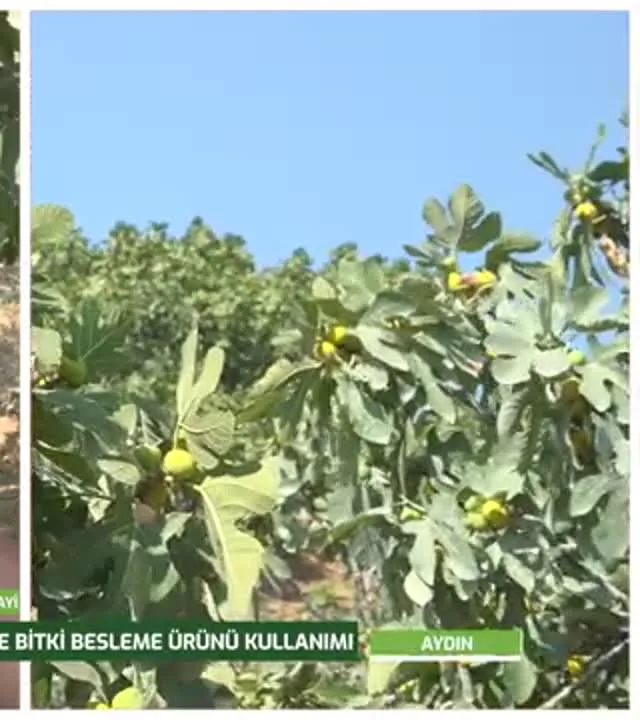
The fundamental cause of fig blight and root scab was explained as the weakening of the tree. At this point, the first step is soil analysis: what is lacking in the soil is supplemented. While a marked lime (calcium) and potassium deficiency is seen in the mountain areas of Aydın, excess lime can appear on the other side of Buharkent; therefore, each orchard is evaluated according to its own analysis. In fig blight, which is in the nature of a vascular blockage, Activo and Fosforiko are applied to open the vessels; once the vessels are opened, the tree draws the nutrients it takes from underground better and begins to recover. It was emphasized that this process does not end with a single application and requires a regular program of at least two years. As for the frost damage experienced this season in areas at 750-900 meters altitude, intervention was made with Activo and Copperas, with phosphorus and organic fertilizer supplementation in places; it was noted that orchards intervened in early surpassed the areas unaffected by frost within a month.
Correct nutrition in Sarı Lop figs: the potassium-calcium balance
The nutrition of Sarı Lop figs cannot be thought of like walnut, olive, cherry, or black fig. The variety does not tolerate too much intervention, and nitrogen-heavy nutrition can cause the inside of the fruit to run and empty during drying. This problem, which the orchard owner experienced in previous years, stopped when the nitrogen applications were removed and a potassium- and calcium-heavy program was adopted. Since Aydın soils are already rich in phosphorus and potassium is low, no phosphorus is needed in this period; potassium is kept high. For this reason, the nitrogen-free, high-potassium Fors 0-15-30 stands out as the main item. To hold the fruit on the tree, calcium support is provided with Calcio, and seaweed-containing mixtures are used to reduce heat stress. In the post-harvest period, Copperas and Fosforiko are applied to form and nourish the new shoot buds, and drop applications are made for fill. The periodic and regular application of this nutrition program creates a marked difference in size, fill, and sugar content.
Harvest, drying, and aflatoxin risk
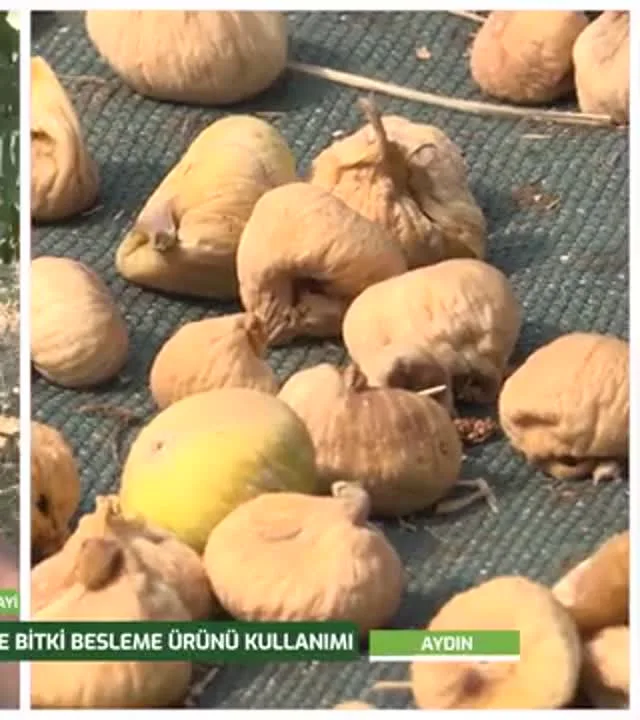
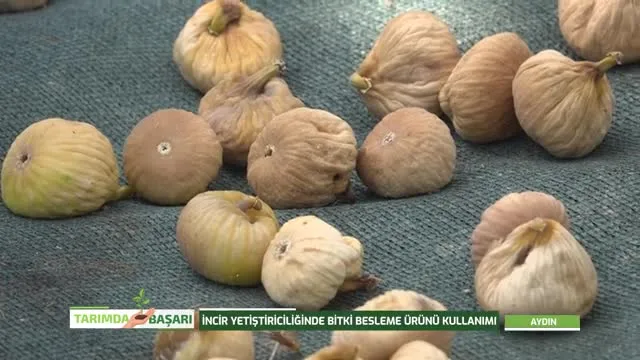
The Sarı Lop fig ripens at the top of the tree, dries with the sun, and after shedding its moisture falls to the ground on its own from the stem. The critical point here is removing the fallen fig from the ground as soon as possible. The longer the fig stays on the soil, the more the aflatoxin risk increases through the green and black mold transmitted from the soil. For this reason, it is recommended that the drying areas be kept out of contact with the soil and the produce be collected daily. In a medium-sized orchard of 20 acres, 4-5 people working morning and evening in the peak season is necessary for the figs on the ground to be collected in time. Since aflatoxin escapes can lead to trucks being returned in export and to company losses, meticulousness on this matter was emphasized. Erol Güven reported that with the regular program he has applied for two years, the fruits are larger, and that he has seen a difference in fill and sugar content.
AgroTroia products featured in the episode
- Activo — the product used to open vascular blockages and to intervene in frost damage.
- Copperas — the product used in post-harvest shoot nutrition and in post-frost recovery.
- Fors 0-15-30 — the nitrogen-free, high-potassium main drop product.
- Calcio — the calcium source to support fruit set.
When correctly understood and given its own unique nutrition, the Sarı Lop fig continues to be one of the most valuable products of the Aydın region and of Turkey. A regular nutrition program based on soil analysis and balanced in potassium-calcium, when carried out together with pest-disease control, visibly increases yield and quality. The difference of a producer who follows their orchard meticulously and works with correct consultancy is evident in every aspect of the tree.
Source: AgroTroia – "Success in Agriculture" program, sponsored by AgroTroia.