
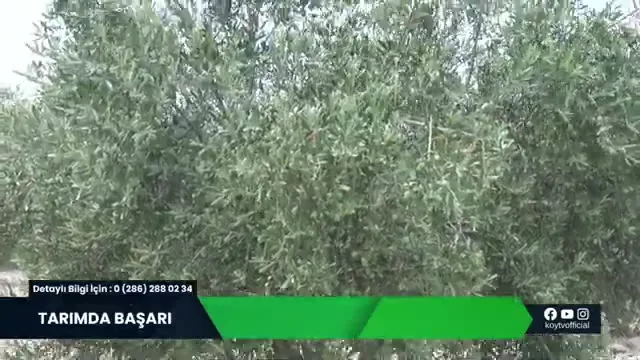
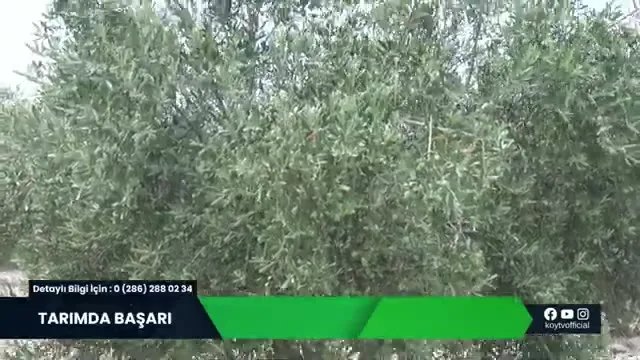
In this episode, the AgroTroia "Success in Agriculture" team is in an olive grove in Osmaniye's Dervişli village, in the scorching heat of mid-July. In this grove covered with olives in every direction, AgroTroia regional manager and agricultural engineer Cemal, regional dealer Burak Çardak (Öz Çardak Tarım) and growers who have managed their groves with AgroTroia for years come together to describe both the region and the nutrition program applied to olives. Lands where peanuts, corn and cotton were once planted are now turning to olives; the abundant yield in the grove shows the reward of this shift.
The Rise of Olives in Dervişli Village
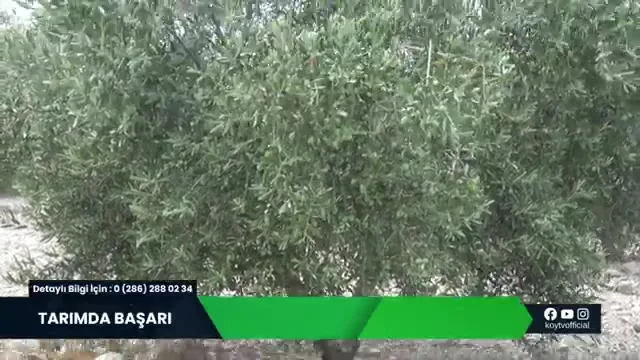
The grove has a total of 1500 trees in the main parcel and another 300 at the back. According to Cemal, until a few years ago there were hardly any olives along the Osmaniye and Ceyhan line; today the region has begun to turn into a brand in olives. Dealer Burak Çardak also emphasizes that growers have shifted from peanuts and corn to olives, but that the product is still mostly sold as oil in tins, and that the region needs its own brand. Grower and agricultural engineer Ahmet Özer states that due to the excessive rise in input costs and the falling profit margin, they have turned to olives on an area of nearly 3000 trees.
Winter Preparation and Soil Fertilization
The nutrition calendar begins with winter preparation at the end of harvest. During this period, Copperas, which contains copper and amino acids, is applied; a boron-zinc based application is made to feed the newly formed shoots and fruit buds. Cemal explains that across Turkey, in the calcareous and high-pH soils outside the Black Sea region, the base fertilizer should be given in sulfur-containing NPK form, and that when applied between mid-January and mid-February, ideally timed to coincide with rain, it reduces losses in yield and availability.
Fighting Peacock Spot, Olive Moth and Cotton Aphid
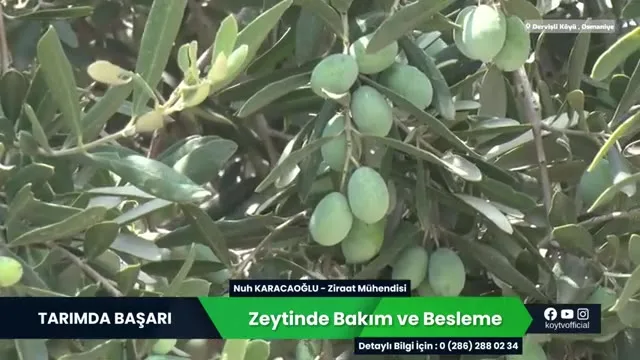
In February, before budding, olive moth and cotton aphid are scouted. Because peacock spot peaks at 18-22 degrees, Copperas and a phosphoric supplement come into play again against this disease; sulfur is applied for red spider (mite). While the cotton aphid destroys fruit buds through its feeding and prevents fruit set, the olive moth causes three separate types of damage in leaves, flowers and fruit. Cemal points out that the active ingredient must be changed constantly so that pests do not develop resistance. Growers Adil Gökşen and Murtaza Özer report that peacock spot has not been seen in their groves for years.
Nutrition from Flowering to Pit Hardening
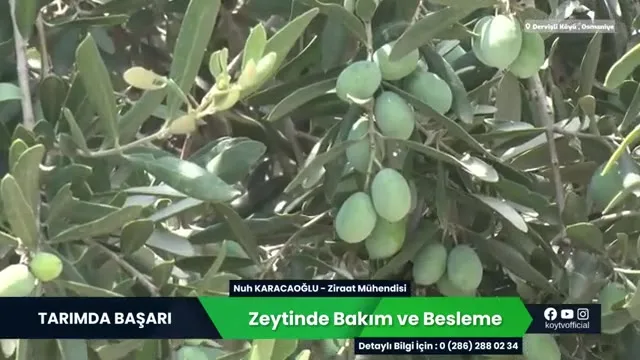
During flowering, an activator (Activo) is used for healthy shoots, and phosphorus and gibberellic acid supplements are given; the application against the flower stalk borer, cotton aphid and moth is repeated. In the peppercorn stage, New Olive, Combi and Aminado come into play to prevent drop. At pit hardening, the program switches to potassium, and amino acid based applications are made to relieve heat stress. Cemal reminds that during flowering the right product and fertilizer can be applied, but caustic pesticides should be avoided.
Olive Fly, Stalk Fungus and Harvest
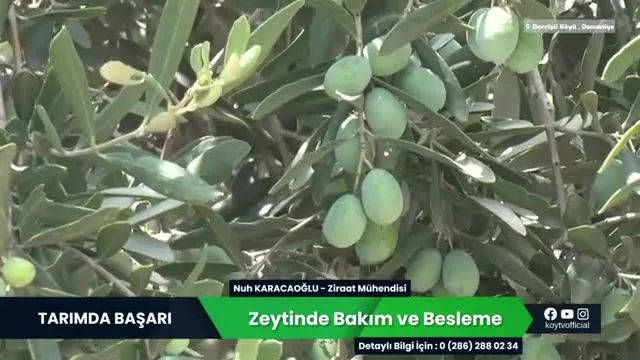
In closing, agricultural engineer Nuh explains that the olive fly appears when oil sacs are forming and the air temperature exceeds 10 degrees, and that a single female can lay 250-300 eggs over the season. He stresses that in control a single insecticide active ingredient can be effective against the moth, olive fly, cotton aphid and flower stalk borer, but that the same active ingredient must not be used over and over again so that resistance does not develop. Recommending continuing with copper-based preparations against stalk fungus, Nuh advises that spraying water onto the fruit for turgor triggers stalk fungus, that fruit picked from the ground and from the tree should not be mixed at harvest, and that olives should be picked when the flesh separates from the pit and kept in an airy manner. He also points out that crowning trees from 120 cm and dense planting increase fungus risk in high humidity.
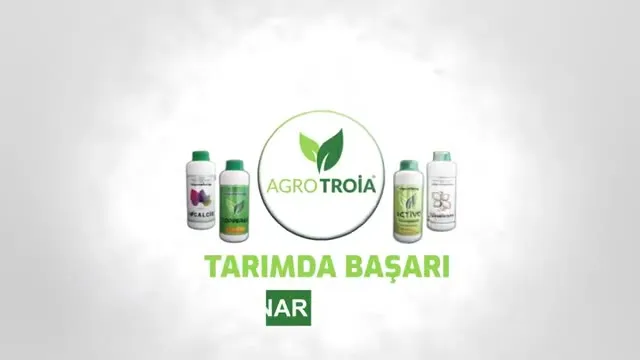
Featured AgroTroia products in this episode
- Copperas – winter preparation and the fight against peacock spot, with its copper and amino acid content.
- Activo – an activator for healthy shoots during flowering.
- New Olive – drop control during the peppercorn stage.
- Combi – fruit set and nutrition support.
- Aminado – reduction of heat stress with amino acids.
This grove in Dervişli village shows that with correct nutrition and cultural practices, the "on-year, off-year" cycle in olives can be prevented. The growers' shared emphasis is clear: no matter how much input costs rise, with the right program and follow-up the reward for one's labor can be obtained. The only missing link for the region stands out as branding in olive oil and investment in a processing facility.
Source: AgroTroia – "Success in Agriculture" program, sponsored by AgroTroia.