
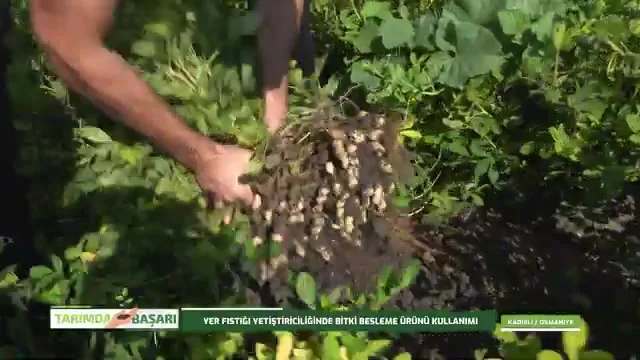
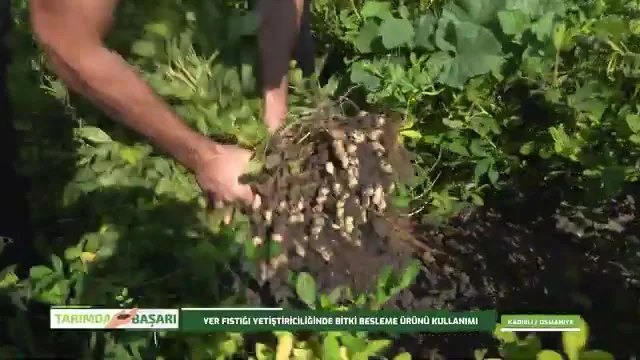
In this episode, the AgroTroia "Success in Agriculture" team gathered in a peanut field in Osmaniye's Kadirli district, on the land of farmer Mehmet Develi from Çaygeçi Village. Develi, who grows peanuts and corn on roughly 300 decares and also works as an agricultural contractor, was accompanied by AgroTroia board member Umut Dönmez, regional dealer Enes Hakan Seçilmiş, and agricultural engineers Simge, Cemal Kurt, and Nuh. Çukurova is a region that accounts for roughly 80-90 percent of Turkey's peanut production; for this reason, a correct care and nutrition program in peanuts is of great importance for the region.
The Place of Peanuts in Çukurova and Variety Selection
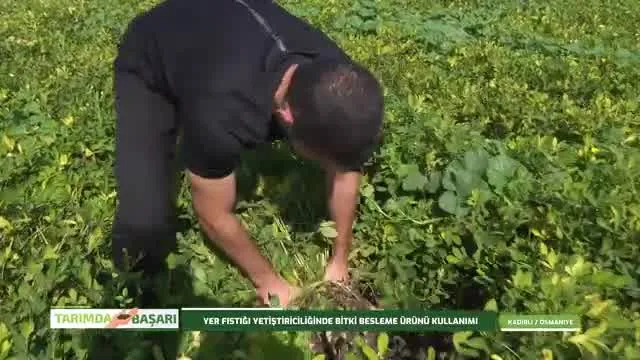
Besides being a good oil crop, peanuts are a product that can provide income to the grower by offering an alternative raw material to the pastry, snack, and paste industry in years when pistachios are scarce. For this reason, timing the rotation to coincide with years when pistachios are low can be a strategic choice. The Osmaniye 2005 and Halis Bey varieties were planted in the region for a long time; however, these varieties are sensitive to iron deficiency, that is, chlorosis. Because peanuts remove magnesium intensively from the soil and magnesium and iron work antagonistically, the uptake of these two elements becomes difficult and yellowing appears on the leaves.
The developed Masal variety, on the other hand, has become preferred at a rate of 80 percent in the region because it is suitable for dense planting, has more durable stem thickness, and is more resistant to chlorosis. While other varieties yield 250-300 kilograms per decare, the Masal variety can yield up to 400-500 kilograms. Planting in two periods per year is also possible: after the main crop harvest, it can be grown as a second crop (fresh peanut).
Soil Preparation and Correct Planting
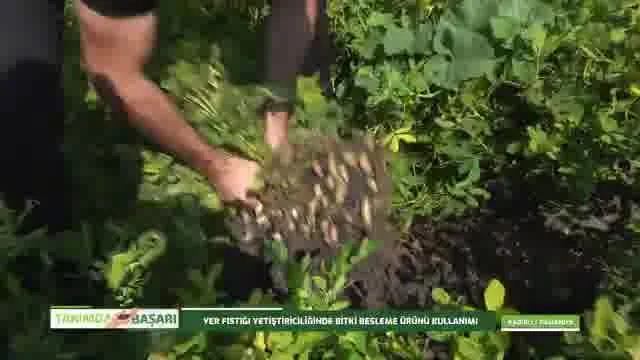
Peanuts do not like soils heavy in clay minerals, because clay soil binds phosphorus and, with low water permeability, keeps moisture high. Instead, they develop better in sandy-loam, loose soils rich in organic matter. Soil pH is tolerated in the 7-8 range, up to 8.5; the plant loves calcium very much and removes up to 8-11 kilograms of calcium from the soil. At the end of spring, in the April period, plowing is done with a disc plow to a depth of 30-40 centimeters, after which the soil is prepared with a cultivator and float. An important detail: after leveling, the surface should be firmed with a roller, because although the plant loves loose subsoil, it wants a firm planting surface.
Seed quantity is a frequently debated topic. Although 7-9 kilograms per decare of foundation seed is sufficient in drill planting, because of the problem of dead and empty seed, fungal diseases such as fusarium, and the drill damaging the germination layer, the grower tends to sow more seed. Yet sowing excess seed does not yield more crop; the correct approach is to treat the seed at planting and apply the coating together with amino acid. This improves germination and ensures a homogeneous emergence.
Hoeing, Irrigation, and Protecting the Pegs
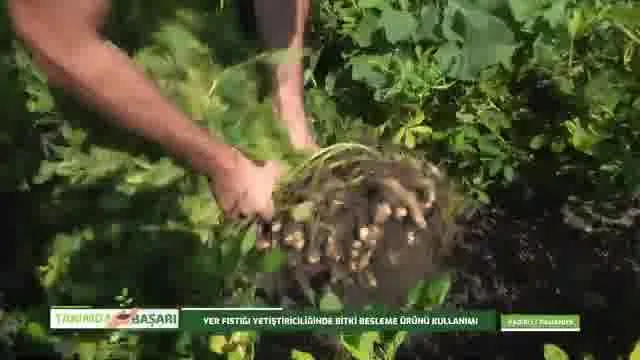
The peanut is a typical hoe crop; among farmers it is said that "two hoeings stand in for one watering." The first hoeing is done when the plant reaches the three-leaf stage, but because the pegs develop beneath the soil, the first hoeing must be very light, at a depth of 1.5-2 centimeters, only stirring the surface; the top should not be filled. In the second hoeing, because the pegs begin to enter the soil, work is done a little deeper to allow the pegs to move freely and to aerate the soil.
Irrigation should not be rushed; the first watering should not be given early but when the first flowers begin to appear. Depending on drought, 3 to 5 waterings are applied, and the most suitable system is sprinkler. The region's most critical issue is the breakage of pegs at harvest. Because the fruit is in the roots, beneath the soil, if the pegs break during lifting and the peanut remains in the soil, the farmer's year of labor is wasted; this means a loss of up to 10-20 percent. Farmer Mehmet Develi and dealer Enes Hakan Seçilmiş reported that in the field where the nutrition application was made, the peanuts stayed vigorous until late, the pegs were strong, and no breakage occurred during lifting.
A Protective Approach Against Diseases
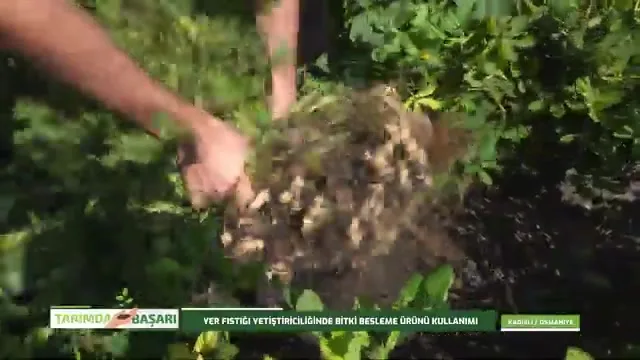
One of Çukurova's biggest problems is soil-borne fusarium disease; in fields where rotation is not practiced, the plant turns brown and dies in patches, and this directly leads to peg and fruit loss. Aspergillus (root rot), angular leaf blight, and stem blight also pose risks in this humid, continuously irrigated region. The engineers stated that, because it lowers the plant's resistance, they prefer protective nutrition rather than using fungicides.
After emergence, 100 cc of Copperas and 100 cc of Aminado are applied per decare. Copperas protects the plant against seasonal stress while increasing green parts and, by promoting cell division, enables the disease and humid period to be passed with less damage; Aminado, in turn, provides strong root development. With this approach, aspergillus, fusarium, and leaf blights are not seen in the field. In the period after the first hoeing, zinc supplementation is also done with NitroZinc; zinc regulates stem thickness and rosetting, preventing the blunt-leaf formation called "cat's ear."
Calcium and Potassium Nutrition in the Pegging Period
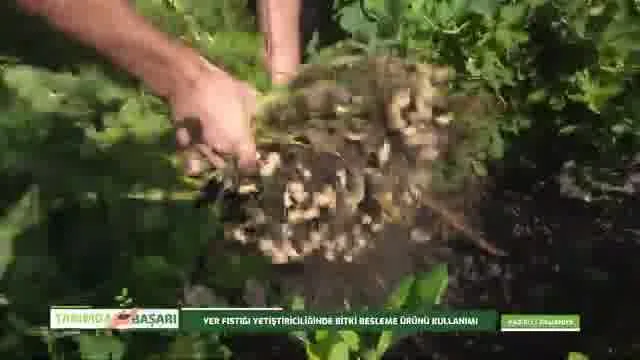
When the plant begins to send its pegs into the soil, instead of urea or ammonium sulfate, calcium-containing fertilizers are used; since the soils are calcite-derived and the plant is very sensitive to calcium, calcium nitrate stands out. In foliar application, chelated, propionic-acetate-structured 14% Calcio is used. The more solid the pegs and stems, the stronger the attachment, and the seed left in the ground is minimized; it also helps in collecting the first-set peanuts. In this period, phosphorus and magnesium supplementation is also not neglected.
When the capsules begin to enlarge, the potassium period begins. Potassium, the region's "bleeding wound," requires external supplementation even when present in the soils. In this product, which matures in about 120 days, potassium is applied as a liquid at 100 cc per decare instead of granules, ensuring homogeneous fruit, even caliber, and a reduction in the proportion of small undersize grains. In irrigation management, after fertilizer is applied, drowning the plant in water should be avoided; otherwise the plant may go into a dormant period and enter the stress of forming capsules early.
This field in Osmaniye Kadirli showed how much difference correct variety selection, careful soil preparation, measured hoeing and irrigation, and calcium- and potassium-based nutrition in the pegging period make together in peanuts. While the engineers found the orchard successful, they also honestly shared that there were aspects to improve; the real message was that with a rotation and protective nutrition program, the region's fusarium pressure and harvest losses can be markedly reduced.
Source: AgroTroia – "Success in Agriculture" program, sponsored by AgroTroia.