
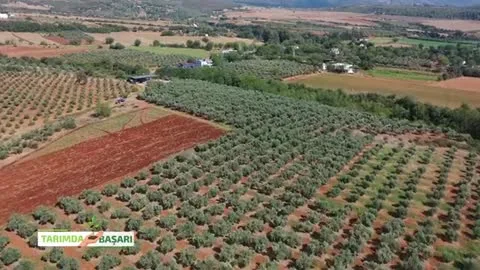
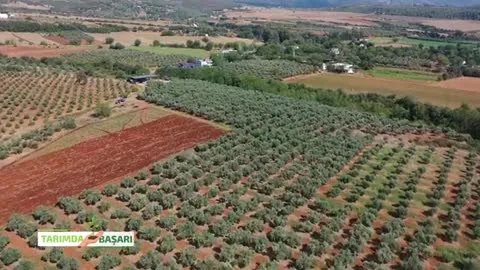
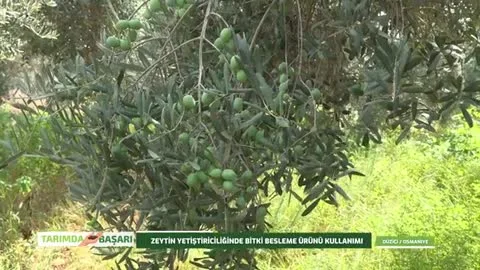
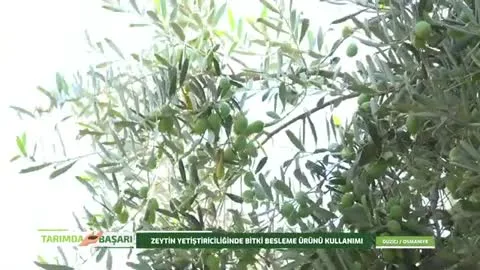
In this episode, the AgroTroia "Success in Agriculture" team was in an olive orchard applying the AgroTroia olive nutrition program in the Alibozlu area of Osmaniye's Düziçi district. In a season when drought and last winter's severe frost had worn down the region, with barely an edible olive to be found anywhere nearby, this orchard's full and high-quality crop drew attention. On the program, AgroTroia board member Umut Dönmez, orchard owner farmer Mehmet Kuşçu, and AgroTroia agricultural engineers Cemal Kurt and Simge İsen explained the effect of olive care and nutrition on yield.
A productive orchard in a tough season in Düziçi
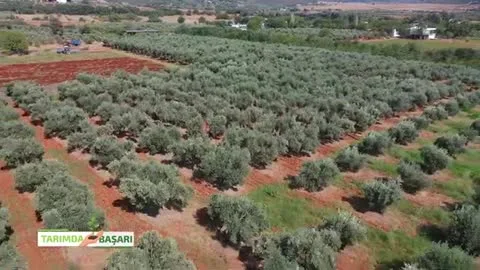
At the time of filming, on 9 September 2025, it was emphasized that olives were nearly nonexistent across the Çukurova region. By contrast, the 40-decare orchard visited was lush and heavily laden. Orchard owner Mehmet Kuşçu explained that he had begun using AgroTroia products seven years ago on the recommendation of an acquaintance, and that thanks to regular application his crop clearly stood out compared to neighboring orchards. The farmer shared that, besides olives, he also uses these products on cucumbers and pistachios, and that this season, in a product he tried for the first time, he saw a visible increase in tonnage and color. AgroTroia board member Umut Dönmez stated that Çukurova is important for the company, that they serve the region through their distribution center in Hatay Dörtyol, and that for twelve years they have stood beside the grower in the field with their agricultural engineers.
Nutrition under heat and drought stress
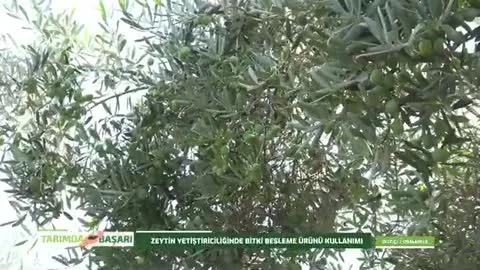
Agricultural engineer Cemal Kurt said one of the major reasons for the success was regular nutrition. Copperas, applied before the frost arrived, made the plant somewhat more resistant to the cold. In this period when the weather has been dry and irrigation options limited, Vital and Aminado application is recommended against heat and drought stress; the aloe vera in Vital prevents sunscald, while the amino acid reduces the tree's water stress. It was emphasized that foliar feeding alone after harvest is not sufficient and that the tree must also be fed from the soil. Because the region's soils are high in pH and lime content, it is more appropriate to turn to analysis-based, sulfur-containing NPK fertilizers such as the 4-15-30 type. The aim of this application is to close the wounds opened, to prevent fungal infections, and to form healthy fruit buds for the following year; Aminado, in turn, relaxes the tree so it enters winter comfortably.
Main diseases and pests in olives
Agricultural engineer Simge İsen explained that the most troublesome disease in olives is peacock spot (bird's eye), which occurs only on this plant. The disease is active at 18-24 degrees and stops at 36 degrees; nitrogen-based applications should be avoided during its period, because while the tree is being fed, so is the disease. Infection accelerates in orchards with high water tables and dense planting. After harvest, regular, periodic applications of Copperas prevent peacock spot; this systemic product also activates the tree's shoot mechanism. Bacterial-origin olive knot enters through pruning mistakes and the wounds opened; it is recommended to disinfect pruning shears with bleach after each tree and to apply Activo with phosphorous acid. Fungal-origin verticillium wilt clogs the conductive bundles, causing localized dieback in branches; using 500 cc Activo and 500 cc phosphorous acid in the backpack sprayer reopens the bundles and restores transport. Against anthracnose, which is more common in the Marmara region, Copperas and Activo are again used.
On the pest side, the olive cottony scale, the olive moth, and especially the olive fruit fly—which requires serious control in the region during this period—stand out. The olive fruit fly causes stung and dropped fruit; when dropped olives are mixed into the oil, they also spoil the oil's acidity value. The growers' biggest mistake is timing; when control starts late, the damage grows. For this reason, it is recommended to apply before the pest arrives, by questioning the active ingredient of the last product used and, if resistance exists, changing the active ingredient. Spraying is stopped 20-25 days before harvest, and only plant nutrients continue to be applied.
Correct pruning in olives
AgroTroia agricultural engineer Nuh explained that a significant part of yield in olives depends on correct pruning, and that there is a widespread misconception about this in our country. There are three types of pruning in olives: shaping, yield, and rejuvenation pruning. The most important is shaping pruning; trees should be crowned as a single trunk from at least 1.20 meters. Trees grown with many branches from the root collar, tied left and right, are considered wrong; a single-trunk structure makes both the fight against trunk borers and soil tillage and fertilization easier. In yield pruning, cutting only the upward and vertical branches and removing half the tree is a mistake; the correct approach is to remove the inward-facing branch and leave the outward-opening one. Because water pumping in olives works from top to bottom, setting fruit on the upper branches as well increases yield and quality; the habit of harvesting fruit only from skirt branches causes yield loss. A controlled thinning pruning also forms a precaution against peacock spot, anthracnose, stem fungus, cottony scale, and the olive moth, because these problems increase in poorly aerated, intertwined shoots. Rejuvenation pruning, on the other hand, is only needed in old, diseased, or trunk-borer-infested trees. The timing of pruning is also critical: while in the Mediterranean region it can be done after harvest without overdoing it, in the high areas where a continental climate prevails it must be done in spring. Nitrogenous fertilizers such as ammonium sulfate and urea applied before the end of March, deceived by the season, can wake the tree early and increase frost damage and dieback; indeed, the severe frost in the region, which dropped to -7 degrees on the thermometer, combined with pruning wounds, had caused great damage.
Beside the grower with fixed prices and field support

Umut Dönmez emphasized that AgroTroia has applied a fixed-price policy across Turkey for years, with all farmers able to receive the products at the same price from their dealer or delivered to their address. In Düziçi, because it is impossible for a single dealer to cover the entire region as demand grows, there are multiple dealers; it was stated that dealerships that break the price and policy by selling the product at a different price are canceled. The team visits the grower on site and writes their prescription; the grower can buy the product at a fixed price from the dealer of their choice. It was stated that in villages such as Çerçioğlu, Atalan, Ellek, Yarbaşı, and Pir Sultanlı, they are in the field not only in olives but across all crop patterns; the company's goal is to become the sector's leading firm without lowering service quality.
Featured AgroTroia products in this episode
- Copperas – a systemic foundational product that supports pre-frost resistance and periodic post-harvest protection against peacock spot and anthracnose.
- Aminado – an amino acid source that reduces water stress under heat and drought stress and prepares the tree for winter.
- Activo – a product used together with phosphorous acid in the fight against olive knot, verticillium wilt, and anthracnose.
- Fors – a special product that markedly improves fruit caliber and color, tried by the farmer for the first time this season.
This orchard in Osmaniye Düziçi concretely demonstrated how regular nutrition, timely pest and disease management, and correct pruning make a difference in olives, despite the unfavorable surrounding picture and harsh winter conditions. With seven years of consistent care, both this year's harvest and next year's yield are secured. May God grant all our growers good and bountiful harvests.
Source: AgroTroia – "Success in Agriculture" program, sponsored by AgroTroia.