
In this episode of AgroTroia's "Success in Agriculture" program, we were in the Düziçi district of Osmaniye. On this fertile plain where peanut production is intensive, we brought together AgroTroia agricultural engineers with the region's farmers and discussed the field results of well-planned nutrition. AgroTroia board member Umut Dönmez, farmer Mehmet Koşu from Düziçi Alibozlu village, Hüseyin Çolak who has worked with the company for many years, and field agricultural engineers Cemal and Nuh recounted both the technical topics and the success story achieved in peanut.
AgroTroia, which has a wide dealer network and farmer base in the Çukurova region, filmed this season in Düziçi, Osmaniye after Kadirli. The company's core principle is to provide on-site and timely support to the farmer; to provide uninterrupted consultancy to the grower with agricultural engineers on the phone and in the field. Mehmet Koşu, who plants 120 decares of peanut in Düziçi Alibozlu village, stated that he saw a marked increase compared to his yield before meeting the company, and that he could easily reach the engineers when needed. He also added that farmers adopt the product not through narrative but after seeing it with their own eyes in the field.
Crop Rotation and the Fight Against Diseases
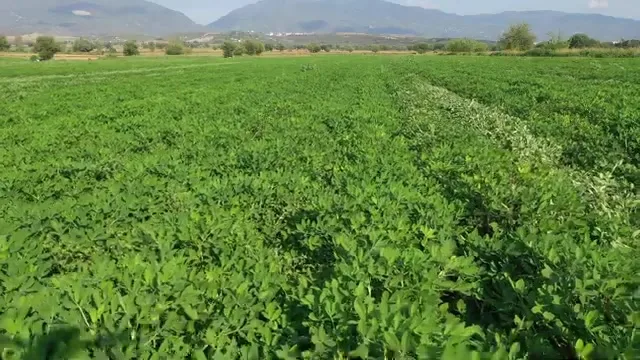
As agricultural engineer Cemal emphasized, the healthiest disease control in peanut begins with crop rotation, that is, with rotation. Because once a disease settles into a field it shows itself in the following years too, planting peanut over and over carries risk. Since peanut is evaluated in the region as both a first and a second crop, attention is paid to rotation. Before planting, treating the seed with a coating pesticide against root rot disease is recommended; the nutrition support added alongside this application encourages homogeneous and easy germination. Thus the plant makes a stronger start and passes the first weeks of the season healthily.
Early-Period Nutrition: Copperas, Aminado, and Activo
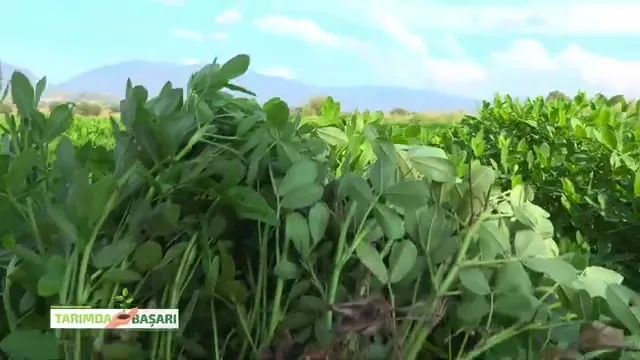
The first-three-leaf period in peanut is critical. In this period, aspergillus-based disease can cause serious problems in the region, but fungicide use can be inadvisable because it tires the young plant. Cemal explained that with Copperas and Aminado applied at this stage they prevent the disease, and at the seed stage they support homogeneous germination with Aminado. During the peg period, with Activo the number of pegs is increased and the plant's stress is relieved. Since peanut is a plant very sensitive to calcium, calcium supplementation is indispensable; the more strongly the root holds, the more strongly the plant advances. During the fruit maturation period, potassium-based nutrition comes to the fore and both nitrogen and potassium are utilized.
Fighting Pests in Peanut
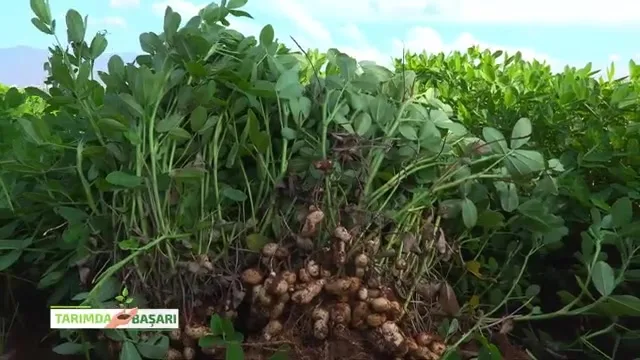
Since there is no drip system in the field, some pests can be more effective. Cemal stated that they recommend the active ingredient emamectin benzoate against wireworms and bollworm, and acetamiprid-containing pesticides against aphids. Empoasca and red spider mite, which lower the plant's condition, are also among the important pests in the region. A practical method is used to detect the red spider mite: since the pest is sensitive to black, when the phone is held under the plant and the branches are shaken, the mites falling onto the screen can easily be seen. By using the active ingredient abamectin against this pest, the problem can be brought under control. According to the engineer's observation, plant resistance and condition are markedly higher in fields fed with the company's products.
Iron Deficiency, Yield, and the Cost Advantage
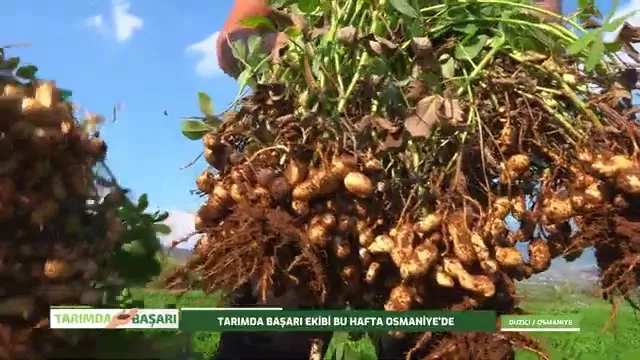
Agricultural engineer Nuh conveyed that peanut's planting area has been increasing worldwide, but that yield per decare in Turkey, at about 222 kg, lags far behind Europe. He emphasized that the main goal is not to expand the area but to raise the produce harvested per unit area to the 600-700 kg levels. Drawing attention to the iron deficiency widely seen in Çukurova soils, Nuh noted that, due to high pH, the iron in the soil is often not available to the plant. He demonstrated that in this field, without using an iron product, the iron present in the soil was made available to the plant with the AgroTroia nutrition program; this both lowered cost and kept the plant, by harvest, green like beet. He said that only 100 grams of Copperas per decare was applied together with zinc-boron.
As a result, in this field, without using expensive inputs such as fungicide, damping-off treatment, and iron, cost was lowered and yield was raised with AgroTroia's nutrition products. It was stated that under conditions where other growers got 300-350 kg per decare, with this method they reached up to 500-550 kg. The engineers emphasized that the products are produced with pH values suitable for Turkey's soil structure, that the programs are updated every year according to climate change and increasing disease pressure, and that the same price stability is offered to all growers. AgroTroia, also growing in olive and field crops in Düziçi, continues to provide uninterrupted support to farmers with its field agricultural engineers.
Source: AgroTroia – "Success in Agriculture" program, sponsored by AgroTroia.