
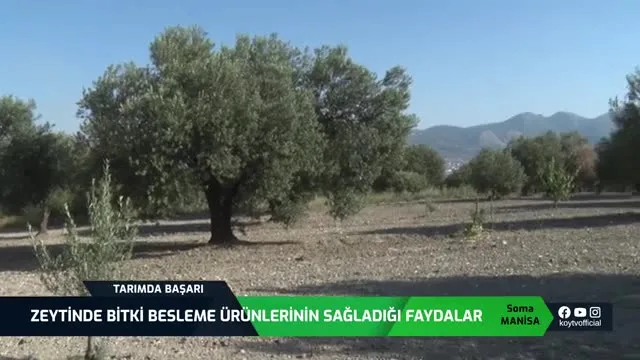
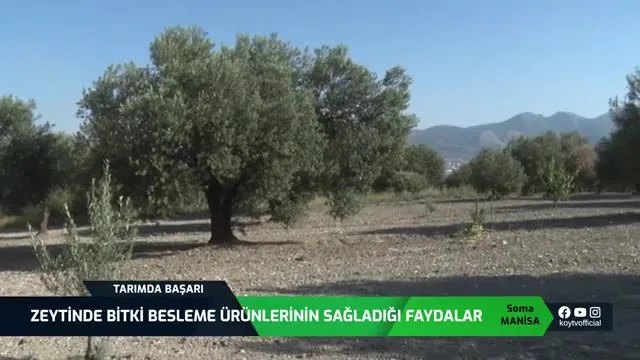
In this episode of the "Success in Agriculture" program broadcast on AgroTroia, we are in the Soma district of Manisa. Mustafa Bey, a grower the AgroTroia team had spoken with by phone for years and met face to face for the first time, is writing a remarkable success story in his unirrigated 8.5-decare olive grove. This grove, made up of old trees grafted onto wild olive inherited from his father, yields roughly 1 ton of olive oil each year thanks to a regular olive nutrition program applied for seven years. In this episode, where the effects of climate change on the sector were also put on the table, we discussed the secrets of olive yield with agricultural engineers and growers.
Nearly 1 Ton of Oil Every Year from 8.5 Decares
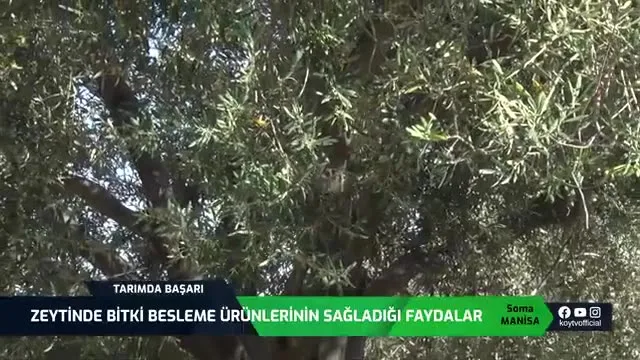
The most striking aspect of the grove is the steady yield obtained without irrigation. Mustafa Bey recounts that last year they got close to 800-850 kilograms of oil, and the year before that they produced 1 ton of oil. This year too, if no damage comes from hail and rain, a harvest close to 1 ton is expected again. In the grove, which has a total of 110 trees, the trees bearing olives abundantly every year shows that the on-year–off-year cycle so often encountered in olive growing has been broken. The grove not being irrigated, and periodicity nonetheless being minimized, makes the program's effect even more valuable. Getting nearly a ton of oil from an eight-decare area stands out as a truly serious success for growers.
The Power of a Regular Program: Seven Years of Consistency
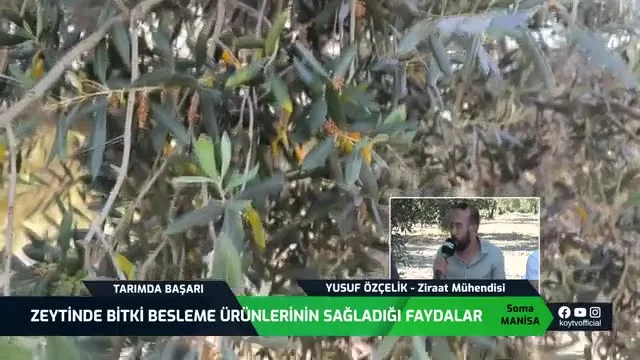
Mustafa Bey first encountered AgroTroia products seven years ago and has followed the program to the letter ever since. The grower, who makes nine applications throughout the season, in some years extends this number into October and November, going up to twelve applications. He photographs each application and shares it with the engineers, recording the process. Mustafa Bey's most important principle is to tend to the tree not only for yield but for its health. The engineers explain this approach by likening plant physiology to human physiology: just as a person needs all nutrients to be healthy, the tree too is strengthened by regularly receiving all micro and macro nutrient elements. The more leaves and shoots, the more olives.
Shoot and Disease Management with Copperas
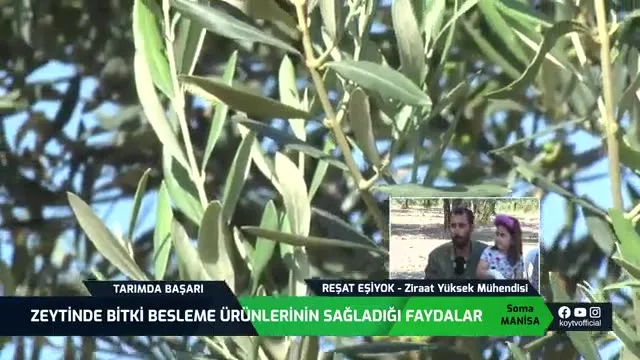
At the foundation of the grove being this healthy is Copperas, used regularly for six years. The engineers note that the feature distinguishing Copperas from other copper-based and Bordeaux-compound products is its systemic effect. Containing roughly 5 percent copper, organic acids and nutritive elements, the product is actively transported in the plant's conductive tissues; in this way it does not create a phytotoxic effect like other coppers and does not shut down the shoot mechanism. On the contrary, it increases resistance to peacock spot disease, causes diseased leaves to drop and immediately afterward encourages the formation of new leaves. The engineers report that in groves where Copperas is used the shoot mechanism is more advanced than in other groves, and that in the Edremit and Memecik varieties the leaves turn almost a "green gold" color.
Nutrition Against Climate Stress: Cold and Heat Waves
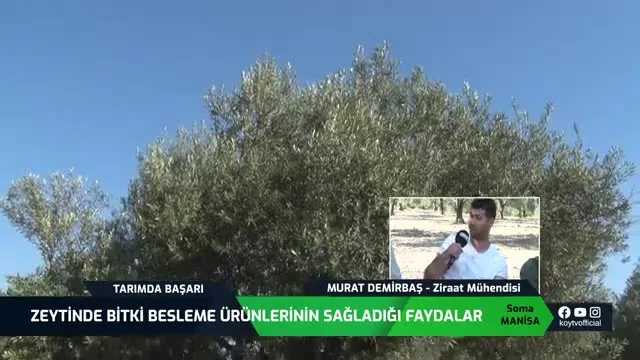
This season, early waking and the cold damage experienced during flowering threatened yield in regions where the day-night temperature difference is high. The engineers explain that under these conditions, seaweed-based products such as Ocean Mix reduce the effect of the temperature difference and, thanks to the organic matter and alginic acid they contain, make the plant less affected under stress. Calcium-containing Calcio, by helping to thicken the cell wall, contributes to protecting the tree against both cold and heat. During this period, when the olive fruits reach pellet size, foliar applications containing potassium and magnesium are also added to the program to support fruit development.
The Cost Debate: Is "Too Much Pesticide" Really Expensive?
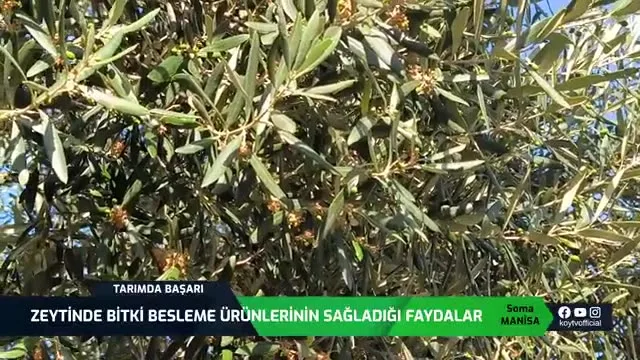
Although some surrounding growers tell Mustafa Bey "you're spraying too much pesticide," the engineers refute this perception with a calculation. Even though among growers even fertilizer is often called "pesticide," what is being discussed here is actually nutrition applications. The total cost of nine applications made to the grove with 400 liters of water remains low, even including insecticides. In return, the nearly one ton of oil obtained each year means serious income on the market when it is acid-free and high quality. The engineers also give as an example that, compared to the high cost of a 2 percent Bordeaux application in another grove, the cost was reduced markedly by using Copperas and a few products together, and moreover a visible improvement was achieved within a month.
Featured AgroTroia products in this episode
- Copperas – systemic copper source; supports resistance to peacock spot and the shoot mechanism.
- Calcio – calcium-containing; protects against cold and heat stress by thickening the cell wall.
- New Olive 5-10-15+ME – balanced nutrition support specific to olives.
This grove in Manisa Soma shows that when working with decent people, decent products and a regular program, sustainable yield in olives is possible. Seven years of consistency is concrete proof that the on-year–off-year cycle can be broken even on unirrigated land. The AgroTroia team continues to support growers in lowering costs and obtaining healthier produce with programs tailored to their groves. Conveying their wishes for a swift recovery to all growers affected by natural disasters, the team once again reminds us that the people who produce deserve to win.
Source: AgroTroia – "Success in Agriculture" program, sponsored by AgroTroia.