
In this episode of the "Success in Agriculture" program, the AgroTroia team visited the village of Dikmen Palamut in Manavgat. Filmed in the olive grove of producer Erdoğan Akel, who has worked with AgroTroia for years, the episode covered the olive nutrition program of a grove bearing fruit on every branch in a hot region, with assessments from agricultural engineer Mr. Umut and insights from Dr. Halegül, who supports Erdoğan Akel with grove management. Having lost 30 of his trees in the Manavgat wildfire, Erdoğan Akel said he expects a harvest of roughly 7-8 tons this season.
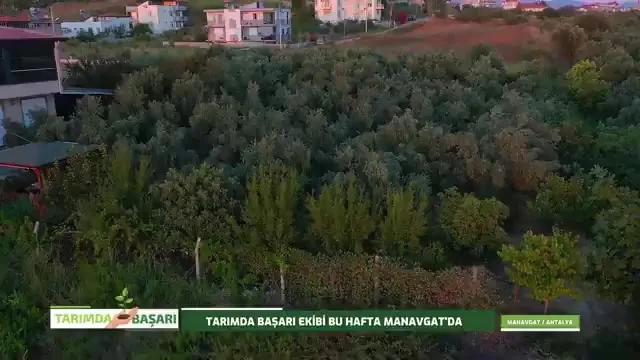
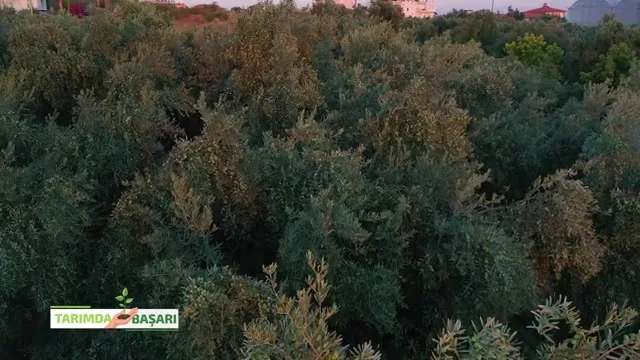
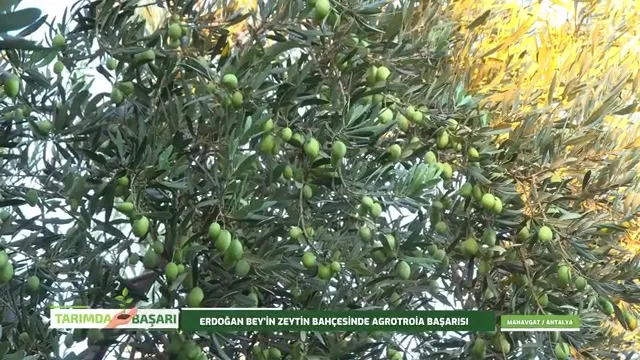
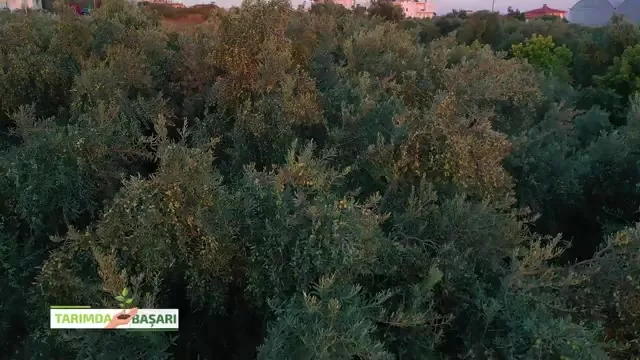
A grove full of olives in Dikmen Palamut, Manavgat
Although the team moved quickly because the program was filmed at the end of the day, the sight of the grove spoke for itself. Mr. Umut said this was the most beautiful olive grove he had seen during his roughly week-long tour, with fruit on almost every branch instead of empty ones. Erdoğan Akel noted that he also grows avocado and dragon fruit in the same grove, that he harvested 3 tons of olives from it last year and 5 tons the year before, and that he does not experience the "on-year, off-year" problem in olives. On the roughly 120 trees in the grove, a yield of 60-65 kilos per tree is targeted this year.
A ten-year partnership: the AgroTroia nutrition program
Erdoğan Akel explained that he uses AgroTroia products throughout his entire production and that this collaboration began about ten years ago. Agricultural engineer Mr. Nuh, who visits the grove four or five times a year, provides guidance even from photos sent when he cannot come in person. The producer said that, following base fertilization and animal manure after harvest, he repeated the foliar applications six or seven times this season. It was emphasized that, apart from pesticides, only AgroTroia nutrition products are used in the grove, and that the results obtained have drawn the attention of neighboring producers.
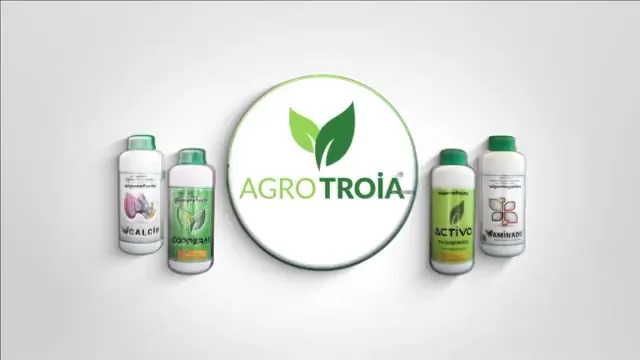
Featured AgroTroia products in this episode
- Copperas — supports the healthy development of the plant through copper-based applications.
- Aminado — with amino-acid-based nutrition, helps the plant get through stress periods better.
- Calcio — supports fruit quality and resilience with calcium supplementation.
- Activo — with its organic acid complex, is effective in breaking down residue and in plant vitality.
The problem of pesticide residue and correct usage
Mr. Umut explained that the biggest problem with pesticide use in our country is timing and dosage. Every product has a lethality (LD50) threshold and a duration of effect; for example, the effect duration of deltamethrin used against the olive fly is 3-7 days. In contrast, spraying one day before harvest and starting to harvest shortly after leaves residue in the product, negatively affecting both human health and market value. Erdoğan Akel also stated that he consumes his own olives, which is why he does not use toxic pesticides after June and never exceeds the dosage.
Reducing residue with nutrition products
Mr. Umut reported that in a citrus grove where residue had previously been detected, using AgroTroia nutrition products brought the residue well below the threshold value. He explained that Activo, with its organic acid complex, accelerates cell division activity to break down formed residue, and that results were achieved with applications made at seven-day intervals. He emphasized that residue levels were significantly reduced by using two liters of Activo per decare via drip in annual plants, and a specific ratio per 100 liters or per ton in perennial plants through scheduled applications, which means exportable, high-quality produce.
Healthy yield despite peacock spot and anthracnose
It was noted that in a season when Antalya experienced the hottest summer in 90 years, with the felt temperature reaching 62 degrees, many groves in the region failed to set fruit. Alongside pests such as peacock spot, olive fly, olive moth, and aphids, fungal diseases such as stem rot and olive anthracnose are among the region's main problems. Despite this, no peacock spot appeared in this grove; both fruit set and sizing were uniform. Mr. Umut said the fruits were nearly the same size, as if turned on a lathe, which is important both for ease of labor and for the economics of the following season.
Classification of olive oil and correct storage
At the end of the episode, the storage of olive oil was discussed. Mr. Umut recommended that, due to the risk of rusting, oil should not be stored for long in tins left over from the previous year, in plastic drums, or in PET bottles, and that chrome containers or suitable wooden vessels should be preferred. He explained that harvesting is a matter of discipline, that olives left in sacks oxidize, raising acidity and lowering the polyphenol content. He reminded that olives picked off the ground should not be mixed with those picked from the tree, and that storage should be done in a cool, dry environment. He also emphasized, as a public service message, that olive oil essence is not olive oil and that such blends mislead consumers.
This grove in Manavgat became a powerful example of how correct nutrition and conscious pesticide use can deliver results even in a difficult season. A happy producer, advisory support, and trees full of fruit; wishing you abundant and blessed harvests.
Source: AgroTroia – "Success in Agriculture" program, sponsored by AgroTroia.