
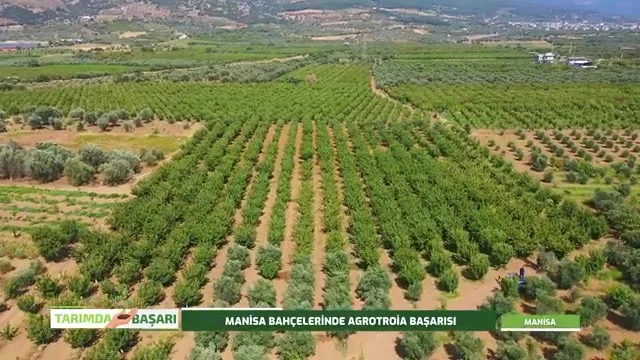
In this episode of the AgroTroia "Success in Agriculture" program, we are in the village of İğdecik (İğdirci) in the town of Sancaklı in Manisa. In this fertile region, where the first cherry in Turkey—indeed in the northern hemisphere—is harvested, we came together with cherry producers and the AgroTroia team to discuss the cherry nutrition program and the agricultural frost disaster experienced this season. Orchard owners such as Hamza Büyüksavran and İsmail Karadağ, together with the agricultural technician and engineers, explained how correct care in cherries should be done throughout the year.
The story of the cherry in İğdecik and this year's frost damage
The village of İğdecik is one of the regions in Turkey where cherries are harvested earliest. This season, however, very serious agricultural frost and cold damage was experienced across the region as well as the whole country; in many orchards the flowers were scorched, and there were producers who said not a single piece of fruit remained. In orchards unaffected by frost, cherry prices ran above expectations, and even twin-shoot cherries found buyers this year. Producers interpret this situation not as "making a lot of money," but as the produce finally getting the value it deserved for the first time after years of selling below cost. Considering the high cost of inputs such as diesel, fertilizer, and labor, how the earnings erode against inflation was also put on the table.
The importance of post-harvest care and bud nutrition
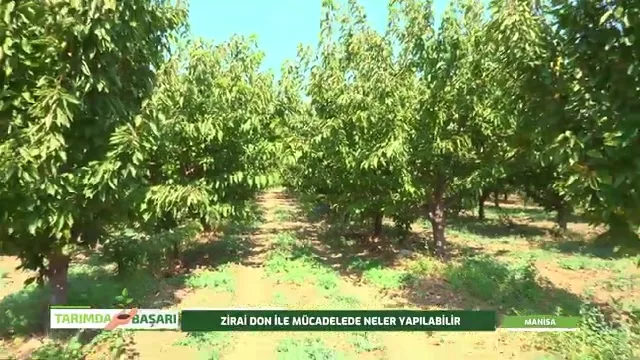
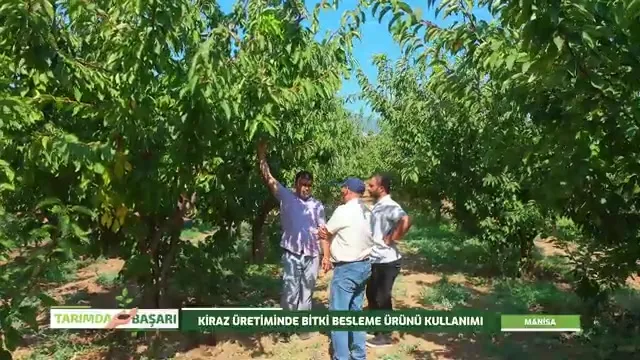
One of the most critical periods in cherries is after harvest. Many producers have the habit of leaving the orchard to its own devices after harvest; yet building the cherry tree's coming year from now on depends on this period. The application recommended by the AgroTroia team is foliar nutrition done immediately after harvest with a mixture of 500 cc Activo and 500 cc Fosforiko per 100 liters of water. If there is a risk of fungal or similar disease, this mixture can be supported with Copperas. Bud nutrition is essential; because if strong buds are not formed on the tree, there will be no homogeneous flowering, and without flowers no fruit set can be achieved. Large, bright buds directly determine the following year's yield potential.
Strengthening flowering by increasing the number of buds
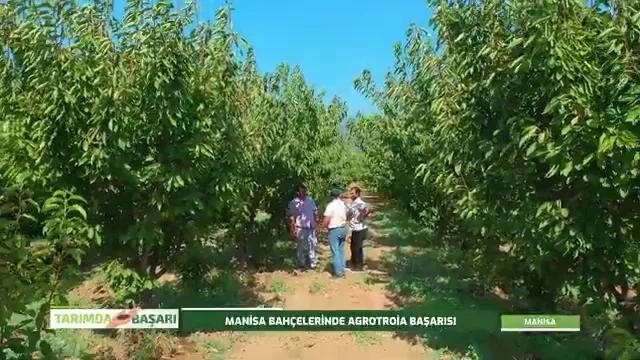
The dealer's experience over the years shows that this application markedly increases the number of buds. While Activo was initially used by giving 2 liters per acre via drip irrigation, it was found that better results were obtained when applied foliarly and combined with Fosforiko. Generally, while two flowers emerge from one bud—three in well-tended orchards—with this nutrition, up to six flowers can be seen from a single bud. In the orchard of young producer Hamza, who trialed the products for the first time this season, the observation that, even at an early stage with the three-application method, there was at least a 50 percent difference compared to neighboring orchards turned the method into the most powerful advertising recounted in coffeehouse conversations.
The danger of early nitrogen fertilization
One of the most important mistakes that increases frost damage is early nitrogen fertilization done right after harvest. A fruit tree must drop its leaves and enter a dormancy period for a certain time. Giving nitrogen in January-February, while the tree is fully dormant, brings waking forward and makes the tree open to frost; it is virtually a call to "wake up before the frost comes." The plant needs nitrogen in the period from waking until harvest. Moreover, in this period when urea prices have reached high levels per bag, nitrogen applied early means both harm to the tree and a burden on the wallet. Correct planning lies in not throwing nitrogen onto the soil at the wrong time.
Emergency intervention after frost, irrigation, and preparation for next year
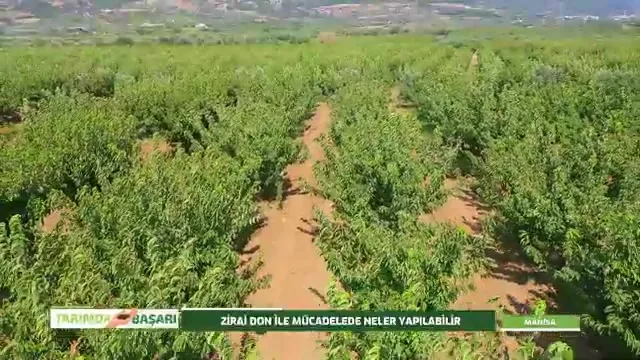
Rapid intervention as soon as frost occurs is decisive in recovering the damage. The team's recommendation is to apply Activo foliarly, together with an amino acid and seaweed-based product, immediately after the frost or hail damage—if possible, the same day. It was emphasized that with similar interventions in grapes, damage that could reach 90 percent was held at the 60-70 percent level, and secondary cluster formation was ensured. For this reason, a professional producer should always keep a drum of Activo in their depot, virtually like a first aid kit; even a one-day delay waiting for an order reduces the effect. Even if there is no crop on the tree, irrigation must not be cut off: because of the increasing drought and the decreasing spring-autumn rains, one must not forget that the tree prepares next year's shoots and buds this year.
AgroTroia products featured in the episode
- Activo — the fundamental product in post-harvest bud nutrition and in emergency intervention after frost/hail.
- Copperas — a supportive application against fungal and disease risk.
- Aminado — an amino acid and seaweed-based supplement in post-frost recovery.
This meeting in the village of İğdecik once again showed that success in cherries depends not on a single application, but on a holistic care approach extending from post-harvest nutrition to post-frost emergency intervention, and from irrigation to the correct timing of nitrogen. A producer who looks after their orchard throughout the year both lowers their cost and secures next season's yield from now on.
Source: AgroTroia – "Success in Agriculture" program, sponsored by AgroTroia.