
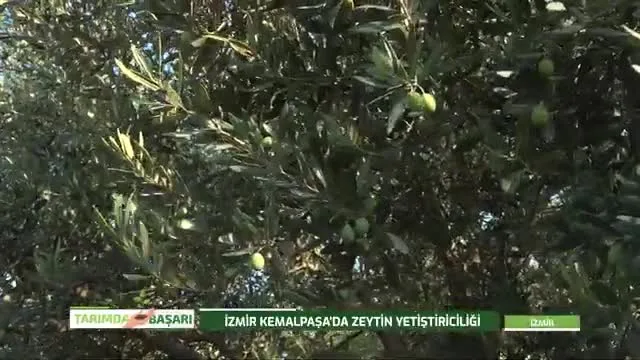
In this episode, the AgroTroia "Success in Agriculture" team was in an orchard growing the Akhisar region's table "domat olive" variety in İzmir's Kemalpaşa district. This area, from which orchard owner Özkan Bey had not been able to harvest for two years, reached full fruit within a year after he met AgroTroia dealer Cihan Bey and began applying the olive nutrition program. On the program, AgroTroia board member Umut Dönmez, dealer Cihan Bey, agricultural engineers Simge Hanım and Yusuf Bey, and Mehmet Uyar—who is a neighbor of the orchard and carried out the applications—explained the effect of care and nutrition on yield in domat olives.
How did an orchard that produced no crop for two years recover in one year?
Özkan Bey explained that he had not been able to harvest for two years from his orchard of roughly 15 decares and around 600 trees, that leaves were dropping, and that peacock spot had formed. He said that after getting to know AgroTroia products, the trees quickly recovered, and that this year, for the first time, he expected to harvest and make money. Mehmet Uyar, who is a neighbor of the orchard and personally carried out the spraying and fertilization, also reported that they saw the difference on site: after the applications, the trees stopped dropping leaves, the buds set, and there was no drop or shedding after flowering. Dealer Cihan Bey emphasized that growers who took up farming later are more open to research, and that Özkan Bey, too, found the right path and turned a neglected orchard into a valuable one.
The domat olive variety and correct planting spacing
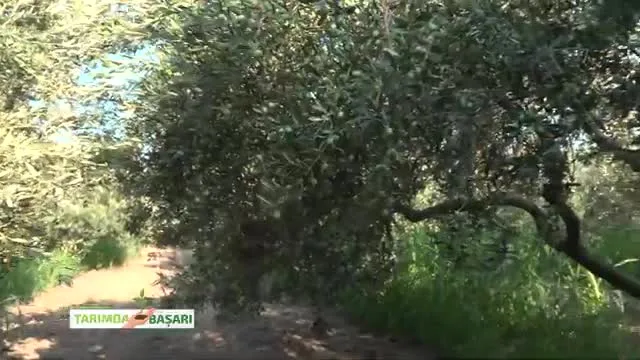
Engineer Yusuf Bey explained that the Akhisar domat variety is a table green olive variety preferred in orchards that have irrigation water. Planting spacing is of great importance in this variety: because the tree forms a wider crown when it reaches mature size and has longer branches, spacings of 6x6, 7x7, or wider are recommended instead of the 5x5 meters common in Gemlik. If planting spacing is not heeded, the trees crowd together and it becomes harder to fight problems such as peacock spot. In the orchard visited, peacock spot was experienced for a period as the trees grew, but this problem was overcome under Cihan Bey's management.
Irrigation, tillage, and weed control
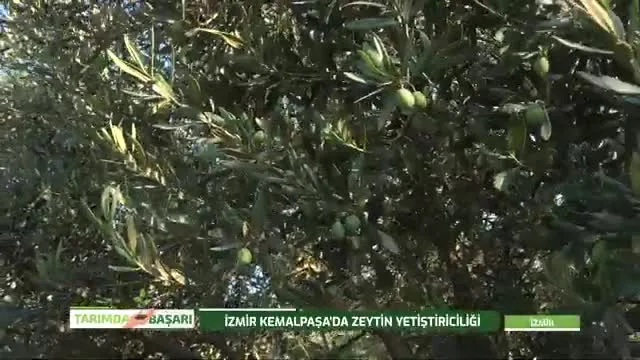
Agricultural engineer Simge Hanım emphasized that deep tillage must absolutely be avoided in olive orchards. During deep tillage, the tree's capillary roots are damaged; while the tree tries to repair those roots, it spends the energy that should go to shoots and fruit on the roots. If necessary, it is more sensible for tillage to remain at a shallow depth of 5-10 centimeters. Weeds are also unwanted because they share both the plant nutrients applied and the irrigation water; for this, weeds are kept under control with herbicide-group protection products. Simge Hanım stated that nutrition should be done not by rote but in season and according to need, which is why seeing the land on site is important. The layout of the drip irrigation and the orchard arrangement are also evaluated on site.
Pruning, caliber, and fruit size
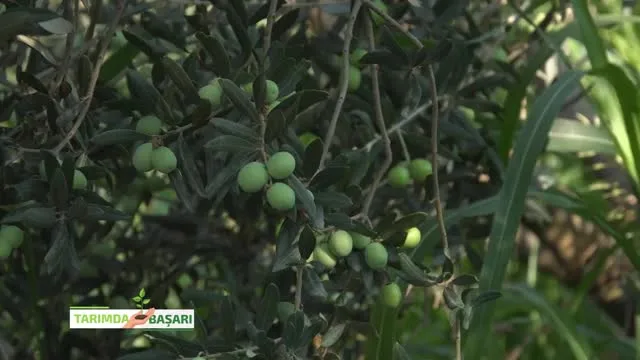
The experts emphasized that the biggest obstacle to quality in domat olives is old branches. In this variety, old branches should not be left on the tree, fresh shoots should constantly be set, and the worn-out lower branches should be cut. Cihan Bey reported that correct pruning lies at the foundation of fruit enlargement, but that finding a competent pruner is difficult in the region. To enlarge the caliber in the orchard, one Force application was done via drip this year; the experts stated that it would be appropriate to give Force a few more times to increase fruit size. It was emphasized that supporting with potassium-heavy fertilizers toward harvest and pruning better would raise quality.
Main diseases and pests in olives
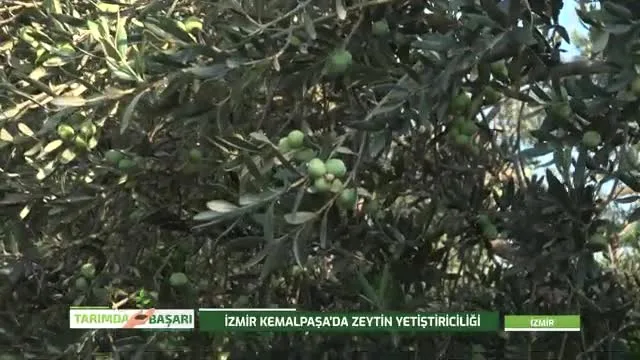
The most striking problem in the orchard was peacock spot, which causes leaf drop and yield loss; it was explained that this disease can be overcome with correct planting spacing and nutrition. Yusuf Bey stated that measures should be taken against the black scale, that is, the scale insect pest, in August, and that the agriculture and district directorates send warning messages to growers on this matter. After the fruit begins to oil up in August and September, the olive fruit fly can cause serious damage; a warning was given that especially this year, since the crop is low due to frost, if the olive fruit fly population increases, orchards carrying few fruit could suffer more damage. For this reason, a timely and correct protection schedule is of great importance. At the orchard's closing, the effect of the copper-based product the farmer applied during the flowering period was also recalled.
Featured AgroTroia products in this episode
- Copperas – the company's flagship copper-based application, which the farmer began using in the orchard and which was effective in the trees' recovery.
- Force – a product given via drip, used to increase fruit size and caliber.
This domat olive orchard in İzmir Kemalpaşa concretely showed how even an area that produced no crop for two years can recover with correct planting, balanced irrigation, systematic nutrition, and timely pest and disease management. In the orchard, which reached full fruit with a year of work, it was emphasized that the real success would be harvesting the following year as well and overcoming periodicity, that is, the "on-year, off-year" problem. The experts also recalled that a price of between 80-100 lira per kilogram for table olives this year would put a smile on the grower's face, but that the farmer's inability to set the price of the product they produce is one of the sector's biggest problems.
Source: AgroTroia – "Success in Agriculture" program, sponsored by AgroTroia.