
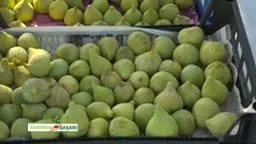
In this episode of the "Success in Agriculture" program on AgroTroia screens, we are in Çapak village, in İzmir's Torbalı district. In the orchard of Mehmet Cin, one of the region's model growers, we discussed the cultivation, care, and nutrition program of the bardacık fig, which stands out for its flavor. In the conversation attended by Umut Dönmez from the AgroTroia team, İzmir dealer Cihan, and guest agricultural engineer and technician, we addressed the practical side of fig production, from the quality the climate adds to the product to disease control.
The Secret of the Bardacık Fig in Çapak Village
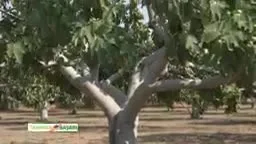
Mehmet Cin explains that the village's altitude is about 100-120 meters, and that the northeasterly wind blowing from the north acts almost like air conditioning for the orchard. According to the grower, this cool wind gives the fig a distinct aroma, flavor, and color; even if the same fig variety grows in nearby villages, Çapak's air and soil differentiate the quality. He emphasizes that the best market for the bardacık fig is fresh, but that because it can also be turned into dried fruit, the product never goes to waste. He adds that production is done in this region, where drought is felt, with limited water via drip, yet the fig gives good results with little input. Mehmet Cin says that over the years he has compared the taste of the same variety in different villages exactly, and that the aroma of the bardacık from his own orchard has always been a step ahead. According to him, behind this result lies not only the climate but also the labor, love, and regular care given to the orchard.
The Advantage of Figs in Dry, Low-Input Farming
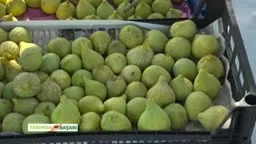
Guest agricultural technician Recai Feyzinci states that the choice of fruit type is critical in regions where water is decreasing. While lands divided into hobby orchards and increasing water shortage strain water-dependent species such as cherry in the region, he says the fig can make use of the fertilizer and pesticide applied even with limited water. That the fig can be produced without the high input cost of cherry, and that yield can be obtained on bottomland even with little water, shows it is a correct choice for this region. Grower Mehmet Cin, too, expresses that the fig is a durable and valuable product that stands out even above the olive in his own region. Another advantage of the fig is that it is a product that ripens in the heat, that is, it does not lose value even in hot weather; produce that cannot be sold fresh can be turned into dried fruit, and thanks to this the grower never suffers a loss in any year due to leftover product.
Fighting Diseases and Pests in Figs
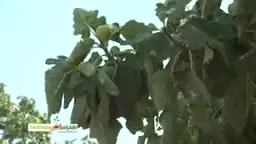
Yusuf from the AgroTroia team lists the main problems encountered in figs. Alongside hard-to-fight diseases such as crown gall and fig mosaic, fig rust, a fungal problem, also troubles the grower. On the pest side, red spider mite, fig mussel scale, and the fig fly stand out. It is stated that each of these diseases and pests is broad enough to be the subject of a program on its own, but can be kept under control with timely and correct measures. The fig's lower care requirement compared to other fruit groups provides the grower with an advantage in terms of both cost and labor. The conversation also emphasizes that the fig can find value across a wide quality range, from A-quality product to the scrap and rotten class, with every grade able to earn money; this stands out as one of the most important features that lowers the risk of fig growing.
Post-Harvest Nutrition Program and Applications
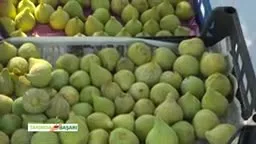
At the time the conversation took place, harvest had begun in the orchard; for this reason the main emphasis is on post-harvest applications. After harvest, a copper application with Copperas followed by a phosphoric application is recommended. After the pre- and post-caprification applications, potassium supplements come into play; depending on the year and climate, a calcium application with Calcio can be done once or twice against cracking. It is stated that this nutrition program, consisting of a total of five-six applications per year, can be carried out at low cost, and that the fig does not tire the grower much in terms of care. Mehmet Cin reminds that the products should be applied not once per season but at least three-four times and at the right times.
Model Growing and Knowledge Sharing
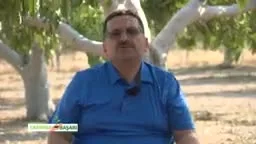
Mehmet Cin not only tends his own orchard but also supports growers by sending bardacık fig saplings to all four corners of Turkey. He explains that thanks to the connection he established with the Aydın Erbeyli Fig Research Institute, he reaches up-to-date information on the disease and spraying schedule, and that he does not hesitate to share the experience he has gained with other farmers. The guest agricultural engineer also emphasizes that agriculture is an endless learning process and the value of cooperation with such model growers. With his volunteer approach to sharing knowledge and saplings, Mehmet Cin leads the way for growing in his region.
Featured AgroTroia products in this episode
- Copperas — for the post-harvest copper application
- Calcio — calcium supplementation against fruit cracking
In this episode from Çapak village in İzmir Torbalı, we saw that producing high-quality figs with little input is possible through correct variety selection, timely nutrition, and conscious disease control. In a high-value-added product such as the bardacık fig, when the experience of model growers and a correct nutrition program come together, a sustainable production emerges even in dry, water-limited regions.
Source: AgroTroia – "Success in Agriculture" program, sponsored by AgroTroia.