
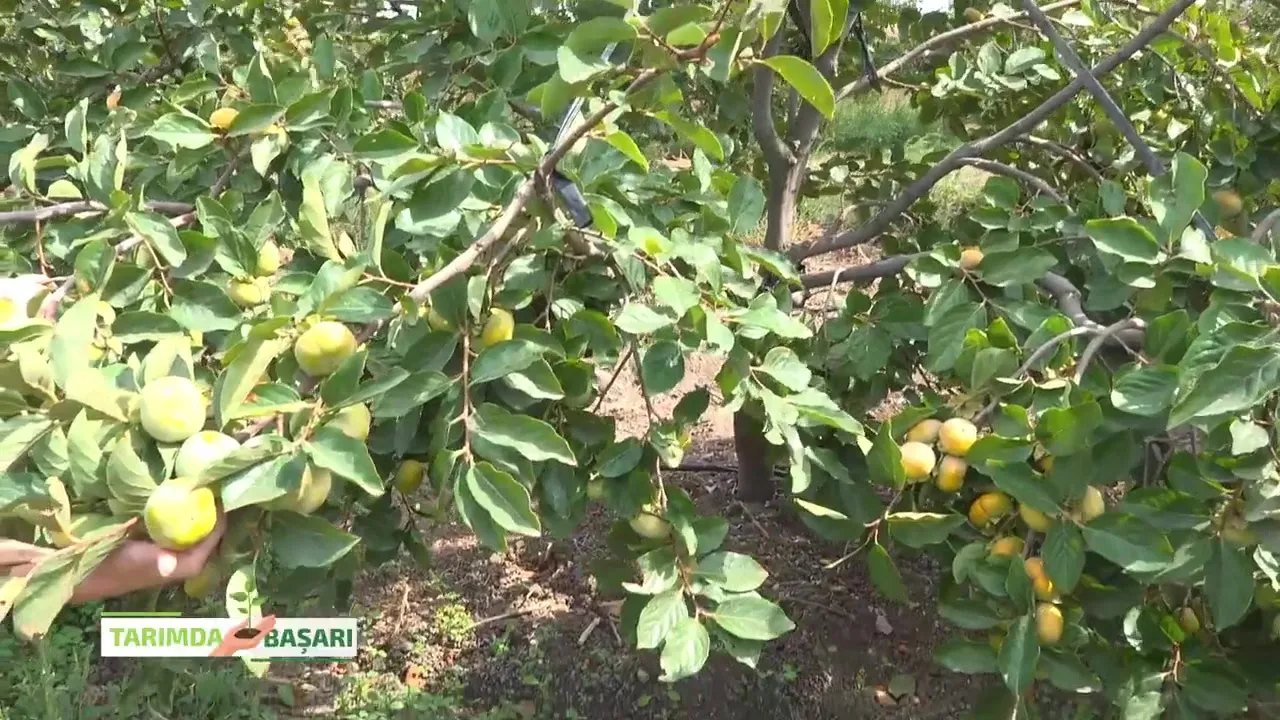
In this episode, AgroTroia's "Success in Agriculture" program was a guest in the persimmon orchard of Cemalettin Yüce in the village of Doğa, Bandırma district of Balıkesir. With AgroTroia board member Umut Dönmez, agricultural engineers Nuh and Simge, and the participation of the region's persimmon growers Aytuğ Uçer and Mehmet Yüce, persimmon growing - for which there is a lack of resources in our country - was addressed in detail within the framework of the AgroTroia nutrition program.
The Place of the Persimmon in Turkey and Its Varieties
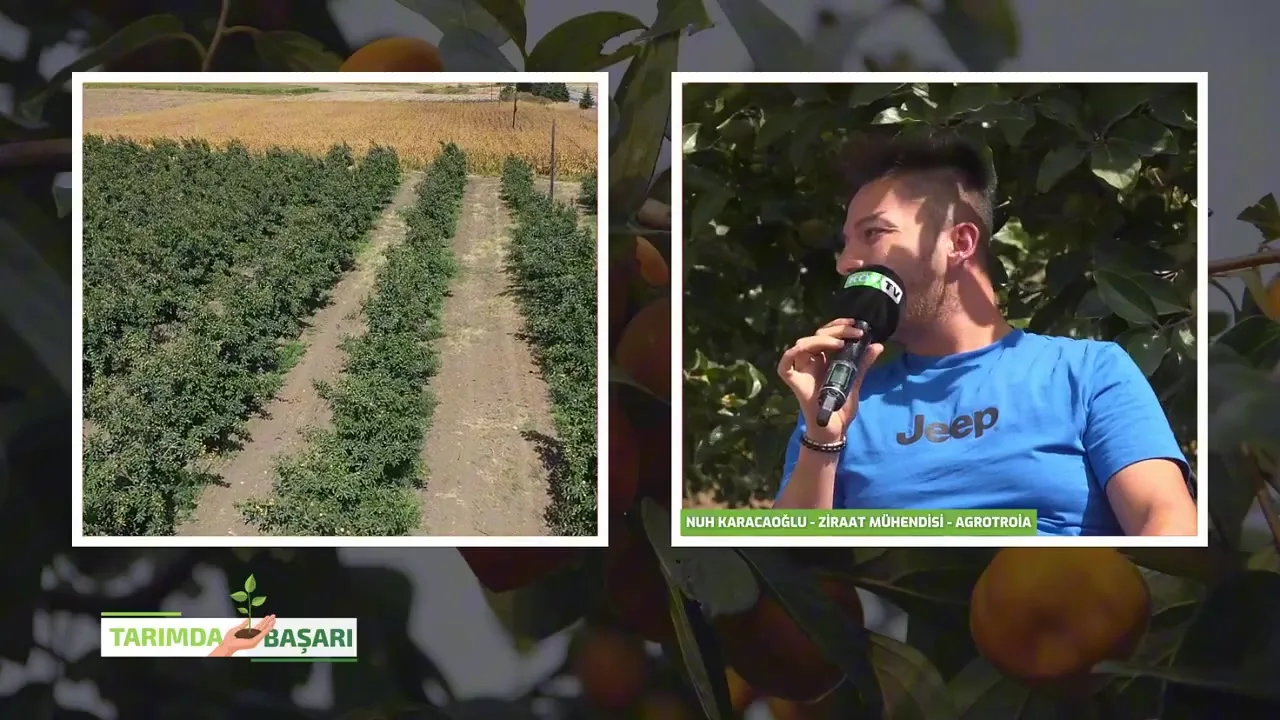
The persimmon, which entered our country through the port of Trabzon and was at first planted only as a shade tree, today has an annual production of about 50 thousand tons. By contrast, in China, its place of origin, production is expressed in the millions of tons. The main varieties cultivated in Turkey are Hachiya, Roja Brillant, and Fuyu; in recent years Hanafuyu has also been spreading. Hachiya is large, orange-red, with a short ripening stage and consumption period, requiring haste at harvest; for this reason it is suitable for markets that go to consumption immediately. Since Roja Brillant, Fuyu, and Hanafuyu have a longer shelf life, they are advantageous for growers who lack cold storage or want to bring harvest forward. An important principle underlined in the program: choose the variety according to the market conditions of the region.
Soil Requirements and Orchard Establishment
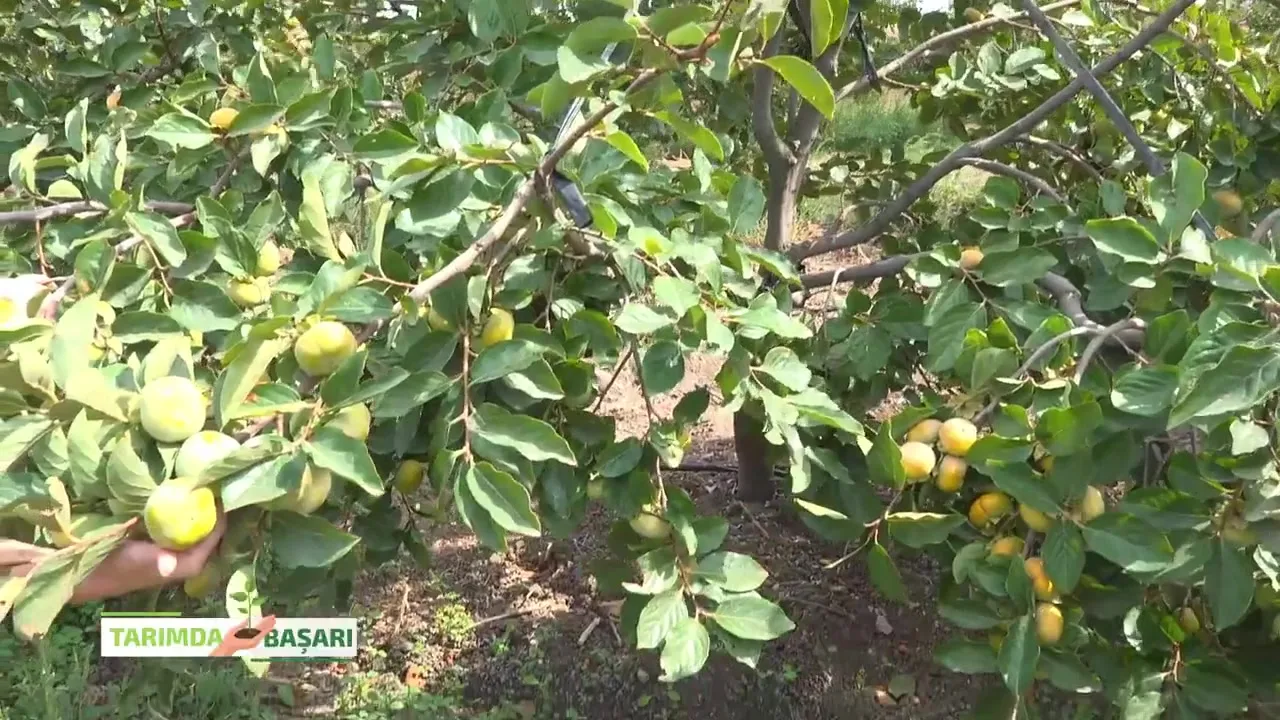
The persimmon likes soils that are not high in clay minerals and are well drained; the water table should not be high and the irrigation water should be sufficient. Its pH requirement is around 6.5-7. Because it is a plant that fully drops its leaves and goes into dormancy, it can physiologically tolerate down to -13/-14 degrees. In orchard establishment, the upright-growing Roja Brillant is planted a little more densely (2.5x5 m), while the spreading Hachiya, Fuyu, and Hanafuyu are planted more widely. Although in well-drained soils rows can be reduced to as little as 3-3.5 meters, since the plant will spread out both in width and height after 10 leaves, thinning out may be needed in dense planting. Dense planting is a matter requiring attention because it invites pests and diseases, and leads to branch breakage and competition.
Pruning and Variety Selection Against Frost
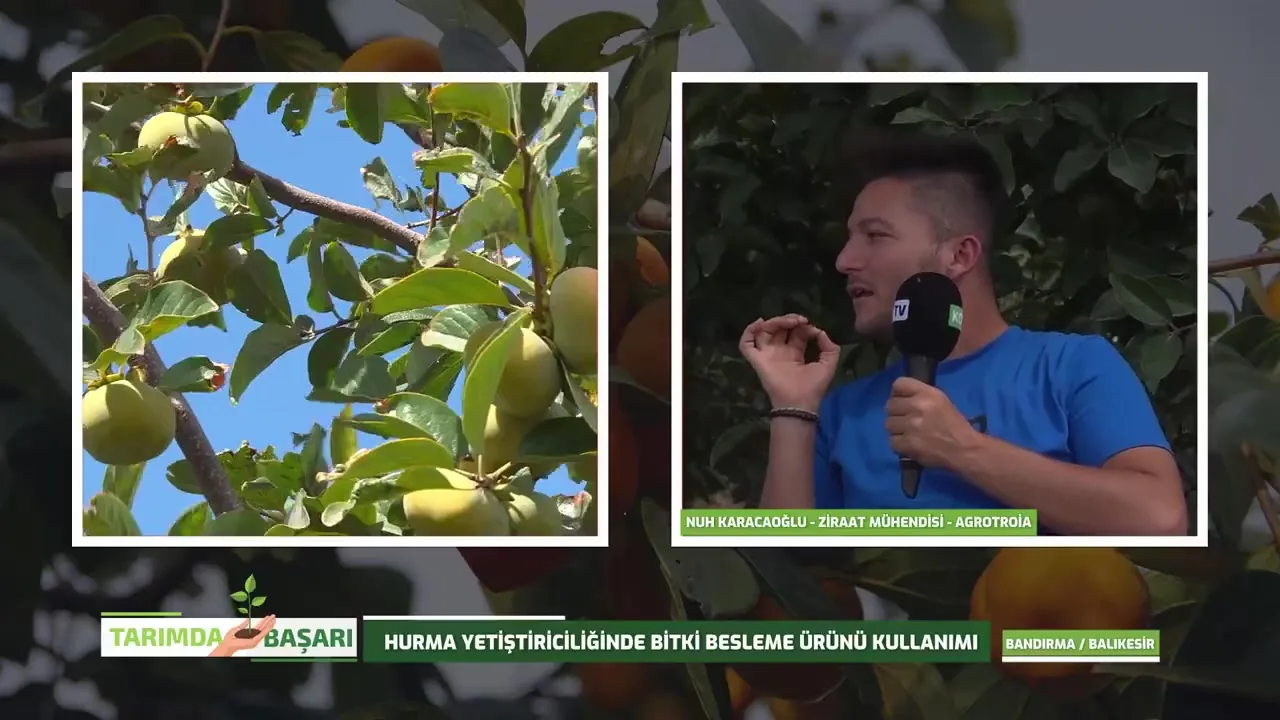
In persimmons there are three types of pruning - shaping, yield, and rejuvenation; however, because persimmon growing is relatively new in our country, rejuvenation pruning does not yet have a place. Against frost, variety selection is decisive: the early Roja Brillant, which moves its sap in the third week of May and is especially risky with early pruning, may not escape late frosts. Since Hachiya and Fuyu break later, their turgor pressure forms late and they are less affected by frost. This season the frost experienced in the Gönen and Ovaköy area completely took the crop in many orchards; in orchards with regular care, even if the crop was lost the trees were saved and the loss of a year was prevented.
Fruit Drop, Irrigation, and Nutrition
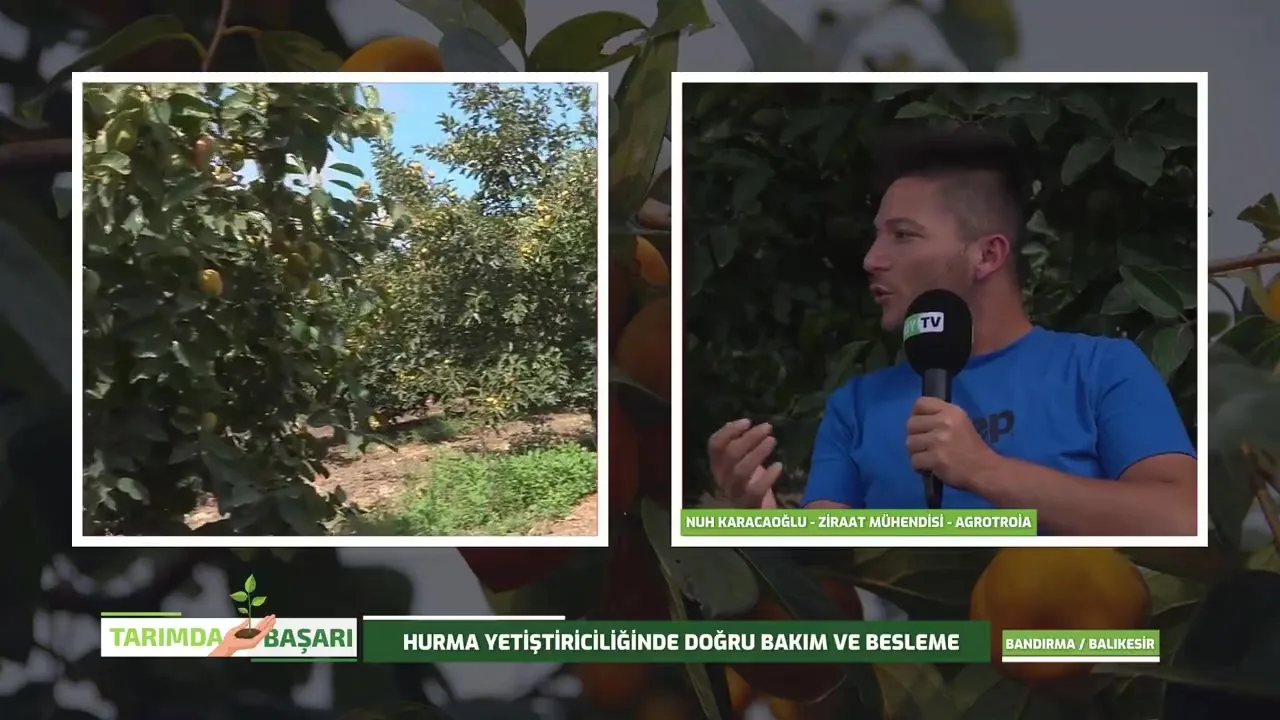
The most critical issue in persimmons is the balance of irrigation and fertilization. It is so sensitive that it could be said "the persimmon will make you tear your hair out in a single day"; when given excessive water, the fruit on the tree can drop within a few hours. After the flowering and shoot mechanism has begun, the excessive nitrogen given lengthens the internodes and leads to a sparse fruit structure and physiological drop. For this reason, it is recommended not to irrigate for a while after fruit set, or to apply a regular, measured irrigation period. The program also clarified that the persimmon is a parthenocarpic plant, that seedless fruit formation does not mean lack of fertilization, and that these fruits have market value. In nutrition, it was particularly emphasized that Bordeaux mixture should not be applied to the orchard; after harvest, within the framework of the soft-pitted fruit nutrition program, Copperas and the elements lacking according to soil analysis are completed specifically for the orchard. In the end, with abundant fruit set, balanced nutrition, and correct irrigation, it was reported that 25 tons were achieved in the orchard last year, with a target of about 30 tons this year, and that periodicity was also broken.
AgroTroia products featured in this episode
Copperas - post-harvest copper nutrition and protection against fungal agents
In a field where technical knowledge about persimmons is extremely limited in Turkey, this episode serves as a comprehensive reference from variety selection to irrigation and nutrition. With the right variety, the right planting distance, balanced irrigation, and post-harvest nutrition, both yield and continuity are possible in persimmons; the key is conscious and patient orchard management.
Source: AgroTroia - "Success in Agriculture" program, sponsored by AgroTroia.