
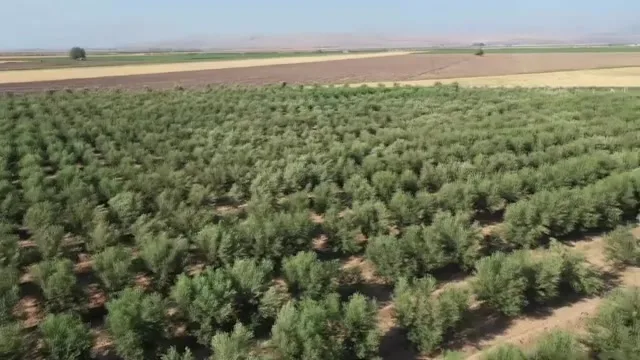
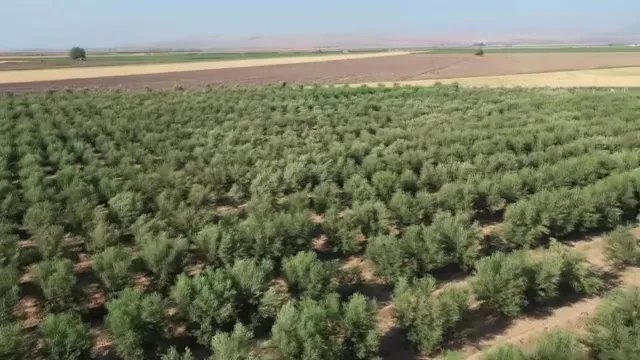
The "Success in Agriculture" program on AgroTroia screens stopped by the village of Muharrem in Kumlu, Hatay, in this episode. To discuss how production continues in the region, which is among the provinces hit hardest by the earthquake, the Reyhanlı dealer İsmail Cüneydioğlu (ISC Tarım) and olive grower Ahmet Durak, who is also a veterinarian, sat down at the table. The topic was the yield increase achieved with the correct nutrition program in olive.
A Real Olive Success Story in Hatay
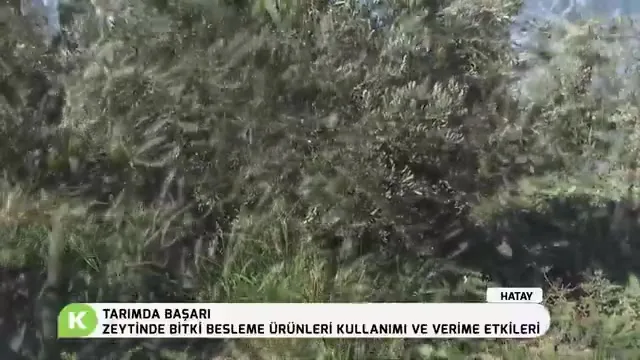
At the opening of the program, the Reyhanlı dealer İsmail Cüneydioğlu told the story of how he met AgroTroia. After hearing that the Copperas product was being used in his uncle's olive orchard, his path crossed with the company while searching for a copper-based product against root rot in a strawberry orchard where he was consulting. The strong crown and flower development obtained in strawberry clarified his decision. He said that when he opened his dealership it was one of the first brands he sought out, and moreover that he knew the company for a long time only by the name "Copperas." He reported that the products are used in olive, strawberry, potato and peanut in the region, and that they received positive feedback both from the field and on the price-performance side.
From 7.5 Tons to 16 Tons: The Effect of Correct Nutrition on Yield
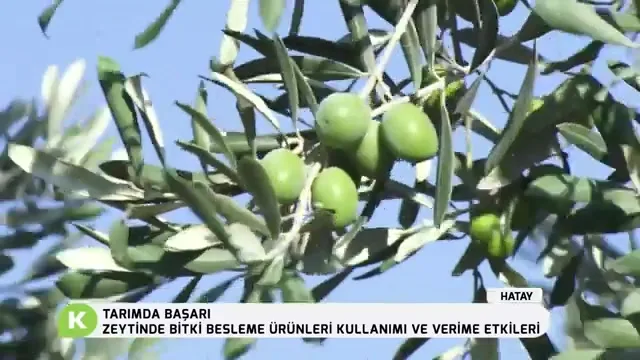
The most striking part of the episode was Ahmet Durak's orchard. He explained that in trees about 56 years old, years ago he started from 400 kilos and reached the 7-ton level, but afterward, due to a stubborn wilting in the trees, he could not get the yield he wanted. When he could not find a solution despite trying many products, he called the company he had been following from a distance for a long time and had his orchard inspected. At the end of the program, which began in February—a period that could be considered late for the season—the picture changed: he said that the harvest, which had been around 7.5 tons the previous year, was expected to reach 16-17 tons this season, and that the merchants who came confirmed similar figures. The grower emphasized that he noticed the surplus of produce and the vitality in the trees with the naked eye.
Prominent Diseases in Olive and the Role of Nutrition
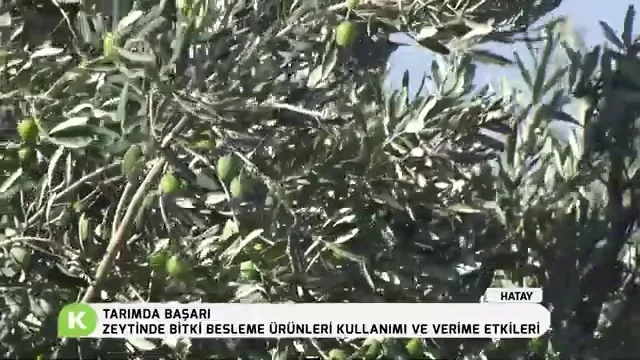
The program's agricultural engineer listed four main diseases in olive. Ring spot (peacock spot) is a fungal agent that peaks in periods of rising temperature and humidity, forming ring-shaped spots on the leaves; as it progresses, it leads to leaf drop and a decline in shoot and fruit set. Olive knot (branch canker) is a problem of bacterial origin that can be transmitted via pruning tools or hail damage and advances in the plant's sap. Verticillium wilt is soil-borne and difficult to control; it can start from one part of the tree and cover the entire crown. Anthracnose, seen in the fruit, is fungus-induced and triggers fruit drop and an increase in the acidity level of the oil. As a solution, instead of direct chemicals, emphasis was placed on nutrition that strengthens the plant's metabolism; it was explained that Copperas, which contains 5% copper and organic acid, supports the plant's resistance mechanism.
The Application Schedule for Olive Heading into Harvest
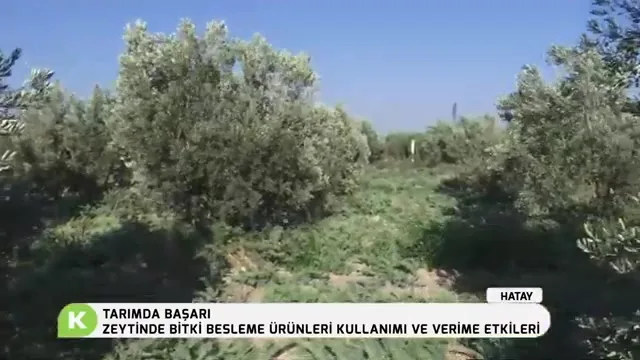
The dealer's technical team stated that the biggest risk as harvest approaches is fruit drop caused by anthracnose. Against this, it was conveyed that, starting one period earlier, copper-based Copperas applications were continued at half doses about 20 days apart together with calcium-based, phosphorus-potassium and phosphite applications; the dose, which was at the liter level in the winter season, was reduced to 250-500 grams in the summer months. About 20 days before harvest, a full dose is begun, and 15 days after harvest, a copper-based application is again carried out to close the wounds opened during fruit picking and to turn the previous year's shoots into fruit buds. It was noted that products such as Activo and New Olive also take part in this rotation; in Ahmet Durak's orchard, Copperas, biostimulant and New Olive were applied as a triple mixture.
A Modern Approach Instead of Bordeaux Mixture
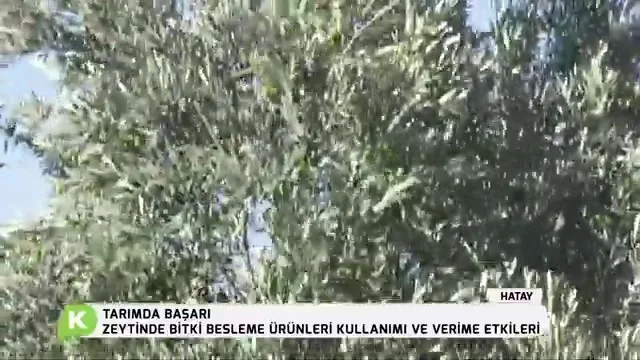
The episode also addressed the long-debated topics of Bordeaux mixture and lime sulfur. It was explained that the Bordeaux application, which contains added dye along with the blue color of copper, can cause phytotoxicity, color change and stress in olive, which keeps its leaves throughout the winter. It was emphasized that the excess copper that descends to the soil with rain is measured as an excess rather than poisoning; and that the calcium polysulfide-based lime sulfur application can damage the next year's fruit buds by burning the internodes and fruit buds. Instead, the use of copper sulfate-based Copperas during the winter period was recommended. On the cost side, it was stated that, against the amount reached by classic Bordeaux mixture made with 20 kilos per ton, the nutrition program offers a much more efficient balance.
AgroTroia products featured in this episode
- Copperas — a copper-based application containing 5% copper and organic acid that supports resistance against disease pressure and the shoot mechanism.
- Activo — a complementary product used in the nutrition rotation.
- New Olive — an olive-specific nutrition product included in the triple mixture.
This episode in Kumlu, Hatay, demonstrated with a concrete example that, despite the difficult conditions after the earthquake, production continues in the region and how a well-timed nutrition program with the right content can double olive yield. Both the dealer and the grower particularly emphasized that the technical follow-up carried out in the field determines the result.
Source: AgroTroia – "Success in Agriculture" program, sponsored by AgroTroia.