
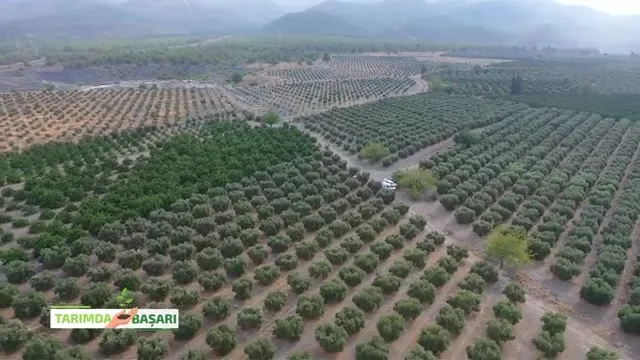
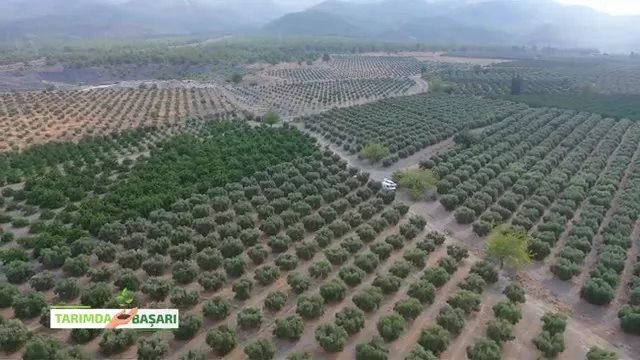
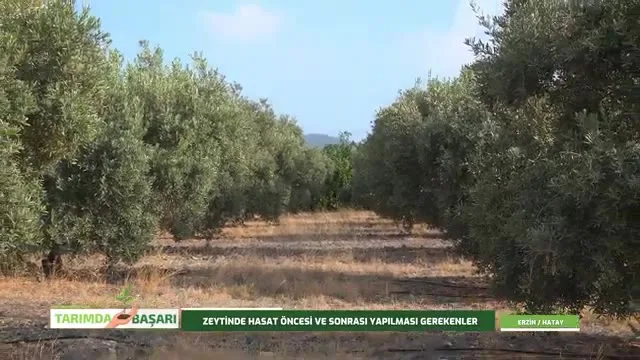
In this episode, AgroTroia's Success in Agriculture team is in the Erzin district of Hatay, in the olive grove of farmer Şahin Özgür. The team, which has filmed in the same grove again and again for years, brings to the screen the yield made sustainable thanks to the olive nutrition program carried out with AgroTroia. AgroTroia agricultural engineers and the company's board member Umut Dönmez are also present in the grove; the olive, an extremely valuable crop for the region, is discussed thoroughly.
Sustainable Success in Olives in Erzin, Hatay
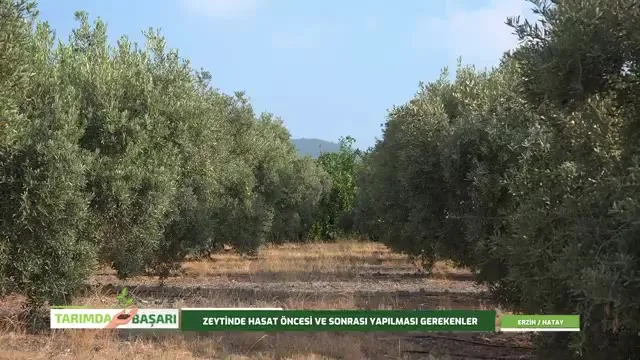
The starting point of the program is not a one-time but a years-long success. The speakers emphasize that a crop holding by chance for one year should not be confused with real success; the real issue is being able to repeat the same result every year. In Şahin Özgür's grove, work has been done with AgroTroia for about nine years, and this episode is the sixth or seventh recording of the grove's success story. The farmer explains that the engineers come to the grove every two weeks to check the situation, technically determine which application is to be made, and that he carries no worry about care. It is expressed that sustainability is a fundamental principle in both agriculture and fertilization, and that the company has been moving forward on the same principles for twelve years.
Final-Period Pre-Harvest Applications
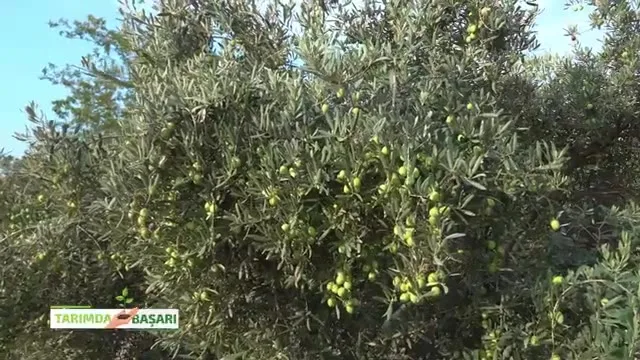
In the program filmed in September, the grove is moving toward harvest. The AgroTroia engineer notes that even about 15-20 days before harvest, the fight against the olive fly continues: the fruit caliber has reached the desired size, the oil sacs have formed, and this has created a suitable environment for the fly to strike. In this period, while Fors and drop are applied to develop the fruit in places where the caliber remains low, Copperas is applied to facilitate the harvest. Pesticide application is stopped in the final days before harvest, and instead Copperas is preferred to ease leaf drop and make the harvest easier.
Post-Harvest Tree Care and Nutrition
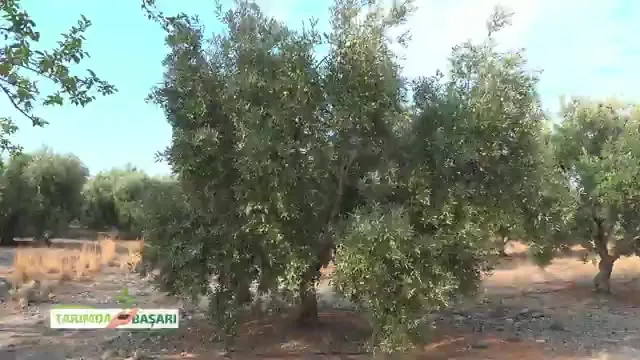
The engineer particularly emphasizes that the mindset of "the harvest is done, everything is done" is wrong. A tree nourished for an entire year becomes tired when it gives its fruit; for this reason, after harvest one must repair the tree's wounds and feed the next season's shoots and fruit. For this purpose, periodic applications continue with Copperas. It is also reminded that nutrition is not a fixed recipe and can vary from region to region, even from tree to tree: in some places only a calcium need arises and Calcio is given; in trees under heat stress, support is provided with Aminado; and when necessary, Copperas or applications against anthracnose are made. The basic logic is the continuous and balanced nutrition of the tree; not a one-time intervention but a periodic program.
The Impact of Agricultural Frost, Drought, and Climate Change
The region was seriously affected by agricultural frost this season. Engineer Nuh explains that on the Çukurova line, no rain fell at all for 60-65 days during the winter period, and the soil and air did not cool enough; the olive, which did not go into winter dormancy, was hit by frost just as it woke, fooled by a false spring. It is reported that when the olive remains at about -7 degrees for 24 hours, the nails (fruit eye, bud, flower) begin to die, and above 50 hours the trunks crack. Even in the best case, only the nails died; many groves could not even enter the bud period. With the drought and heat stress that followed, early ripening was observed and values reaching 60 degrees were measured. Although the olive is a plant that can renew itself, this requires summer irrigation and good spring rains; otherwise the shoots do not turn into fruit.
The Fight Against Peacock Spot, Anthracnose, and Stem Rot
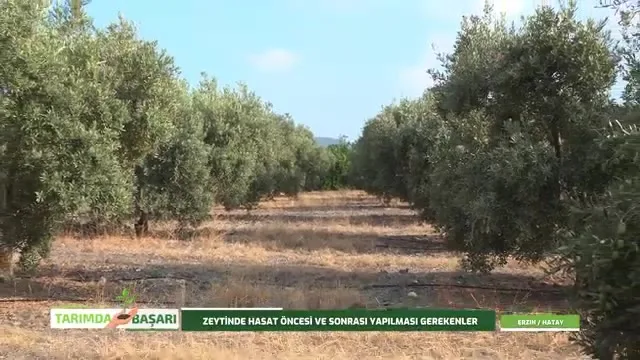
Because of the Amanos Mountains behind the Erzin line, the humidity simply does not disperse; in this region close to sea level, fungal infections and peacock spot peak. Branch canker, stem rot, and anthracnose are the region's main troubles; it is noted that with climate change, new diseases have also emerged. Anthracnose causes brown spots on the fruit and stem rot, leading to spring drop. According to the speakers, the solution is not a fungicide but nutrition that makes the tree resistant: the olive, which for years remained in the shadow of citrus in the region, has now become the primary crop with products like Copperas, and some producers have even begun to uproot citrus and plant olives. In a tree that is well nourished and does not get sick, the need for pesticide also decreases.
Featured AgroTroia products in this episode
- Copperas — the region's prominent product for facilitating harvest and for nourishing the tree post-harvest to make it disease-resistant.
- Fors — to support development in places where the fruit caliber remains low.
- Calcio — for supplementation in trees with a calcium need.
- Aminado — for relieving trees under heat stress.
The Erzin, Hatay example shows that success in olives rests not on a single season but on continuity established with the right application at the right time. Despite frost, drought, and heavy disease pressure, groves that are regularly nourished and kept under technical monitoring can preserve their yield. What falls to the producer is not to leave the grove to its own devices after harvest and to lay the foundation of the next season starting now.
Source: AgroTroia – "Success in Agriculture" program, sponsored by AgroTroia.