
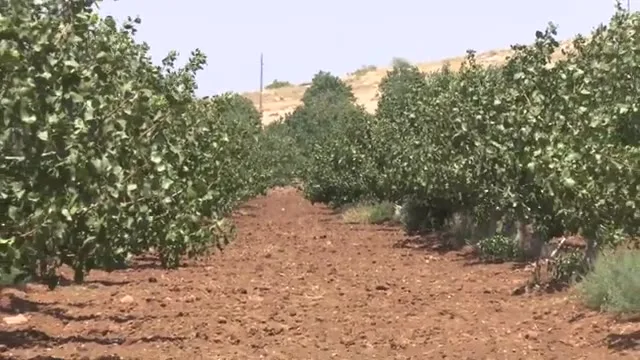
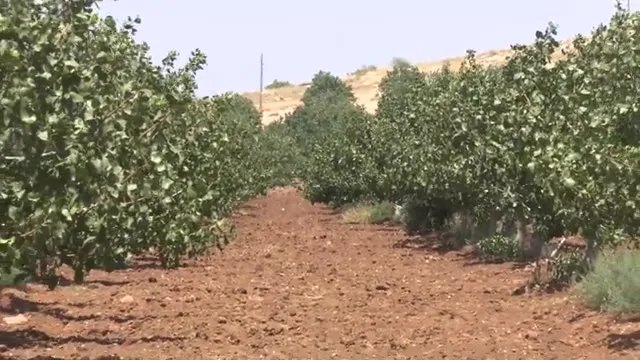
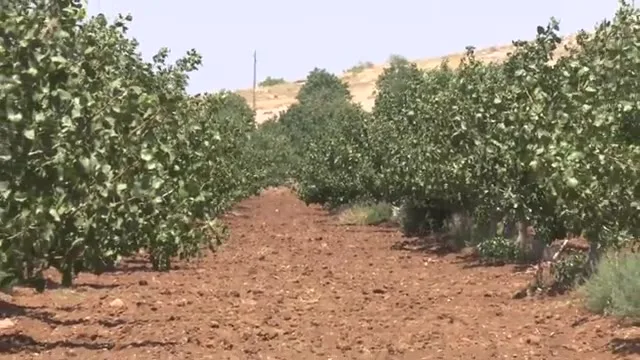
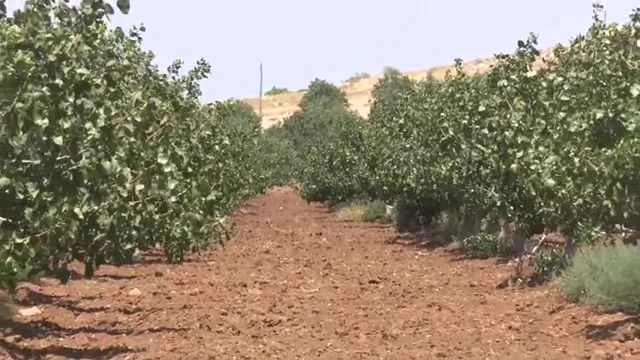
In this episode of the Success in Agriculture program, we are in a young pistachio orchard about 12-14 years old in the Arıkdere neighborhood of the Karkamış district of Gaziantep. On this land, which the orchard's owner Mr. Erol set out to cultivate inspired by the success he saw from his uncle, Mehmet, the trees will give their first pistachios next season under the guidance of the regional dealer Bozgeyik Tarım and AgroTroia's agricultural engineers. In this article, we address, for the benefit of farmers, Karagöz formation in young trees, pest and disease control, planting and climate requirements, and the contribution of a correct nutrition program to early yield.
What is Karagöz formation in young pistachio trees
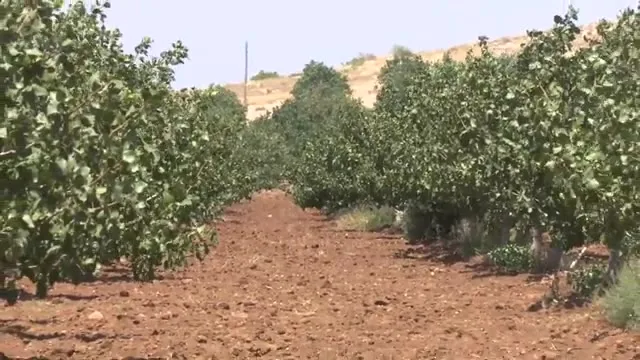
In pistachio, the Karagöz is the fruit bud that will bear the next year's fruit. In young trees, the formation of these buds depends on the shoots reaching maturity without remaining empty. The shoots that developed this year in the orchard have caught up with the main branches and even reached the same thickness; 10-12 buds have formed on each branch, and a significant portion of them have turned into Karagöz. Achieving at 14 years of age this yield level, which could normally be obtained at 20 years, is the result of seeing a large number of Karagöz per branch on the trees.
In the region, the sudden cold spells during the spring period can leave the internodes empty instead of turning the shoots into Karagöz; this leads to the failure of fruit buds to form. When the plant's condition is kept strong, the shoots remain in place, the vascular bundles fill and the buds mature. Because this year so many buds formed that the trees cannot carry them all, Karagöz thinning is planned for next season in order to set healthy fruit.
Prominent pests in pistachio
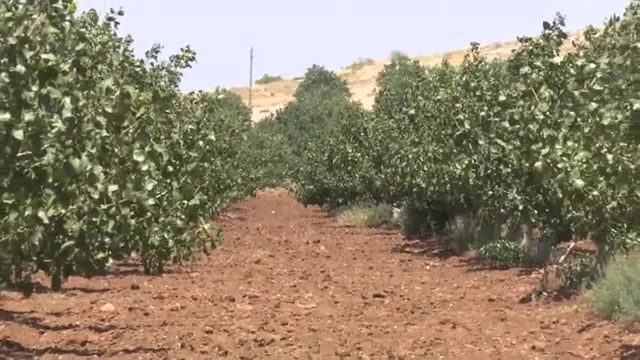
There are several main pests that must be controlled in young orchards. Foremost among them is the pistachio psylla (pisilla); this pest, which causes damage through sucking, leaves a sweet secretion on the upper surface of the leaf that causes sooty mold. Because the spray loses its effect once the secretion completely covers the leaf, control must be carried out before it is too late.
The second important pest is capnodis, also known as the root borer. Its larva enters the roots from the part near the trunk, and a single capnodis can destroy even a large 30-40 year-old tree. Since direct control against the larva is not possible, control during the adult stage is essential; in addition, avoiding excessive tillage of the soil near the trunk prevents damage to the roots. The Karagöz borer is another pest that stands out in these orchards, occurring intensively, producing one generation per year and causing damage in a short time.
Diseases in pistachio and control methods
Three main diseases stand out in pistachio: karazenk (Septoria leaf spot), internal kernel blackening of the fruit, and phytoplasma, which has become widespread in recent years. Phytoplasma closes the vascular bundles in the cortex layer, causing dieback and root collar rot; it can lead to the gradual complete drying of the tree. For this disease, only the trunk section is sprayed twice with 500 cc of Activo and 5 cc of phosphoric acid added to the backpack sprayer, and good tillage of the soil also supports control.
Karazenk, on the other hand, is a disease with a fungal agent that, in periods of increased humidity and temperature, forms spots on the lower and upper surfaces of the leaves, similar to the ring spot in olive or anthracnose in walnut; as it progresses it causes early leaf drop and yield loss. Copperas, applied in time against karazenk, both strengthens the shoot mechanism and, by opening the vascular bundles, supports shoot and Karagöz formation. Thanks to the approximately 5 percent copper, organic acid and nutrient elements in its content, Copperas acts systemically and also prevents internal kernel blackening of the fruit.
Pistachio cultivation: planting, climate and irrigation
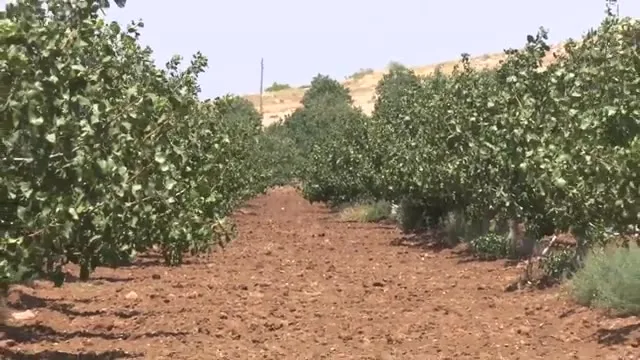
The orchard planting spacing was planned at 8 by 8 meters; this layout is quite suitable in terms of the rows closing up after a few years. The depth of the planting hole should be at least 1.20 meters; in fact, in holes dug up to 1.5 meters, pistachio takes root more easily and forms a healthy trunk structure with quality shoots. Because pistachio is a desert plant, the mechanism of rapidly bursting into shoots after being cut, as in olive or walnut, does not apply here.
In terms of climate, pistachio wants dry and hot summers and cool winters with harsh cold. It requires about 900-1000 hours of chilling below 7 degrees Celsius; mild weather of 20-25 degrees during the flowering period and hot weather of 40-45 degrees in summer accelerate Karagöz maturity. In irrigation, pistachio completes its maturity with 450-500 cubic meters of water per year; because excess water leaves the shoots empty, 400-450 cubic meters is considered ideal. Since water that descends to the groundwater provides no benefit, water given during the spring period in a way that does not contact the trunk is more effective.
Early yield through pollination and the nutrition program
Pistachio is a dioecious plant; the male and female reproductive cells are found on separate trees, which is why planting male varieties in the orchard and wind pollination are essential. Four male varieties are used in the region: Uygur, Göktürk, Ohadi and Kaşka. Uygur is the earliest-blooming variety and its effective period is short; Göktürk and Kaşka are in a more mid-early position. When the four varieties are used together, the pollination period is extended as one finishes while another opens. With the effect of the prevailing westerly winds as well, whereas one male tree per 25-30 trees used to be recommended, today it is advised to reduce this ratio to one per 12-16 trees. In orchard establishment, using the drought-resistant clonal Ucube rootstock instead of local rootstocks such as mastic, terebinth and bıttım also shortens the grafting period.
The key to early yield is well-timed irrigation and foliar nutrition. Because pistachio likes calcareous soils and cannot take up most of the fertilizer applied to the root in soils with a high calcium carbonate content, foliar nutrition comes to the fore. In this orchard, Copperas was applied at least three times after harvest, and the plant's condition was secured with phosphorus and activator support. Nutrition is completed at the end of September to the beginning of October and the trees are put to rest; this ensures homogeneous awakening during the spring period, which directly and positively affects fertilization and Karagöz formation.
AgroTroia products featured in this episode
- Copperas — a systemic product used against karazenk and internal kernel blackening of the fruit, containing approximately 5 percent copper along with organic acid and nutrient elements; it stands out in the post-harvest foliar nutrition program.
- Activo — an activator that supports resistance to stress conditions and is used together with phosphoric acid in trunk spraying for phytoplasma control.
In young pistachio orchards, success is achieved by bringing together correct planting, timely pest and disease control, balanced irrigation and a regular nutrition program. This orchard in Karkamış is a fine example showing that the yield obtainable in 20 years can be achieved at 14 years of age with the right care and nutrition program.
Source: AgroTroia – "Success in Agriculture" program, sponsored by AgroTroia.