
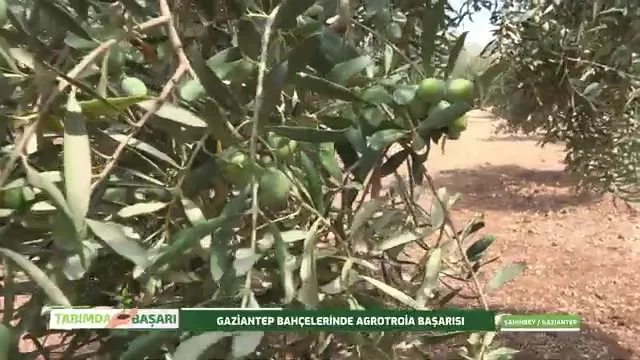
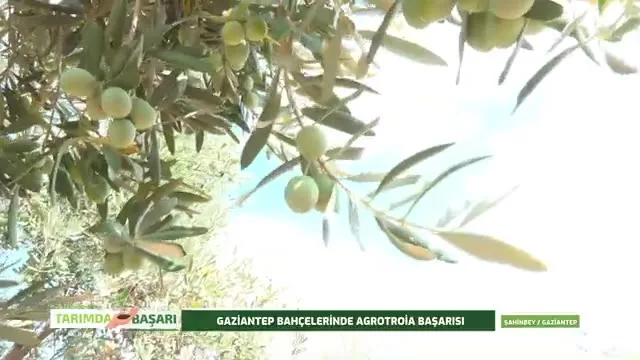
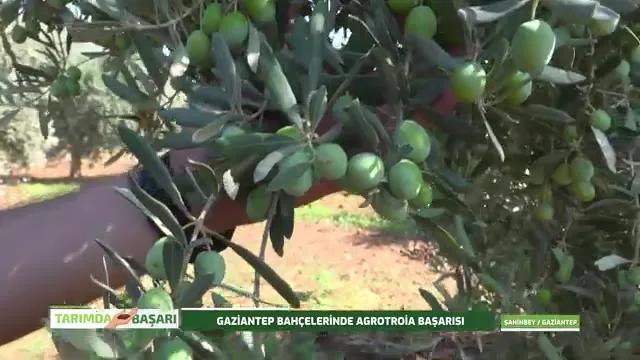
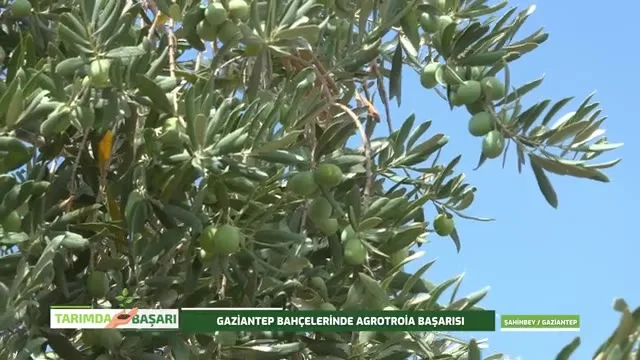
In this episode of the Success in Agriculture program, we are at an olive orchard in the town of Burç in Şahinbey, Gaziantep. In a year when almost nowhere in the region could a single kilo of olives be found, when frost dried out the trees, this orchard has a real yield. Producer Harun, who has used AgroTroia products for seven years, together with AgroTroia board member Umut Dönmez and regional agricultural engineers Cemal Kurt, Simge, and Nuh, explained how this year's harvest was saved with a correct olive nutrition program.
Having a yield in this orchard while there are no olives in the region
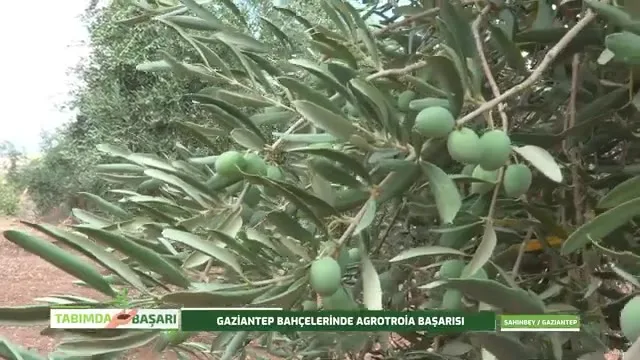
This year, between frost and drought, olive production in Gaziantep and its surroundings dropped significantly. While many trees in the same plain set no fruit, the trees in this orchard, where filming has taken place for four years, are full. Producer Harun says he was able to save his olives this season only by spraying four times, otherwise the leaves would have completely dropped. Frost affected this orchard too; although the yield is halved compared to last year, there is a crop well above the regional average. The engineers emphasize that this is the result of regular care and nutrition spread over years: working with a producer who knows the product and does not skip the program is what makes the difference here.
The effect of frost on olives and protection with Copperas
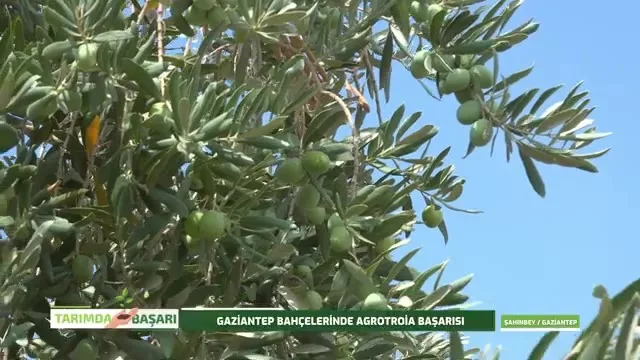
Engineer Nuh explains that when olives are exposed to cold below -4 degrees for a long time, the plant freezes, drops its leaves, and cracks form in the trunk. These cracks are seen especially in orchards where nitrogen is applied excessively and early, where early fertilization is done. Here the secret of the matter is an application that coats the leaf surface and the pores (stomata). Copperas coats the tree from the outside, preventing seasonal events such as frost and heat from damaging the plant from within. Thus both this year's fruit and the shoot tips (claws), which are next season's fruit buds, stay alive. The engineer shows on site that a frozen claw would be brown or black, whereas the claws in this orchard are still alive and green.
Correct irrigation and pre-frost application
One of the most critical steps in reducing frost damage is irrigation. Regional engineer Cemal Kurt draws attention to the importance of applying water from the soil rather than by sprinkling: when water moves to the tree, the tree's water pump works and the plant does not freeze inside, so bursting and cracking are largely prevented. Sprinkling over the branches, on the other hand, caused more damage in many orchards. Protective applications made one or two days before the frost arrives prevent most of the frost damage. In the long term, the preferred irrigation method in olives is drip; it is far more efficient than flood and sprinkler irrigation because it delivers both the water and the desired fertilizer to each tree homogeneously and in a balanced way.
Orchard establishment and sapling planting distances
Engineer Simge says that a healthy olive orchard is determined as early as the establishment stage. The most common mistake is dense planting: in orchards planted at narrow spacings such as five by five, air circulation weakens and diseases such as peacock spot spread rapidly from tree to tree. Instead, wide planting distances such as seven or eight meters are recommended. Applying humic acid to support rooting when planting saplings strengthens the tree's root development; because the brain of the tree is its root, and a well-nourished root means a more productive tree in the following years. Selecting a variety suited to the region's climate and bottomland is at least as important as the planting distance; the wrong variety or excessively dense planting can result in uprooting years later.
Harvest and correct storage in olive oil
Good olive oil begins with a good harvesting process. The mixing of fallen olives—struck by the fly, anthracnose, or stem fungus—with sound produce, and keeping them for days in airless sacks, causes the olives to oxidize, the acid level to rise, and the polyphenols and nutritional value to drop. For this reason, olives should be pressed without being kept too long. As for storage, olive oil must absolutely not be kept in plastic or fiber containers; plastic both imparts its own odor to the oil and raises the acid level in an airless environment. Correct storage should be done in chrome, stainless steel containers. Cans that have previously held water and rusted should also not be used, as they spoil the taste and quality of the oil.
AgroTroia products featured in the episode
- Copperas – provides protection against frost and seasonal stresses by coating the leaf surface and the pores.
This orchard, which set fruit in a year when frost struck the entire region in Gaziantep Burç, shows what a difference well-timed nutrition, irrigation from the soil, and protective pre-frost application make when they come together. Success in olives requires holistic planning, from orchard establishment to sapling planting, from irrigation to harvest and oil storage. The AgroTroia team reminds that, at every stage from orchard establishment to nutrition, it is only a phone call away from the producer.
Source: AgroTroia – "Success in Agriculture" program, sponsored by AgroTroia.