
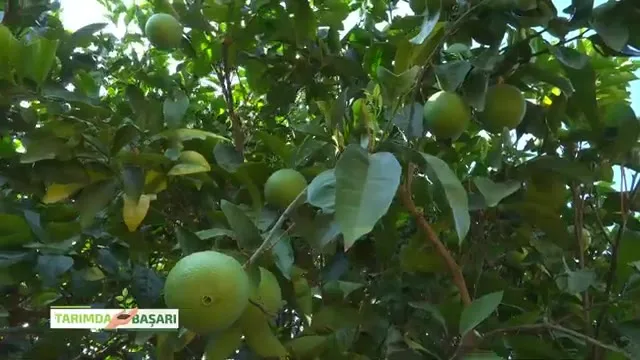
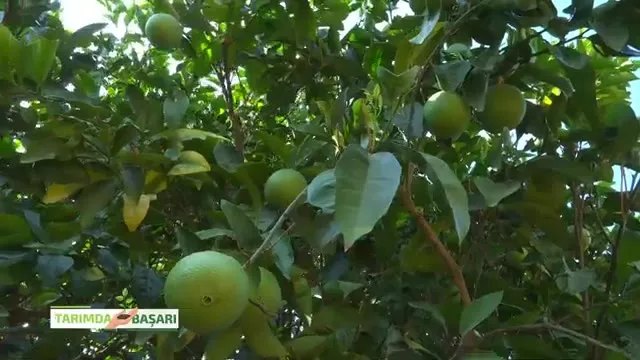
In this episode, we meet in the citrus orchard of orchard owner Karani Şıkaroğlu in the Finike district of Antalya. The AgroTroia team, accompanied by board member Umut Dönmez and technical director agricultural engineer Nuh Bey, evaluates the success story of a producer whose trees had reached the point of being cut down—in the orchard he took over from his father-in-law—within the framework of a correct nutrition program for the Washington Navel variety orange. The subject of this article is how, over the roughly five years of this work, the orchard recovered despite heavy twig blight pressure and the agricultural frost that struck the region this year.
From an orchard slated for cutting down to a success story
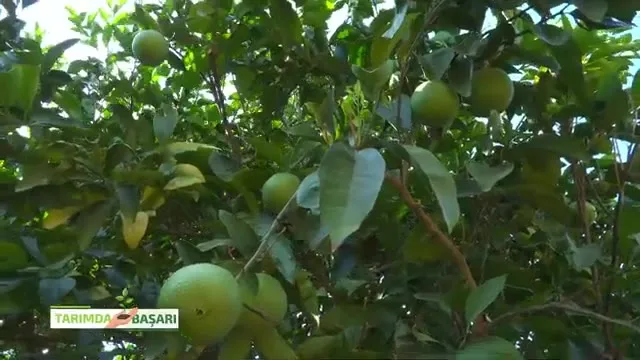
Karani Bey's orchard has been working with the AgroTroia team since 2020. When the orchard was first entered, it was at the point of drying out, loss, and cutting down the trees; the uprooting of trees grown over years was on the agenda. The producer met the company at a fair through the guidance of a friend in İzmir, after which Nuh Bey saw the orchard on site. The assessment made at the time was clear: just as the problem did not form in a single day, its solution should not be expected in a single day either. The producer agreed to this patient process and carried out the applications to the letter. In the end, the trees that seemed doomed to uprooting, into which years of labor had gone, were saved; the orchard was brought to a certain point over a three-to-four-year process. The principle of obtaining much yield with few inputs, following the produce, and working with people who do their job properly forms the essence of this story.
Twig blight disease and its working mechanism
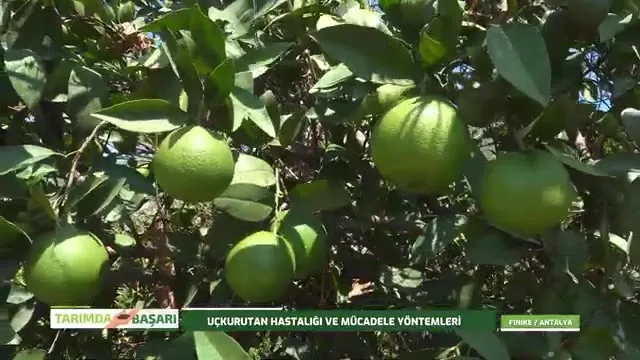
The orchard's main problem is twig blight disease in citrus; its agent is the fungal-origin Phomopsis fungus (Phomopsis citri, as it is called in the literature). Against this disease, no matter where in the world you go, no fungicide solves the problem at its root; therefore, to combat it, one must know the disease's working mechanism. Most producers carry out control after fruit set; the correct way, however, is to combat it in the period when the air is between 1 and 28 degrees—that is, from late September to late May. The clear definition of the disease is this: drying occurs about three fingers from the front row, and the stem remains on the fruit and branches as it is and rots. While the leaf does not drop in nitrogen or iron deficiency, these symptoms are seen in twig blight; for this reason, mistaking the disease for a deficiency and giving unnecessary iron or nitrogen both results in wrong nutrition and unintentionally increases the disease.
Pruning, copper, and correct timing
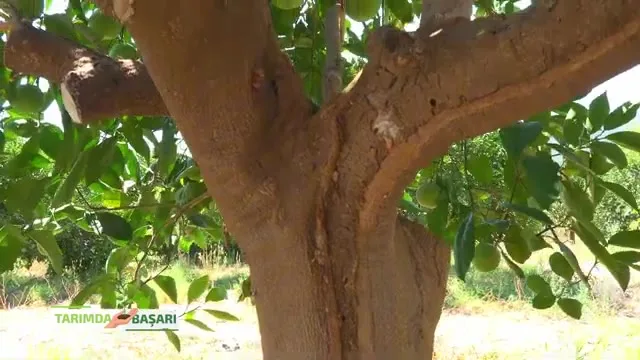
One of the most critical mistakes in control is mistimed pruning. In orchards where twig blight is present, pruning should be done before the air temperature rises above 35 degrees—that is, around mid-June; otherwise the disease is spread by the producer's own hand. Because no pruner sterilizes the tool when moving from tree to tree. The most common mistake is to prune rapidly with the harvest in early November, during the period when the disease peaks. In the citrus and olive group, which does not drop its leaves, producers were dissuaded from using Bordeaux mixture; metallic coppers are preferred instead. Ensuring air circulation between the trees facilitates control in the summer period when humidity rises. If trunk cracks occur above the root collar and turn into gummosis, after a while the conduction tubes become blocked, and if no intervention is made, tree deaths occur by the end of the second year.
Strengthening through nutrition and trunk application
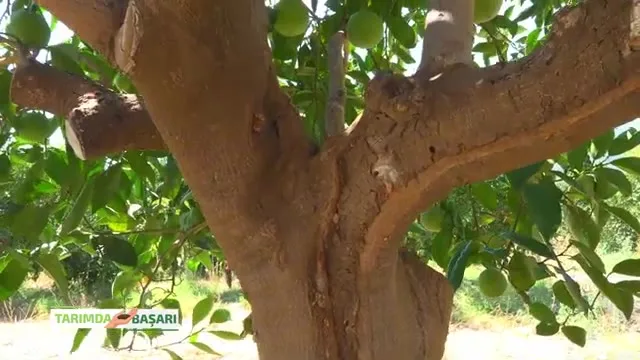
AgroTroia's approach is built on nutrition, not protection: a strong and healthy tree does not get sick easily, and when it does get sick, it recovers more quickly. With this holistic approach, when the tree is kept strong, it also fights the disease itself. Karani Bey personally carried out the trunk application with two products called Fosforiko and Activo three or four times within the first year with a backpack sprayer; over the years this dropped to one or two applications a year as needed. The supplementation done with licensed fungicides for twig blight was also continued with Nuh Bey's guidance. At the beginning of each season, upon the producer explaining the condition of the orchard, the technical team prepares a nutrition program—that is, a prescription; the products are applied in order. Although the disease was not completely eliminated in this process, it was largely brought under control, the transport in the trunk was increased, and the twig dieback was largely resolved.
Agricultural frost, climate, and caliber in Washington Navel
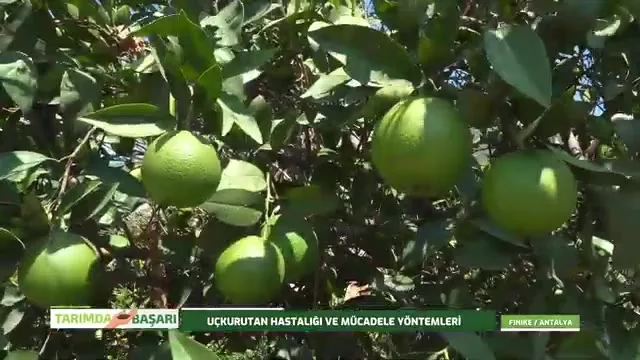
The Antalya region experienced the driest climate of the last 93 years this year; a frost event not seen for 60 years occurred. Because heat came first, followed by frost, excessive leaf drop was encountered. However, because the plant condition was sound, the trees recovered quickly after the frost, and while there was no fruit in many regions, fruit was set in this orchard. With global climate change, in citrus, which requires humidity, the humidity rate and calibration run in direct proportion. In terms of frost resistance, the satsuma mandarin is the most resistant; it is followed by the Mexican lime, orange, and kumquat, while the most sensitive are the grapefruit and citron. The Washington Navel, the dominant variety in Finike, is a mid-early orange; it is harvested in November. Calcio was applied so that the fruit would not drop early from the branch and would firm up, and Fors to give it caliber. The nutrition program also includes products such as Copperas and Aminado.
AgroTroia products featured in the episode
- Copperas — one of the company's fundamental products; one of the starting products of the nutrition program in citrus.
- Activo — used together with Fosforiko in trunk application to strengthen the tree against twig blight.
- Calcio — the calcium source that supports the firming of the fruit and prevents it from dropping early from the branch; it is also preferred in avocado.
- Fors — the product added to the prescription to give caliber, that is, fruit size, in oranges.
- Aminado — among the products that support the tree's development in the nutrition program.
This orchard visit, made in this fertile land of Finike that produces 200-250 thousand tons of oranges annually, shows that correct nutrition, correct timing, and conscious cultural measures make a difference even in a challenging disease such as twig blight. As a nutrition company, AgroTroia helps bring the disease under control by strengthening the tree's immunity. Karani Bey's recovery of his orchard, which he was told to give up on, with the correct program, and his goal of marketing the real Finike orange—known for its slightly sour taste that leaves no membrane on the throat—under the umbrella of a cooperative, also summarizes the program's true purpose: to show the struggling producer how the job is done.
Source: AgroTroia – "Success in Agriculture" program, sponsored by AgroTroia.