


In this episode, AgroTroia's "Success in Agriculture" program was a guest in a hazelnut orchard in the village of Abalı in Adapazarı, Sakarya. With AgroTroia's regional dealer Hüseyin Yalçın, agricultural engineers Cihan, Reşat, and Burcu Özkan, and the participation of hazelnut growers brother Nurettin and his neighbors, plant nutrition and pest and disease control in hazelnuts were addressed within the framework of the hazelnut nutrition program. The shoot took place during a challenging season of abnormal rains, hail, and extreme heat, at a time when powdery mildew had come to the fore in hazelnuts.
Soil pH and Orchard Establishment
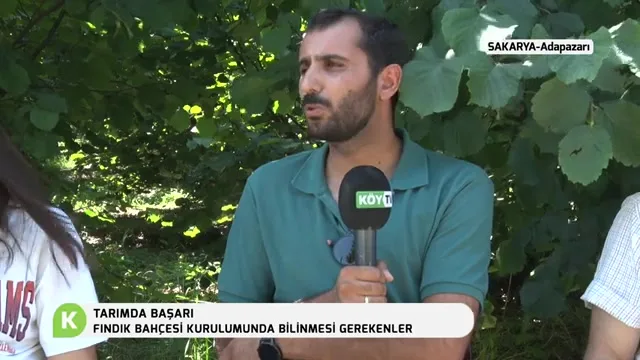
The hazelnut likes somewhat lighter soils and a pH level of 6-6.5. In acidic, humid soils where leaching is heavy, it is recommended to raise the pH slowly by applying agricultural lime once every 2-3 years. Soil being rich in organic matter supports rooting and development; in places with a high water table, hazelnuts should not be planted because root rots are inevitable. One of the most emphasized points in the program was the drawbacks of dense planting: the idea that "the more I plant, the more I get" is wrong. Dense planting blocks air circulation, creating an environment for diseases such as powdery mildew, hazelnut weevil, and bacterial blight; for this reason the distance between and within rows must be kept sufficiently wide.
Fighting Powdery Mildew

Because of the year's conditions, one of the biggest problems in hazelnuts was powdery mildew. In a season when the plants did not get sufficient chilling, followed by a long and humid period, fungal infections peaked. The disease first appears on the leaves as if dusted with flour, and in later stages causes brown spots on the husks and leaves and early leaf drop. In control, cleaning basal shoots, not letting the weeds grow tall, and ensuring the plant can breathe through pruning are critical. In nutrition, Copperas is never left out of any application in hazelnuts; with the copper in its content it keeps the plant resistant to fungal diseases, while with amino acids, organic acids, enzymes, and proteins it systemically opens the vascular bundles and increases shoot and fruit set. Where powdery mildew is intense, Liquid S80 sulfur is used together with Copperas in at least two of the applications, both suppressing powdery mildew and supporting healthy development.
The Brown Marmorated Stink Bug Threat

The program drew attention to the brown marmorated stink bug invasion that seriously threatens the Black Sea region. This pest, which enters via trucks through Batumi, causes significant damage in hazelnuts. As a solution, an urgent call for action was made to the scientists and authorities who have long worked on the natural enemy (the egg parasitoid wasp) that China and the USA are also working on. The stink bug lays its eggs on the undersides of leaves around late May-June; in hazelnuts it first causes deformity and drop, then lowers quality with brown spots inside. Monitoring and control should not be neglected during the July-August period.
Full Hazelnuts Through Foliar and Trunk Applications
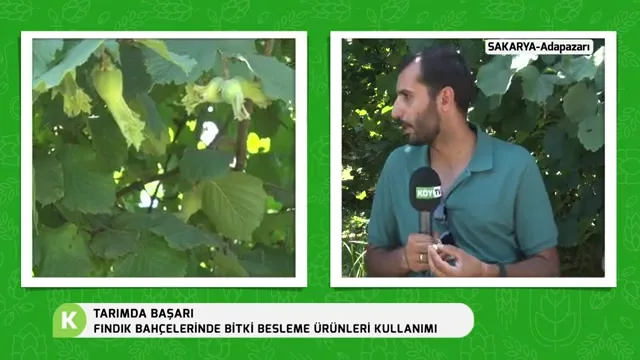
In hazelnuts, about 4-5 foliar and 2 trunk applications are made per year; Copperas is included in every program, and after the cobs set, foliar potassium fertilization begins. With Fors used from the base, the normal soil fertilization cost is halved, while the filling of the hazelnut and yield are supported. According to Reşat, in orchards where good results were obtained from the applications, the cracked hazelnuts are full and clean inside; this means sales at a better price. After harvest, with Copperas, phospholic, and zinc applications, the tree is prepared for the coming year. At the foundation of this whole approach lies strengthening the plant's immunity so that it develops healthily without catching any disease. Indeed, it was observed that the 6-year-old hazelnuts in the orchard developed very rapidly for their age, and that thanks to the trunk and upper applications and Fors, the gaps had closed.
AgroTroia products featured in this episode
Copperas - copper nutrition, resistance to powdery mildew, and shoot support
Liquid S80 - liquid sulfur support in fighting powdery mildew
Fors - nutrition that lowers soil fertilization cost and fills the kernel
This orchard, densely planted yet developing strongly for its age even under harsh climate conditions, shows what a difference correct soil management, regular powdery mildew control, and programmed foliar-trunk applications make in hazelnuts. Conscious and planned nutrition is the soundest investment for both this year's and next year's yield.
Source: AgroTroia - "Success in Agriculture" program, sponsored by AgroTroia.