
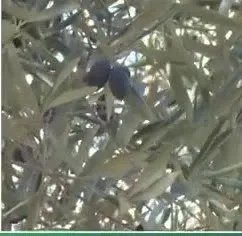
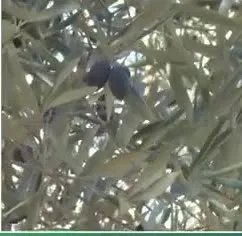
In this episode of the "Success in Agriculture" program broadcast on AgroTroia, we visited a quite sunken olive grove in İzmir, surrounded by pine forest and receiving sunlight for only one to one and a half hours a day. Together with grove owner Cihan Öztuğlu, AgroTroia dealer brother Zafer, and agricultural engineer Yusuf, we saw firsthand the result achieved on this challenging land—where no crop had been taken for years—thanks to the AgroTroia olive nutrition program. This grove, which lay empty the previous year and shed its leaves to peacock spot, was filled from top to bottom with olives despite a dry season.
The Ten-Year Struggle of a Sunless Sunken Grove
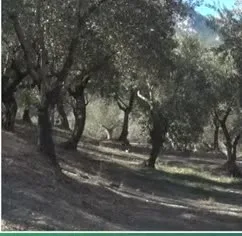
This sunken part of Cihan Öztuğlu's roughly 50-decare land is the lowest point in the region. With a stream behind it, where even the morning dew does not dry until noon, and receiving almost no sun, this spot is extremely unsuitable for olives. Brother Zafer relates that he once even objected to planting olives here, protesting "have you nothing better to do." Because it is an old olive grove, the trees are not in rows but planted in a mixed and dense fashion; the branches have grown into each other, and the grove has become quite closed in. Brother Cihan expresses that for ten years he could not take a proper crop from this sunken area, missing out on an income equivalent to about 25 tons of olives each year. At the root of the problem lie peacock spot, which rages in the constantly damp environment, and the leaf drop associated with it.
A Nutrition Approach Against Peacock Spot and Leaf Drop
For years only copper applications were made to this grove, but no result was obtained. Last season Brother Cihan decided to try a different path: he added phosphoric support to the Copperas application. Although Brother Zafer was hesitant at first, he accepted that this combination, which rests and restrains the tree, was sensible. The 2023-2024 season, in the words of agricultural engineer Yusuf, was a year when peacock spot peaked even in the easiest lands. Despite this, not a single leaf dropped in Brother Cihan's grove; in fact both this year's crop and next year's shoots could be seen on the trees. While neighboring groves were left leafless like brush, the trees in this sunken spot were filled with olives.
An Application Calendar Repeated Every Thirty Days
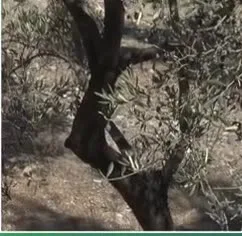
Behind this result lies a regular and frequently applied program. Starting after harvest, Cihan Öztuğlu made a total of five applications, one every 30 days. In the mixture he used about 1 kilo of Copperas and 250 grams of phosphoric per 100 liters of water; after the olives finished, he added supplements such as boron-zinc and seaweed. Yusuf emphasizes that they normally recommend three to four applications in the olive nutrition program from autumn through flowering, but that in such closed and damp groves the number of applications can rise to five or six. What matters is not disrupting the once-a-month, i.e. every-30-days, rhythm and absolutely not missing the first application; because peacock spot begins to cause destruction the moment it enters the grove.
Fighting Branch Canker and Verticillium Wilt
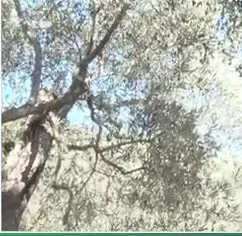
Yusuf explains that, alongside peacock spot, which most affects olive yield, branch canker and verticillium wilt are also prominent problems. Branch canker can easily be carried from tree to tree, especially at pruning time, by tools and equipment; for this reason, the cleanliness of pruning tools and a Copperas-plus-phosphoric application after pruning are of great importance. Against verticillium wilt, which is seen as hopeless, Brother Zafer shares a practical method: instead of immediately cutting the drying branch, place half a kilo of Activo and half a kilo of phosphoric into 16-17 liters of water in a backpack sprayer and thoroughly soak the trunk up to where it forks. He states that within about 10-15 days the tree begins to put out fresh shoots, and that by applying the same treatment to the nearest diseased tree, the disease can be driven away from the grove. In these specific interventions, products such as phosphoric and Fors also come into play.
The Copper Toxicity and Bordeaux Mixture Debate
The topic of Bordeaux mixture was also put on the table in the program. Yusuf says that in the soil and leaf analyses that reach them, they see serious copper accumulation and copper toxicity in groves where Bordeaux has been used for years, and that copper locks up other elements in the plant. He emphasizes that because Copperas has a low copper content it does not cause toxicity or exhaustion in the plant, that the product is not made of copper alone, and that it keeps the plant continuously working with an almost doping-like effect. In this approach, summarized by the slogan "we protect while we feed," the aim is to nourish the plant while protection is provided. The pre-winter advice is clear: make the first copper application before temperatures fall, and plan the base fertilization in the January-March period based on the soil test results.
AgroTroia products featured in this episode
- Copperas — the program's core product in peacock spot, branch canker, and copper-based protection.
- Activo — support product used in trunk application against verticillium wilt.
- Fors — a complementary product featured in specific applications.
Cihan Öztuğlu's grove shows that the right plant nutrition program makes a difference even in the most challenging conditions. The expectation of about 20 tons of olives this season on a sunless, sunken land where no crop had been taken for ten years is an important success story for both the farmer and AgroTroia. For growers with similar streamside, shaded, and damp lands, this example demonstrates the value of applying the program without giving up and without interruption.
Source: AgroTroia – "Success in Agriculture" program, sponsored by AgroTroia.