
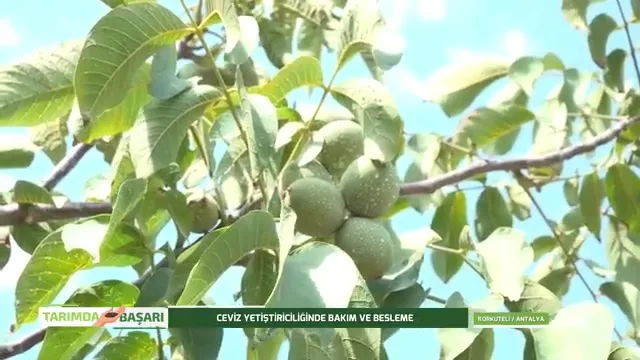
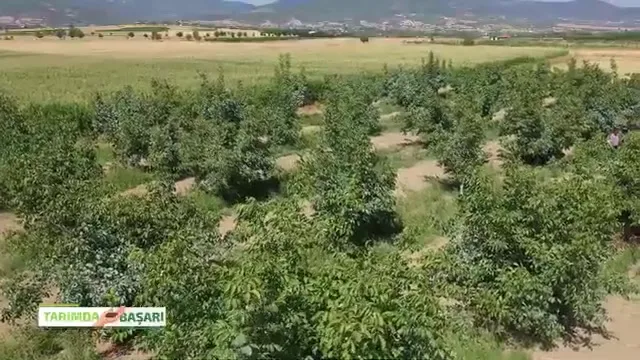
In this episode, AgroTroia's "Success in Agriculture" program visited a walnut orchard in the village of Yelten in the Korkuteli district of Antalya. In this orchard at roughly 1000 meters altitude, where a continental climate prevails, the walnut nutrition program, pruning, and fertilization were discussed from A to Z with the participation of AgroTroia board member Umut Dönmez, farmer Hasan Uçar, Antalya regional dealer and agricultural engineer Mustafa Kemal Özen, farmer Hüseyin Kule, and country technical director and agricultural engineer Nuh Karacaoğlu. In walnuts, in which Turkey has invested heavily in recent years, the mistakes made from sapling selection to orchard establishment and their solutions were addressed through the region's success story.
Walnut Production in the World and in Turkey
In the program, the table was examined based on 2021 FAO data: about forty percent of world walnut production takes place in China, eighteen percent in the USA, followed by Iran and Turkey; Ukraine also follows this ranking with around four percent of production. In Turkey, Bursa ranks first, followed by Mersin. Although as a country we produce roughly 275-280 thousand tons of walnuts per year, we are a net importer in terms of domestic consumption. While demand for sugary foods and products such as pestil and köme, together with the prominence of the walnut against cholesterol and for health, increases domestic consumption, incorrect practices in production widen this gap.
Correct Variety Selection According to Altitude
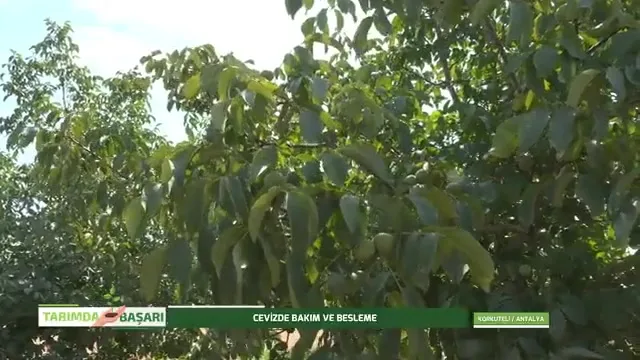
The most emphasized topic in the episode was variety selection. Chandler is itself a clonal rootstock and a fast-adapting variety; its distinguishing features are the cross mark on its trunk and that it sets fruit at the shoot tip. However, it is not correct to grow Chandler at high altitudes, for example at 1600-1700 meters. In this orchard the producer took precautions and planted Fernor instead of Chandler; because Fernor wakes later, it can escape late spring frosts and set its fruit despite this year's frosts. As a general rule, while Chandler can be grown up to 1200 meters altitude, it is recommended to switch to Fernor and Howard at higher elevations; Howard, by variety, better closes the fruit suture that Chandler struggles to close and is larger in structure. Examples such as saplings planted as a certain variety in the Bandırma area turning out to be seedling rootstock years later show how critical sapling and variety selection are.
Irrigation, Drainage, and Orchard Establishment
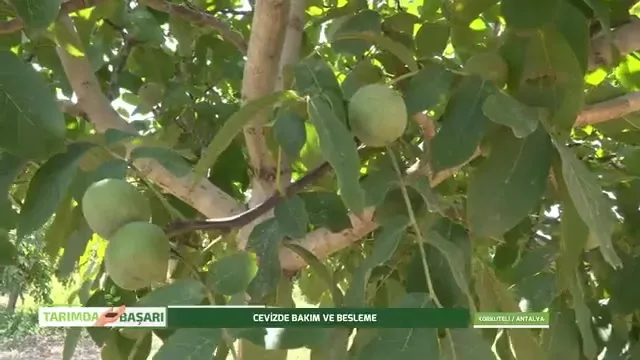
The walnut is a species that wants deep-structured soil but does not like lowland. In the program, it was explained that the most common mistakes are establishing an orchard on lowland, incorrect irrigation, and inadequate drainage. Soil that can drain the applied water a day later is suitable for walnut growing; water pooling in the field and excess moisture are the fundamental source of bacterial and fungal diseases. In densely planted orchards, growth should be expanded not within the row but between rows, that is, across the width of the field; this allows the trees to spread sideways, which also provides an advantage in fighting fungal diseases and pests. Pollinizer selection is also important: although Chandler is monoecious, because it can fertilize only about thirty percent of the fruit it sets up to the age of seven, a suitable pollinizer is essential.
Resistance to Diseases
The prominent diseases in walnuts are verticillium, phytophthora, anthracnose, and bacterial blight. Dealer Mustafa Kemal Özen reported that in difficult walnut diseases such as verticillium and phytophthora, they have achieved success with Activo phosphoric applications; he added that they were also satisfied with the same products for verticillium wilt in olives, which they applied to the trunk and roots. It was emphasized that fungal diseases spend the winter in the soil, at the tree's root collar, and in pruning waste, which is why the fight should be moved to autumn rather than spring; it was noted that fungicides used after the disease arrives often create only a temporary effect. Copperas, meanwhile, stood out as the fundamental nutrition that farmers trust in every crop and that keeps the plant's resistance up.
Pruning and Yield
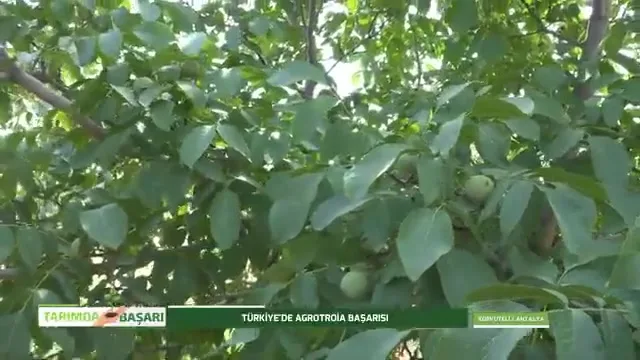
It was explained that producers who cannot cope with pruning due to dense planting eventually tend not to prune the walnut at all, and that this is wrong. The correct approach is to leave a single leader after crown formation and thin out the branches competing with the leader, and to clean out branches showing disease and dieback. After this cleaning, it was stated that the walnut does not need much pruning; pruning that opens the orchard sideways improves both pest and disease control and set quality together. For this specific orchard, it was found that set and sizing were good and there was no cold damage; however, incorrect crown formation, mild water stress due to the late arrival of the irrigation period, and a degree of potassium deficiency were detected.
Featured AgroTroia products in this episode
- Copperas - the fundamental nutrition that strengthens the plant's resistance in walnuts and many crops, trusted by farmers for years
- Activo - the solution-focused nutrition used with phosphoric applications in difficult diseases such as verticillium and phytophthora
This orchard in Yelten, Korkuteli, showed that healthy, frost-resistant walnut production is possible even at high altitude through correct variety selection suited to the altitude, careful irrigation and drainage, and scheduled nutrition. Success in walnuts comes from knowing the soil and the region, choosing the right variety, and keeping the plant's resistance up in every period.
Source: AgroTroia – "Success in Agriculture" program, sponsored by AgroTroia.