
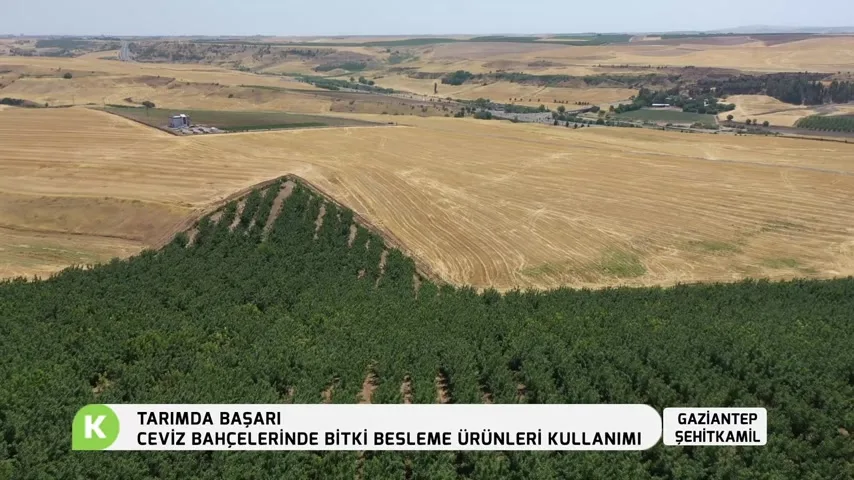
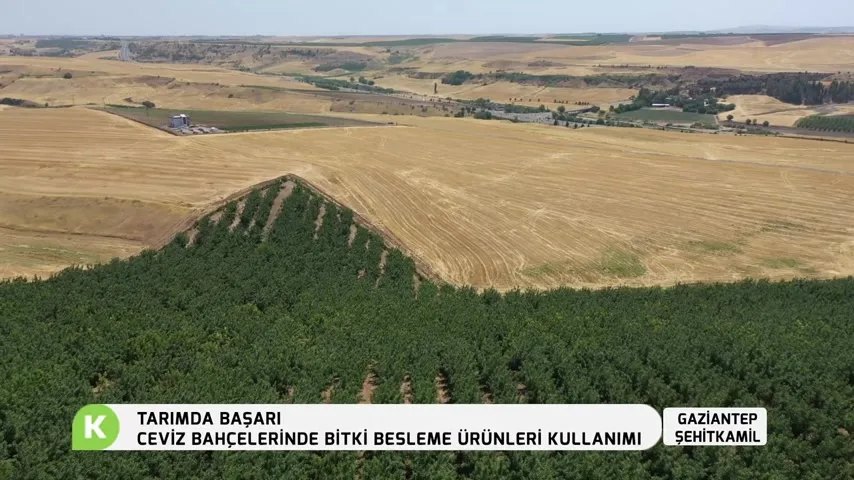
In this episode, Success in Agriculture is in a walnut orchard in Karakesek, Gaziantep. Together with AgroTroia's Antep dealer Hüseyin Bozgeyik, farmer Nurettin Kereci, and agricultural engineers, we discussed pest and disease control in walnuts, trunk applications, and the walnut nutrition program. A technically dense episode describing how orchards considered for removal recovered in a single season.
Orchards saved when they were about to be removed
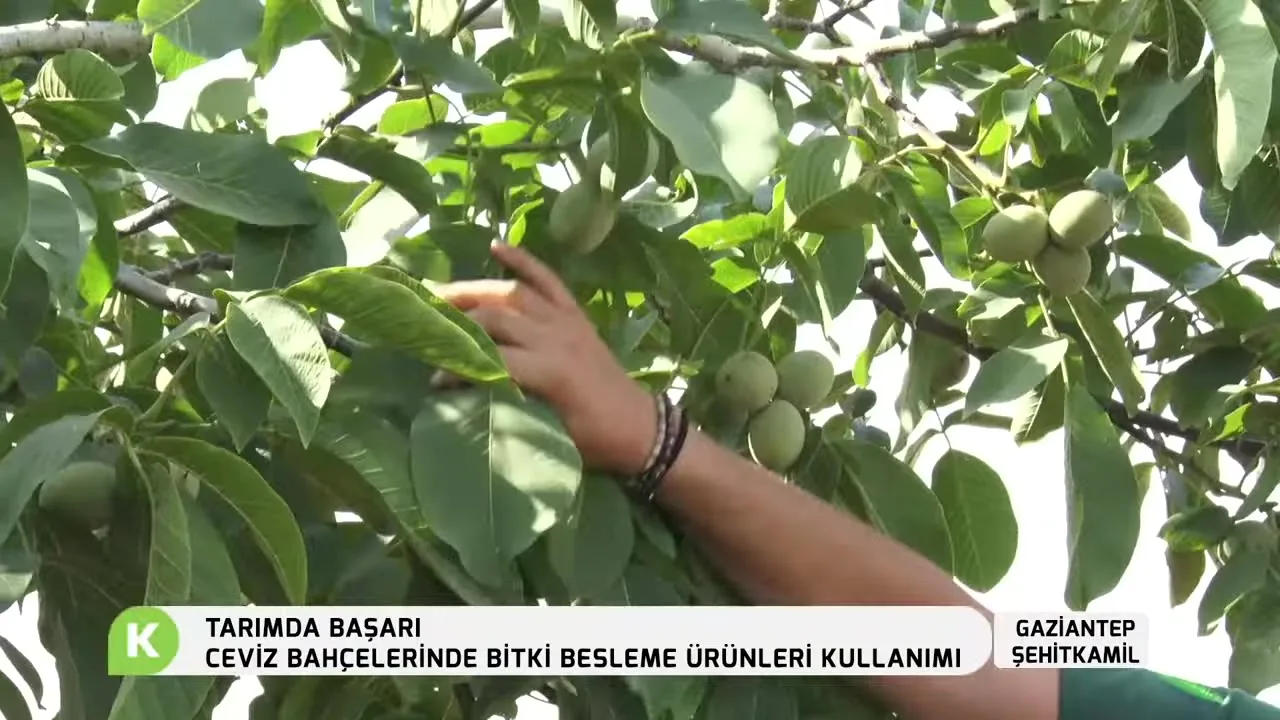
The starting point of the episode is orchards that had reached the stage of removal due to dieback. In farmer Nurettin Kereci's orchard there was oozing on the trunks; after soil and fertilizer analyses, with a trunk application and foliar nutrition program, the trees recovered and yield increased significantly despite being struck by hail twice. In short, the picture is this: correct diagnosis and programmed nutrition can return an orchard that seemed lost back to production.
The 4 main diseases of walnut and their control
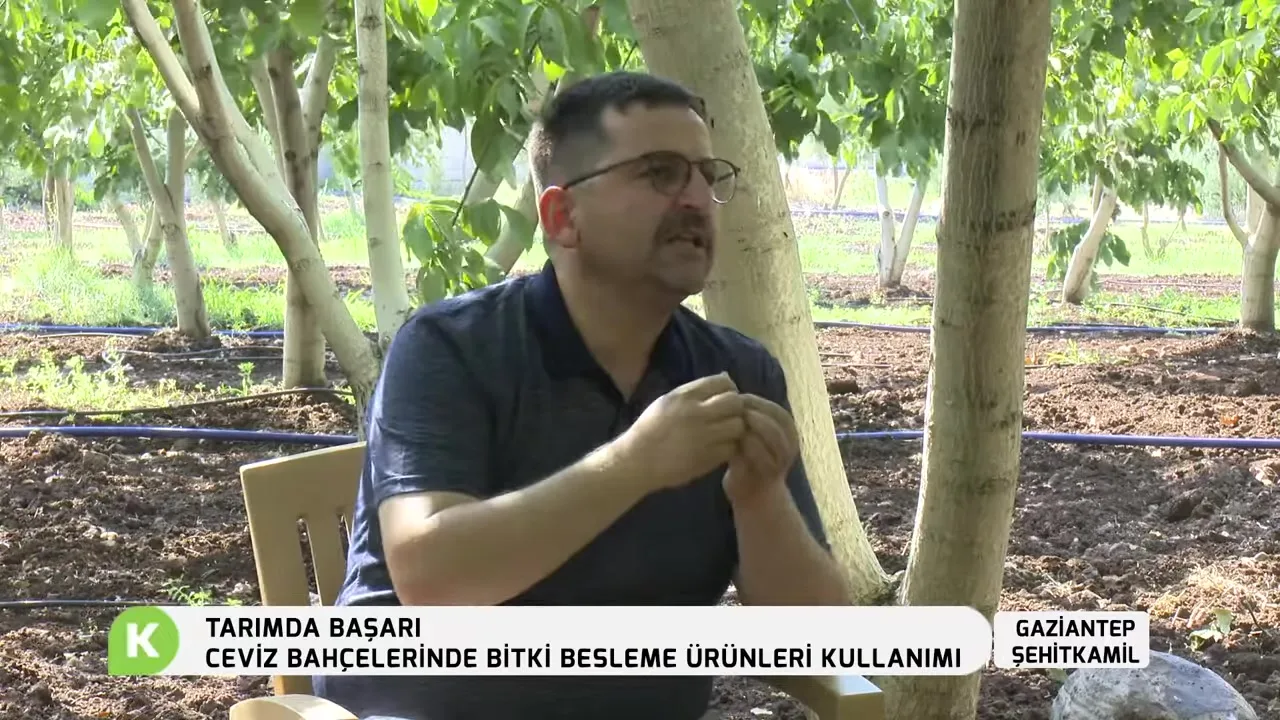
Anthracnose: A fungal disease caused by the air (humidity and temperature). Control must begin when the leaves reach the "cat's ear" stage; adding Copperas to applications along with licensed fungicides increases the movement of the product into the plant and its duration of effect. While spraying, it is important to also spray the leaves that have fallen to the soil, because the disease re-infects from there.
Bacterial blight: Shows itself with black ooze on the trunk and blockage in the vascular bundles. Applying Activo + a phosphorus product to the trunk with a backpack sprayer helps the vascular bundles re-form healthily and the tree recover quickly.
Root rot (phytophthora): Seen in soils with a high water table that are hard and have low permeability. By applying about 500 cc of Regülatör per decare while the soil is dry, the hard structure is broken up and water is allowed to drain downward.
Pests: Codling moth, leopard moth (zeuzera), and aphid are the main pests. Pheromone traps (about one per 5 decares) are used for both mass trapping and detecting the pest; against aphids, natural enemies such as ladybugs are supported.
AgroTroia products featured in this episode
Copperas - systemic in effect; supports shoot growth and homogeneous bud break, and strengthens disease control together with fungicides. Applied after harvest together with Boron + Zinc.
Activo + a phosphorus product - for trunk application against bacterial blight.
Regülatör - supports root health by increasing permeability in hard soil.
Fors - for calibration and quality, at a low dose from the soil/foliage.
Homogeneous bud break: the key to success in walnuts
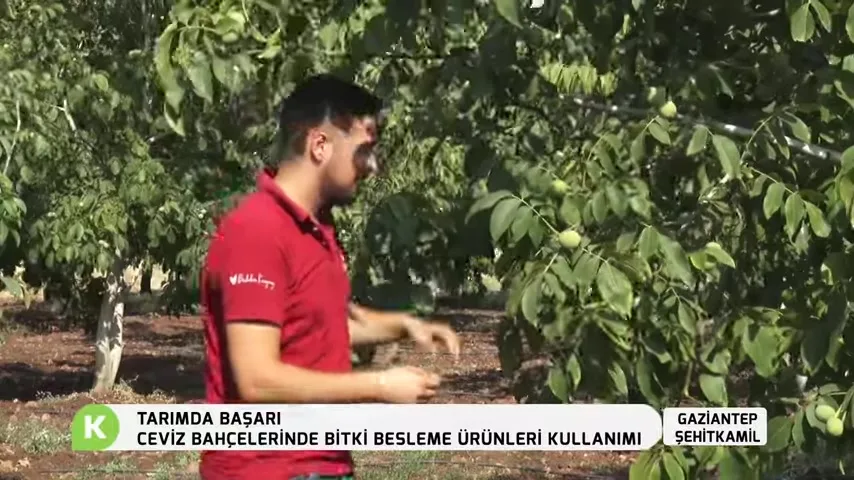
One of the main indicators of yield in walnuts is the homogeneous bud break of the trees. It is recommended not to use nitrogen supplements such as ammonium sulfate, urea, or nitrate during the bud break period - especially in low-lying land and orchards with dieback, if there is bacterial blight, phytophthora, or heavy anthracnose. Instead, homogeneous bud break is achieved foliarly and at low cost with the systemic Copperas.
Points to watch in orchard establishment
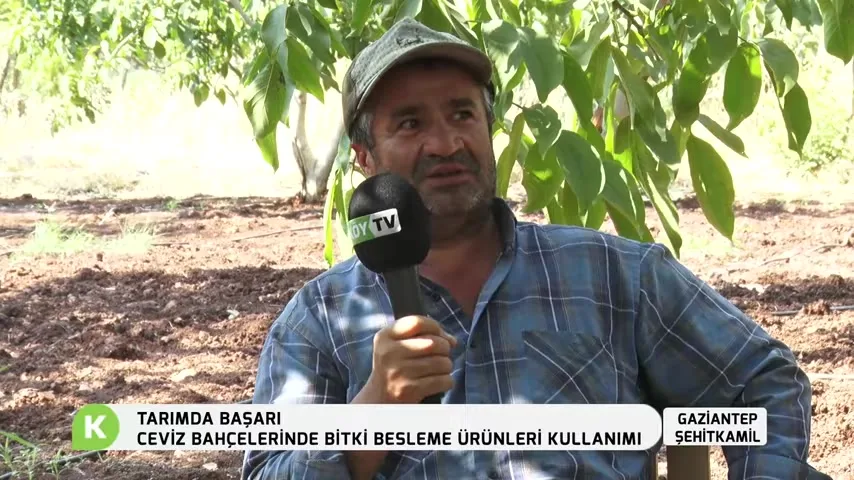
In walnuts, a correct start prevents half of the problems that will arise later. The criteria underlined in the episode: choosing a variety suited to the altitude (the late-breaking Fernor in high, cold regions, Chandler at milder altitudes); soil that can drain water within 24 hours, with low clay content, sandy-loamy, and rich in organic matter; a water table at least 5 meters deep; avoiding frost pockets; and planning planting density so as not to disrupt air circulation.
Pruning, irrigation, and drainage
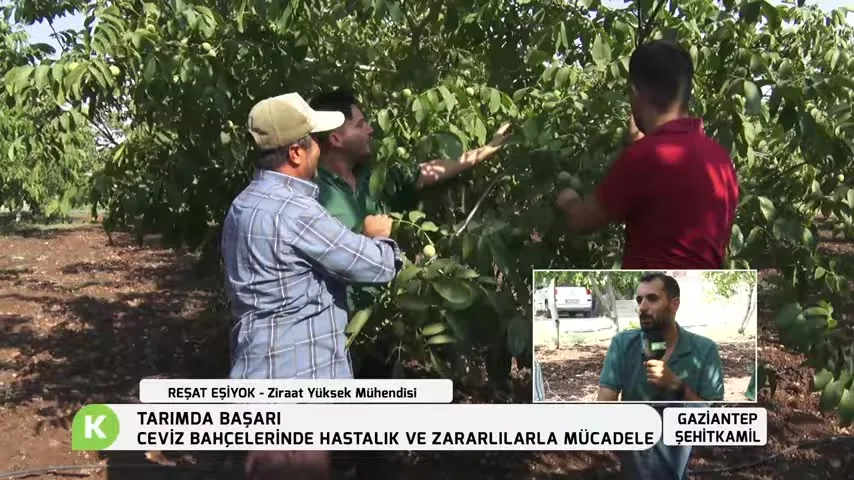
In pruning, the leader branch is selected correctly and the side shoots are thinned; tools are cleaned with bleach when moving from tree to tree. In irrigation, instead of the "how many hours should I water" approach, the plant's water demand is observed: when the leaf blade begins to shrivel and curl over, it means it is time to irrigate. Because over-irrigation triggers phytophthora, water is applied at the canopy drip line, at least 1.5 steps away from the trunk, and good drainage is essential.
Source: AgroTroia - "Success in Agriculture" program, sponsored by AgroTroia.