
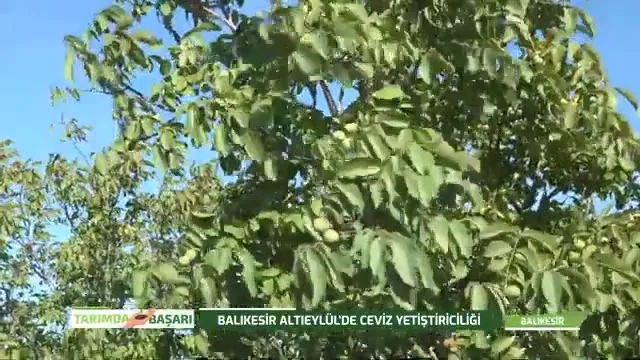
In this episode, AgroTroia's "Success in Agriculture" program was a guest in Altıeylül, Balıkesir, in the Ertuğrul neighborhood. Farmer Cengiz Çavuş, who has been engaged in walnut growing for about 13 years, manages his 44-decare orchard together with his family. There are around 950 walnut trees in the orchard. The Çavuş family, who struggled for a long time with disease and low-yield problems, had even considered uprooting the orchard until they met AgroTroia. In this episode, Zafer Dönmez from AgroTroia and young agricultural engineers explained the key points of nutrition and disease management in walnuts.
The Walnut Success Story Experienced in Balıkesir
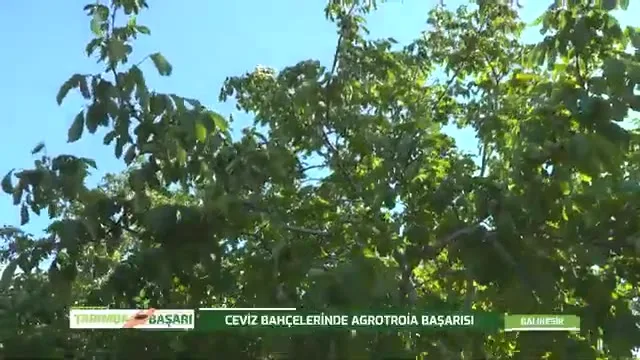
Cengiz Çavuş recounts that they had their first contact with AgroTroia by phone. In the first conversation, a free fertilizer was sent to him; even though Çavuş wanted to pay for it, the company accepted this as a gesture of introduction. The grower, who did the first trial on peppers, noticed a visible change within a week. Upon this, he switched completely to AgroTroia products on tomatoes, peppers, quince, and walnuts. The family's son Ahmet Çavuş and his wife Serpil Çavuş also witnessed this transformation. Serpil Çavuş expresses that at a point when she had lost hope in farming and decided to quit, she became motivated again with the right program, and that the orchard and the crops recovered. The region's plateau air and fertile soil provide the family with both livelihood and peace. The team also emphasizes the principle of not selling the grower more product than necessary; the items the tree really needs are recommended, so the farmer both feeds correctly and avoids unnecessary expense.
The Importance of Irrigation and Orchard Establishment in Walnuts
The agricultural engineers emphasize that the walnut is a species very difficult to grow under dry conditions. Because the walnut is a tree that loves water, dry production is almost impossible, especially in arid climate conditions. For this reason, it is of great importance during the orchard establishment phase that the trees not be planted too densely, so that each tree reaches sufficient water and nutrients. In a period when climate conditions are becoming harsher and rainfall and the amount of organic matter in the soil are decreasing, correct irrigation planning forms the foundation of yield. In Cengiz Çavuş's orchard too, reorganizing the irrigation program was an important part of the improvement in caliber and fruit quality.
Distinguishing Anthracnose and Bacterial Blight
There are two important diseases that walnut growers frequently confuse: anthracnose and bacterial blight. Anthracnose is of fungal origin; it causes local yellowing on the leaf and local browning followed by blackening on the fruit. Bacterial blight, on the other hand, is of bacterial origin and starts on the leaf first as brown spots, distorting the leaf's shape as it progresses; when it passes to the fruit, a blackening starting from the tip is seen. The bacterium enters the plant through stomata and wounds and spreads rapidly in wet, humid environments; in humid orchards it shows itself within a few weeks of entering the orchard. Making the correct distinction between the two diseases is a precondition for effective control.
Method of Fighting Bacterial Blight
AgroTroia recommends a practical application against bacterial blight, which reveals itself with the yellow discharge seen on walnut trunks. With a mixture prepared by adding half a liter of Activo and half a liter of Fosforiko to the backpack sprayer, only the tree trunks are washed. This application helps reopen the conductive bundles clogged due to the disease. With correct timing and regular follow-up, the effect of bacterial blight in the orchard can be markedly reduced. The engineers remind that, alongside disease control, the plant's nutrition also directly affects immunity.
Walnut Nutrition and Caliber Increase with Force
Nutrition in walnuts is carried out with about 7-8 applications throughout the year, starting from the end of harvest until the next harvest. At the end of harvest, a zinc-heavy Nitrozinc application is made together with Copperas; this serves to increase the immunity of trees that come out of harvest tired and wounded against fungal diseases and to form the next year's fruit buds. During the fruit development period, the fruit's caliber and yield are raised with a Force application; the application made when the walnut kernel reaches consistency increases kernel plumpness. Orchard supervisor engineer Nuh reports that with regular Force use the proportion of empty and half-full fruit decreases, and the caliber becomes homogeneous as if it came out of a lathe workshop. He adds that pollination is also decisive in yield, that the walnut is a species needing cross-pollination, and that with the correct program, orchards started at the end of harvest can reach high per-decare yield bands.
Featured AgroTroia products in this episode
- Activo — together with Fosforiko in the trunk-washing application against bacterial blight.
- Copperas — for end-of-harvest immunity and fruit bud formation.
- Nitrozinc — end-of-harvest zinc supplementation.
- Force — for caliber, yield, and kernel plumpness during the fruit development period.
Cengiz Çavuş's experience clearly shows what is possible in walnuts with the right program and the right products. The grower states that the fertilizer cost dropped by one-third, while in return he achieved roughly a 30 percent increase in yield this season. This result, obtained despite frost damage and drought, gives hope for the coming seasons. The family, who gave up uprooting the orchard and gathered a crop they had not seen in 12 years, is living a story of production regained in terms of both cost and morale.
Source: AgroTroia – "Success in Agriculture" program, sponsored by AgroTroia.