
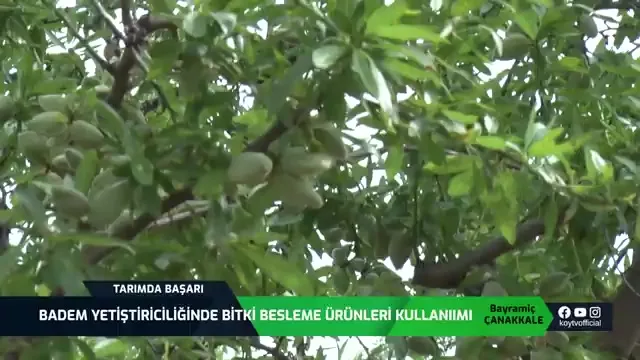
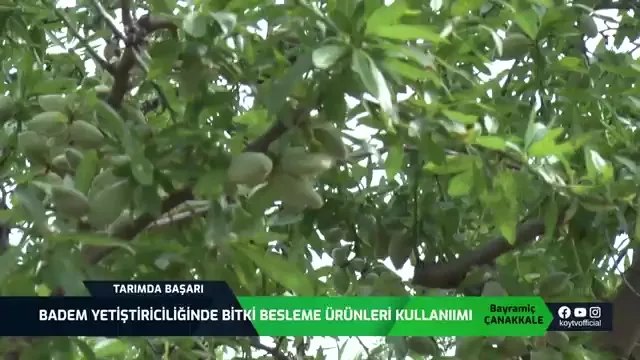
In this episode of the "Success in Agriculture" program, broadcast on AgroTroia screens with AgroTroia sponsorship, we are in the Çanakkale Bayramiç region. Adnan Ökşen, an electrical engineer, has turned the journey he began with 20 decares in 2015 into a farming operation of roughly 300 decares today; together with his family he produces almonds, walnuts and apples. In this episode we address the subject of care and nutrition in almonds together with AgroTroia engineers and the regional MSN Tarım dealer. Here is a success story achieved under tough conditions with a conscious nutrition program.
An almond story stretching from Istanbul to Çanakkale
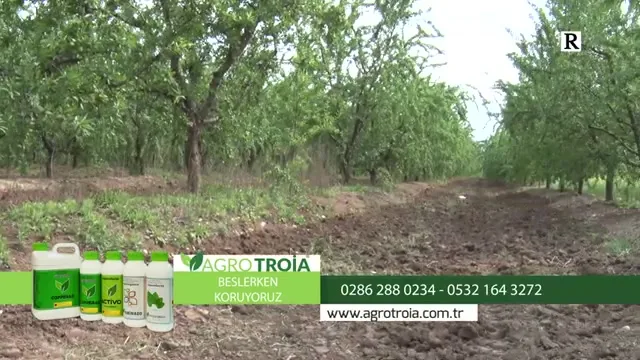
Adnan Ökşen got acquainted with agriculture in 2015 at a friend's invitation. The first thing he did on the first 20 decares of land he bought was to hire a consultant and have a soil analysis done. This approach, coming from engineering discipline, is a step most growers skip. When the soil analysis showed the land to be quite calcareous, his consultant and his agricultural engineer friends in Adana recommended the almond; the fact that the almond has few diseases, relatively easy care and a broad import-dependent market reinforced this decision. Ökşen established his orchard by planting trees in 2017 and 2018 and has today reached roughly 6,000 almond trees in the region. Although the self-fertile Loren variety predominates, pollinizer varieties such as ferragnes and a few bee hives also contribute to the orchard to strengthen the pollination biology.
The correct approach against bacterial canker and gummosis
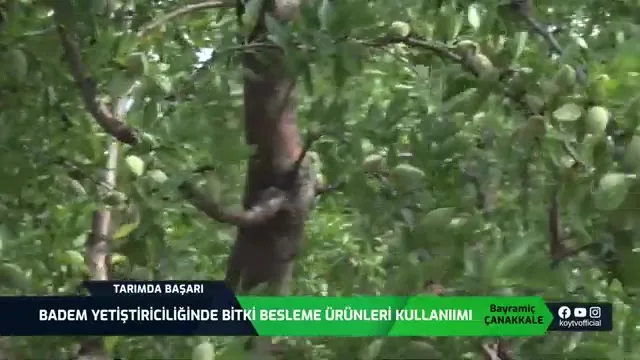
In the program, the AgroTroia agricultural engineer explained the subject of bacterial canker and gummosis, an important problem in almonds. This problem mostly arises from incorrect irrigation and the plant's roots not being able to get enough air. When the conductive tissues are blocked, the tree cannot transmit the nutrients it takes in; discharge on the trunk, brown spots on the leaves, blackening in the buds and ultimately a drop in yield appear. Among the first measures to be taken is that irrigation should be done not right at the base of the tree but from the canopy drip line. It is also critical to disinfect the pruning shears as they pass from tree to tree, not to leave pruned branches in the field, and to make copper-based applications except during the flowering period. To open the conductive tissues, work is carried out three times a year (after harvest, during the waking period and in July); in these applications, Activo opens the conductive tissues while the phosphoric application disinfects the opened tissues. When the temperature exceeds 30 degrees, no application is made.
Fighting monilia, kernel borer and other pests
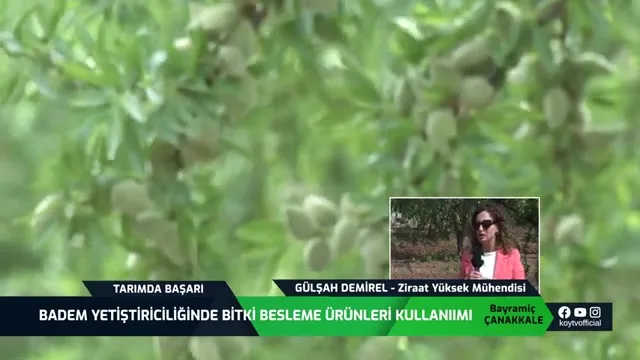
One of the biggest problems in almonds is monilia disease in the flower. This fungal disease appears at the start of flowering. Normally overcome with two applications, monilia was applied three times in this orchard as a precaution because rainfall was heavy during the flowering period. It was emphasized that in operations of this scale there is no luxury of leaving things to chance, because the smallest setback can waste the labor given throughout the year. After disease control, two applications were made for the kernel borer, with the third planned for roughly ten days later. With the warming of the weather, the fight against the aphid and red spider also comes into play. The kernel borer control is carried out three times, and once the shell begins to harden, the danger in this respect is largely eliminated.
Frost damage and what to do afterward
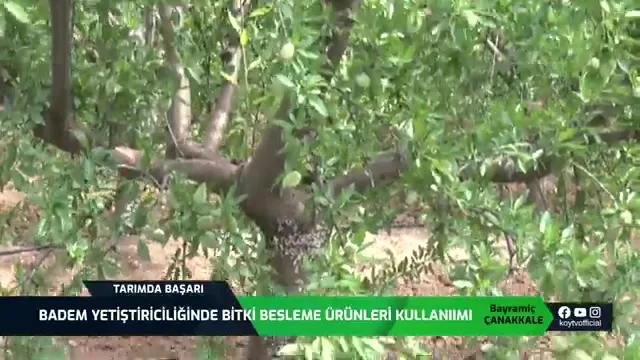
Frost, like with the apricot, is one of the things the almond struggles with most. Frost damage in late-opening flowers and formed fruit can directly cause blackening inside the almond. In this orchard, frost and hail together struck the flowers last season; in an orchard with a 43-ton crop, production fell to the 18-20 ton band. Even so, compared to other orchards in the region, this is considered a significant success. This season, to protect against the false spring effect and prevent flowers from opening early, a Copperas and phosphoric application was made twice. It was shared that insurance is also an important safeguard against frost risk, and that the insurance the orchard owner took out under Tarsim at least covered the input costs in past years.
Nutrition program based on soil analysis
The almond is a species that is not very selective in its ecological requirements, that loves sandy and moderately calcareous soils but dislikes drainage problems. Because the soil structure in this orchard is hard, the ridge planting technique was applied; in this way both the drainage problem and the risk of suffocation were eliminated. The nutrition program is based entirely on soil analysis. Since the analysis showed pH to be high, sulfur application will be started first through drip irrigation; this will then be followed by ammonium sulfate, urea and potassium, with foliar applications completing this process. After fruit set occurs, to ensure kernel filling and increase caliber, 2 liters of Aminado together with 1 kilo of Fors per decare through drip is recommended. AgroTroia sends reminder messages to its growers during the application periods according to the plant pattern; however, the most important point emphasized here is to act according to the actual condition of the orchard, not the calendar in the message. The flower application should not be made before flowering is complete, two applications should not be combined haphazardly, and an engineer should be consulted in every uncertain situation.
Featured AgroTroia products in this episode
- Copperas — used in protective applications against false spring and early flowering.
- Activo — preferred to open the conductive tissues.
- Fors — given through drip for kernel filling and caliber after fruit set.
- Aminado — recommended together with Fors in the chelating application that supports caliber.
This orchard in Çanakkale Bayramiç is a fine example of how conscious and inquisitive growers who later became farmers can make a difference in agriculture. An operation that carries out disease, pest and frost management with discipline starting from soil analysis, working in harmony with AgroTroia's field team and the regional MSN Tarım dealer, shows that productive production is possible despite tough conditions. A correct nutrition program and regular technical support form the foundation of sustainable success in almond cultivation.
Source: AgroTroia – "Success in Agriculture" program, sponsored by AgroTroia.