
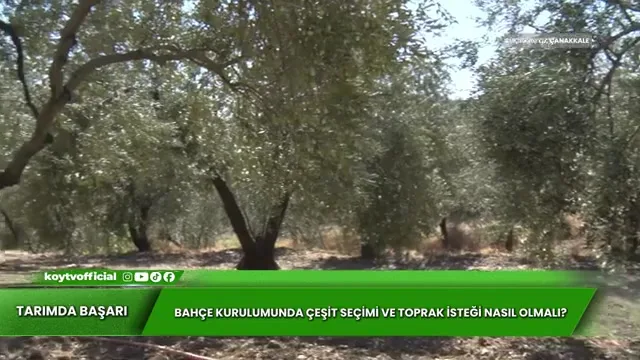
In this episode the AgroTroia "Success in Agriculture" team was at a grove that has applied the AgroTroia olive nutrition program for five years, in the Yeşilyurt area of the Küçükkuyu district of Çanakkale. The grove's owner, Yeşilyurt farmer Savaş Can, born in 1961, together with AgroTroia board member Umut Dönmez, the farmer Musa who tends the grove, agricultural engineer Yunus Şimşek, and the agricultural technician Reşat who handles the grove's care, discussed olive nutrition, grove establishment, pruning, cultural control, and post-harvest applications in depth. The program was filmed at the end of September, when the harvest was slowly beginning.
Five years of success and beating the on-year/off-year cycle
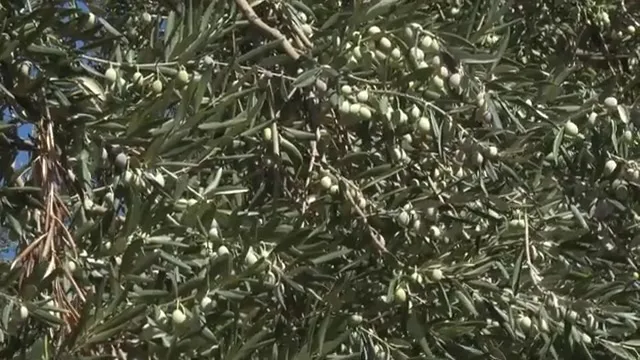
Grove owner Savaş Can was previously accustomed to an order in which olive growing was done with a pole, where in the year fertilizer was applied the crop poured off the branches and the following year the shoots broke and almost no crop remained. After watching and getting to know AgroTroia products on television, the grower, who has now left behind his sixth season, related that he now obtains similar or higher yields every year and does not experience the "on-year, off-year" problem of one year abundant, one year nothing. Umut Dönmez emphasized that the company's basic aim is to enable the farmer to earn more with lower plant nutrition costs, and that when the on-year/off-year cycle is eliminated the farmer's earnings double. The farmer Musa who tends the grove also said that he personally witnessed that a regular crop has been taken from this land for five years and that a well-tended grove clearly stands out compared to the neglected groves around it. Dönmez also noted that the ten agricultural engineers working in the field provide one-on-one, free consultancy to farmers, recommending only what the tree needs in that period—not one item more, not one item less.
Grove establishment, variety selection, and soil analysis
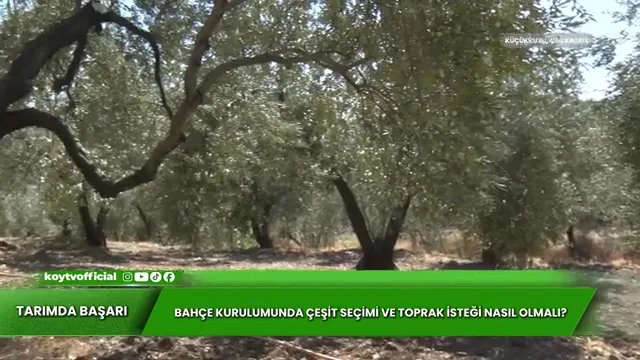
Agricultural technician Reşat explained that the first decision when establishing a new olive grove is whether to work for table olives or oil. He finds the 6-by-6-meter planting spacing ideal for the Gemlik variety for table olives, while for growers working for oil he recommends 8-by-8 in the Ayvalık variety; because Ayvalık grows quickly and closes the gaps after a while. Soil analysis must be done before planting; one should learn whether the soil is hard, rich in organic matter, water-holding, or sandy-clayey, and only after the soil is thoroughly tilled and broken up should planting proceed. Reşat said that a small amount of root fertilizer placed in the planting holes lets the sapling quickly form its root structure and hold to the soil, growing for two years without needing additional fertilizer. Yunus Şimşek also noted that growers often try only to grow the visible shoots and height while not giving enough importance to the root underground; yet the more the feeder roots develop, the more the trunk and branches thicken in proportion. He added that they use Aminado as a root fertilizer in newly established lands, supporting first the root and then shoot and branch development. Attention was drawn to the importance of control against pests such as the olive sapling caterpillar that eat the shoot tips in new groves, carried out in July-August and especially at night.
Correct pruning and healthy trunk structure
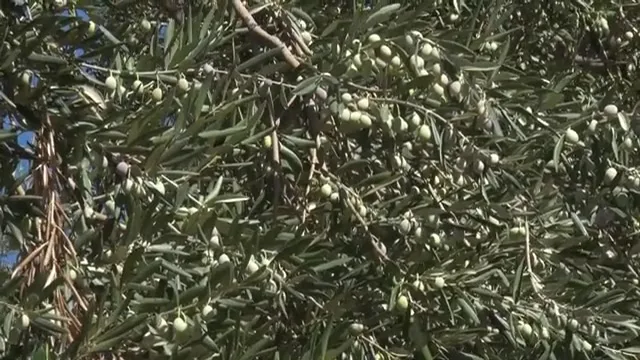
Reşat, who said pruning generally begins in February-March, explained that it must be approached differently according to variety; in the Ayvalık-type trees in this grove, the center should not be left too open. When the center is opened too much, the sun burns the main branches, the trunks darken, and after a while rejuvenation work becomes necessary. Branches that grow into each other and old branches that no longer function should be cut and alternative shoots allowed to develop in their place; branches that obstruct during harvest or spraying should also be cleared. Reşat emphasized that overly shrinking the tree in oil varieties reduces the amount of fruit and the oil obtained, and that rejuvenation should be done gradually rather than all at once. Stating that the basic rule for a healthy trunk structure is good nutrition, Reşat also added that timely control must be done against sooty mold, which blackens the trunk and renders the tree non-functional. In a well-fed and correctly pruned tree, the shoot mechanism works properly, the trunk is protected, and better fruit is obtained.
Is Bordeaux mixture and lime paste necessary?
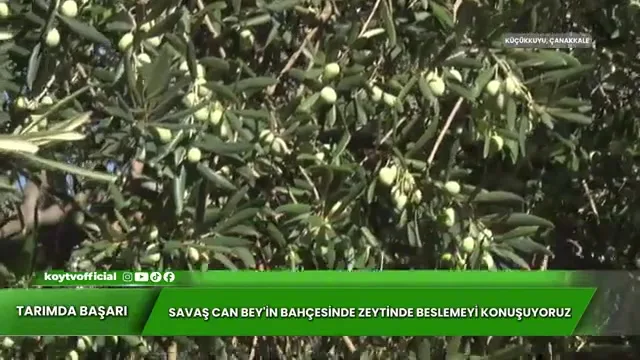
One of the most asked topics in the program was whether traditional Bordeaux mixture and lime paste are still necessary. Reşat explained that the lime paste consists of a stone-lime mixture and has no scientific basis related to nutrition; that if the order is missed during mixing it can harm the grove, and that it is often used only because its bad smell keeps pests away. He noted that Bordeaux mixture is applied mostly in winter, on the belief that by stopping the plant it provides some resistance to cold; but because it stops the plant it also blocks the shoot mechanism. Saying that these mixtures are no longer needed in groves where AgroTroia products are used, Reşat emphasized that resistance to peacock spot can be strengthened with timely control. He explained that true resistance to cold is based on correct nutrition; that when nitrogen fertilizer is used in these months, the soft-tissued shoots that form burn even in slight cold. It was stated that the Copperas product, by keeping the shoot mechanism working without stopping it, protects the plant against cold down to about minus 12 degrees and can take the place of Bordeaux mixture in fungal diseases.
Post-harvest nutrition, fruit drop, and stalk worm
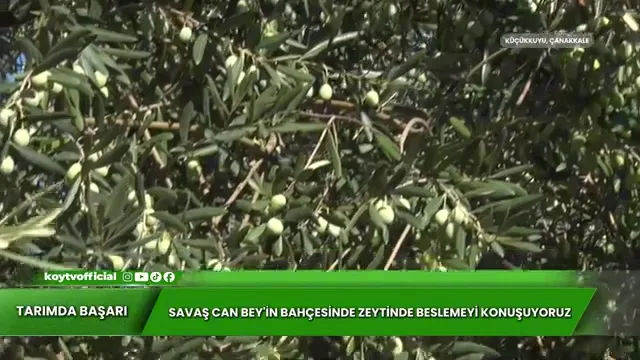
Yunus Şimşek related that AgroTroia begins each season thinking of next year's fruit, whereas many growers around close out the season with one or two applications, which wastes both labor and fertilizer. Saying that the post-harvest application is one of the most critical steps, Şimşek explained that Copperas is used to quickly heal the thousands of wounds formed on the tree during harvest and to let the tree enter winter dormancy without stress, and that a product made of the trio of boron, zinc, and manganese is used to return the plant nutrients spent throughout the season to the tree; boron is especially important in olives. Reşat summarized the main causes of olive drop: at the peppercorn stage the tree holds only as much fruit as it can feed, so correct nutrition during this period maximizes fruit set and reduces drop. It was also emphasized that if timely control is not done against the stalk worm, the olives drop as the pest enters the pit; this loss can be prevented with correct and timely control. The common message underlined by all is clear: what is taken from the tree must be returned to the tree through post-harvest nutrition.
AgroTroia products featured in this episode
- Copperas – the core product that heals harvest wounds, protects the tree against cold down to about minus 12 degrees, and takes the place of Bordeaux mixture.
- Aminado – root fertilizer that supports root development in newly established groves.
This grove in Yeşilyurt, Küçükkuyu, Çanakkale concretely demonstrated how correct grove establishment, variety-appropriate pruning, conscious nutrition instead of traditional mixtures, and post-harvest applications make a difference in olives. With regular care spread over five years, the on-year/off-year problem has been largely eliminated, and both this year's crop and next season's yield are secured. May God grant all our growers a good and bountiful harvest.
Source: AgroTroia – "Success in Agriculture" program, sponsored by AgroTroia.