
We are in a newly established almond orchard in the Karaca village of Bursa's Yenişehir district, where some trees are two and some three years old. The AgroTroia team is in the field together with the grower they have advised since the day the orchard was planted; with us are Kenan Durmuş from the dealer Bahar Tarım, the producer who owns the orchard, and the company's agricultural engineers Nuh and Reşat. In this episode we examine almond cultivation both from the grower's perspective and from a technical standpoint, within the framework of an almond nutrition program.
AgroTroia board member Umut Dönmez emphasizes that the company's fundamental aim is to leave no grower alone, to support the producer on site, and to provide agricultural consultancy. With domestic production, more than twenty plant nutrition products and over 300 thousand growers, the company aims to sustain customer satisfaction through regular field visits.
Almond Cultivation in Turkey and the World
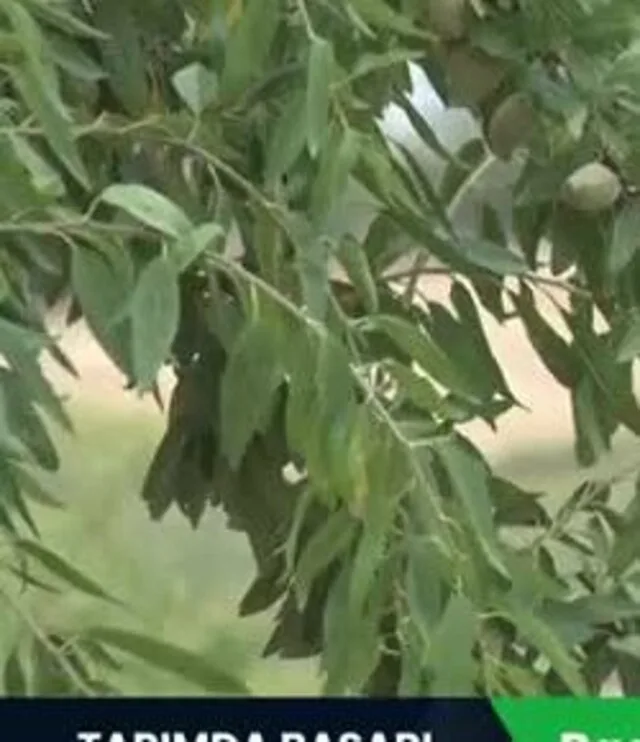
In our country, with the exception of the Black Sea Region, the large majority of soils are high-pH and calcareous; that is, basic in character. The almond is a suitable species for these soils because it is both drought-resistant and one of the leading plants tolerant of high pH. Among the regions where production stands out in Turkey are Adıyaman Kahta (a region where roughly 54 thousand decares of land have been brought into cultivation), Manisa and Şanlıurfa; the common feature of these areas is an arid climate and proximity to market. In the world, America leads in production capacity, with Chile among the prominent countries. Because Turkey falls short of meeting domestic market demand, intensive imports take place; this turns the almond into a valuable source of income for both the pastry industry and the nut sector. In our country, which suffers from water scarcity and pH problems, turning to almond production with varieties such as ferragnes and ferraduel, especially in high places at 850-900 m altitude, can put the grower ahead.
Orchard Establishment: Soil Preparation and Climate Requirements
When establishing an almond orchard, the soil structure must first be well worked. If there is a hardpan below, this layer must be broken with tillage implements such as a subsoiler, ripper or plow, and planting should begin after the soil has been crumbled and aerated. In land with a high water table, excess water at the roots leads to fungal diseases and dieback at the root collar, so yield in almonds declines. If the soil is hard and does not allow water through, planting should be done after improving it with soil conditioner products and organic matter supplementation. In terms of climate, the greatest risk is late spring frosts: because the almond is one of the earliest flowering species in nature, cold spells coinciding with the flowering period can cause serious damage. For this reason, areas with good air circulation should be chosen rather than sheltered spots; the orchard receiving the prevailing wind reduces frost risk. Taking out agricultural insurance against the danger of late frost is also recommended.
Pollination, Fertilization and Variety Selection
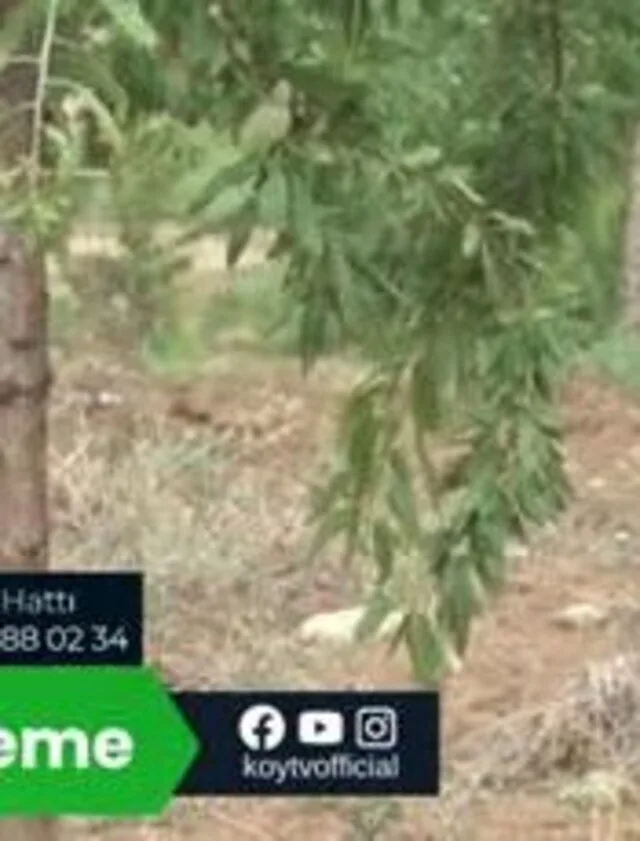
In almonds, pollination occurs through both wind and bees; as bee density increases, fruit set also increases. For strong pollination, at least five hives of bees per decare should be targeted. The old and widespread varieties ferragnes and ferraduel are varieties that pollinate each other; both are present together in this orchard. The general practice is to plan roughly one ferraduel pollinizer for every eight ferragnes. Establishing an orchard with a single variety is not correct, because neither ferragnes alone nor ferraduel alone is fertilized. There are marked differences between the two varieties: ferragnes grows spreading, holds the fruit more on the trunk and thick branches, and has a soft shell; ferraduel grows more upright, puts out more lateral branches, and has a harder shell. If pollination remains insufficient, even though fruit forms, no embryo develops inside it; these fruits, when they reach chickpea size, drop together with the kernel borer. New self-fertile varieties such as Lauranne (lowen) are also emerging, but even in these, bee density is essential.
Pruning, Planting Distance and Water Requirements
The ideal planting distance is generally recommended as five by five meters; close planting is also possible with dwarf varieties, and in large orchards where mechanical harvest is planned the row spacing should be adjusted accordingly. In pruning, the first year works toward an open trunk, reducing the upper branches to thicken the trunk; a sound trunk and root prevent toppling in strong winds. The second year, crowning begins and a modified leader training system is targeted. Intersecting male branches that hinder spraying and vigorous upright shoots should be cleaned out. In terms of water requirement, the almond demands less water than the walnut or olive. Although it can get by on rainfall in places receiving roughly 300 millimeters of precipitation a year, yield increases markedly when irrigation is applied for higher production. Because the almond tree can survive in arid regions, it is a species that can be considered for land with limited water resources.
Nutrition Program and Disease Control
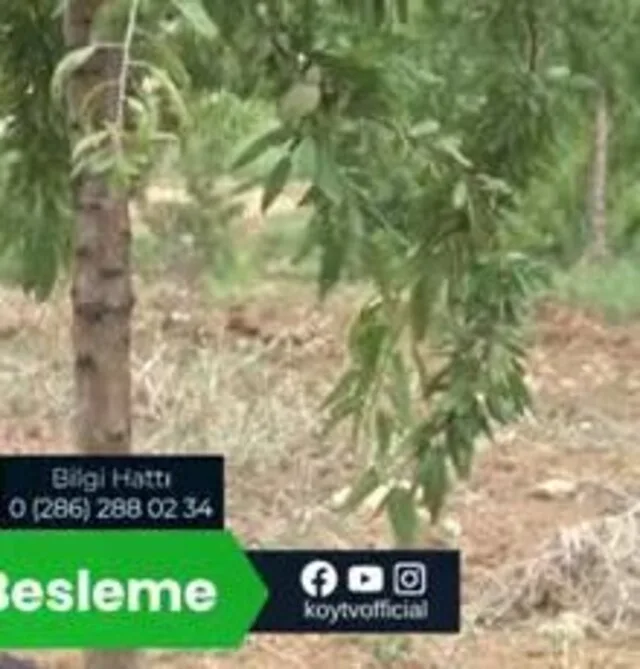
Fertilization in almonds must be planned according to the variety and the period. In late-opening, late-frost-resistant varieties such as ferragnes and ferraduel, the nitrogen in fertilizer given too early can cause early waking as the weather warms; for this reason, fertilization should be done at the earliest in early February, roughly 65-70 days before flowering. As a general rule, it is recommended to give per tree 135 grams of fertilizer multiplied by the tree's age. In high-pH soils, sulfur-containing fertilizers, products high in organic matter and humus, and zinc-containing fertilizers work well in almonds. During the flowering period, alongside copper-based preparations such as Copperas, zinc, boron and phosphorus support are given; after fruit set, the sequence of calcium, boron and nitrogen is followed. Calcium thickens the stalk and strengthens the cell wall, increasing resistance to diseases; boron supports fruit set and prevents the early June fruit drops; the nitrogen given after fruit set contributes to the formation of the next year's buds. The most important disease of the almond is bacterial spot (shot hole); the application must be made before the leaves drop. It must not be forgotten that the almond is very sensitive to Bordeaux mixture and can cause excessive drop during the flower and fruit period. During flowering, control against monilia (mummy) disease is essential; the monilia treatment must be repeated after every rain. In orchards with bacterial gummosis (canker) problems, instead of pulling out the trees, control can be carried out in place by opening the cortex layer on the trunk through autumn and spring applications.
Featured AgroTroia products in this episode
- Copperas – a product used as a copper-based preparation during the period when flowers and buds swell, supporting protection against late waking and reducing disease pressure.
This young orchard in Karaca village shows that with the right variety selection, suitable orchard establishment and, most importantly, regular nutrition, the almond can be grown successfully in Bursa conditions as well. Instead of the "plant the almond and don't look back" mindset, a planned approach from pollination to pruning, from the nutrition program to disease monitoring, secures both this year's yield and next year's fruit buds.
Source: AgroTroia – "Success in Agriculture" program, sponsored by AgroTroia.