
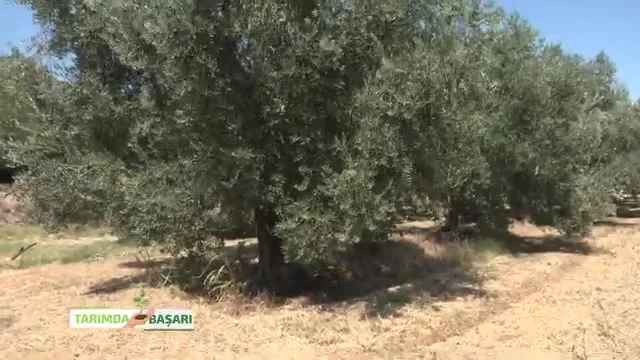
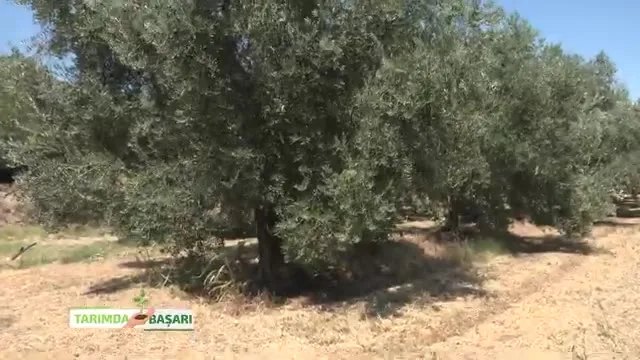
In this episode, we meet in the olive grove of orchard owner Hakkı Bey, in the Kurtuluş neighborhood of Aydın's Kuyucak district. The AgroTroia team, accompanied by the İzmir and Nazilli dealers and agricultural engineers, evaluates olive nutrition and care in this region dense with table olive varieties—particularly the fight against olive knot—within the framework of an olive nutrition program. These orchards, where varieties such as Memecik, domat, and manzanilla are planted mixed and mostly aimed at green sale, are prepared for a healthy season with correct nutrition.
The Prominent Diseases and Pests in the Region
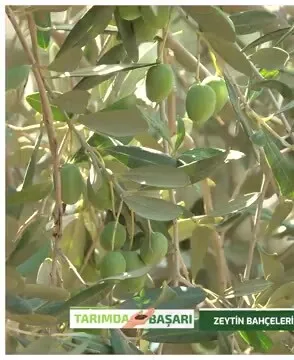
Foremost among the problems most frequently encountered in olives is peacock spot. This disease, which can cause yield losses of up to 90 to 100 percent in orchards where it spreads, requires close monitoring of the spraying timing, period, and dose. Verticillium wilt, another important disease, stands out as one of the hardest problems to fight because it resides in the soil. The main subject of this orchard, however, is the bacterial-origin olive knot, which strikes even healthy trees. This disease often seeps in through the wounds and cracks that this year's agricultural frost disaster opened in the shoots; there are also entry routes originating from pruning and saplings. According to the team's observation, in roughly 90 percent of orchards where frost damage was severe, olive knot appears the following year.
The Path Followed in Fighting Olive Knot
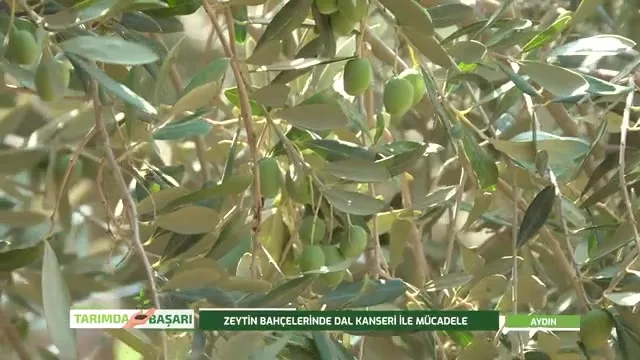
In Hakkı Bey's orchard, which he has been fighting for five years and from which he obtained no harvest for two seasons, the AgroTroia team found that the wounds had dried and the disease had receded to a minimum level. In the fight, copper preparations are applied together with phosphite and liquid sulfur. One of the factors playing a role in the spread of olive knot is the red spider mite, invisible to the eye, working inside the branch and quickly passing to healthy branches. For this reason, applying copper, phosphite, and liquid sulfur to the tree as a single compound yields serious results in preventing the disease's spread. Although completely curing it is an ambitious claim, by increasing the tree's resistance, the worsening of the disease can be prevented.
The Copper Debate: Bordeaux Mixture or Copperas?
After the frost damage, the use of Bordeaux mixture came back onto the agenda. Although copper is in the heavy metal group, it is a material that draws cold; it is also present in AgroTroia products in low amounts. However, the company prefers to provide cold protection not with copper but with its own active ingredients. The cost comparison is also striking: while the market price of a 10-kilo Bordeaux mixture in the winter period hovers in the 2,500-3,000 lira range, the cost of applying Bordeaux mixture to 2 tons of water at the lowest dose reaches about 8,000 lira, and no nutrition product can be mixed in alongside it. By contrast, the cost of adding 20 liters of Copperas to 2 tons of water is about 3,750 lira; that is, less than half. Moreover, Copperas, as a nutrition product, helps do the work of copper preparations.
Correct Irrigation and a Warning on Lime-Sulfur Mixture
One of the problems most frequently seen in field visits is the imbalance of irrigation. Many growers do not calculate how much water they consume from their well or reservoir; there are even growers who give 2 tons of water per tree. While a young tree needs 200-300 liters of water, large trees can demand up to 500-700 kilos of water. If the soil's water-holding capacity is high, watering every two days is wrong; excessive and unbalanced irrigation also facilitates the spread of verticillium wilt. For this reason, the irrigation amount and frequency must be planned by consulting an engineer or advisor. As for the frequently debated lime-sulfur mixture, although sulfur and lime alone do not cause a problem, when combined they show a toxic effect. This mixture can only be applied once in winter, in the February-March period, for red spider mite control; its use in summer is wrong due to its burning property. Since a liquid sulfur application is already included in the nutrition program, there is no need for it either.
Nitrogen and Cultural Measures in Diseased Orchards
As agricultural engineer İlyas Bey emphasized, nitrogen application must absolutely be stopped in orchards where olive knot is seen; because when nitrogen is given to a diseased tree, the disease is fed at the same time. It is recommended to return to nitrogenous fertilizer application after the disease has been brought under protection and control. In addition, disinfection procedures after pruning are one of the most important cultural measures to avoid carrying the disease from one tree to another. Not leaving diseased branches in the orchard but carrying them out and burning them is also an important part of the fight. As for the saying "plant figs to draw the olive fruit fly" regarding the fig-olive mixed orchards frequently seen in the region, this is not correct; moreover, since the pesticide given to olives can harm figs, there is no benefit in keeping the two species in the same place.
Featured AgroTroia products in this episode
- Copperas — a nutrition product used in winter and post-harvest applications in olives with a cost advantage over copper preparations.
- Liquid S80 — liquid sulfur applied together with copper and phosphite in the fight against olive knot, also supporting against red spider mite.
This orchard visit in Aydın's table olive region shows that correct nutrition, balanced irrigation, and conscious cultural measures make a difference even in a tough disease such as olive knot. Although AgroTroia, as a nutrition company, does not produce protection products, it helps prevent and bring diseases under control by strengthening the orchard's immune system. Hakkı Bey recovering, with the correct program, the orchard he inherited from his father and was told to give up, also summarizes the program's true purpose: to show the struggling grower how the job is done.
Source: AgroTroia – "Success in Agriculture" program, sponsored by AgroTroia.