
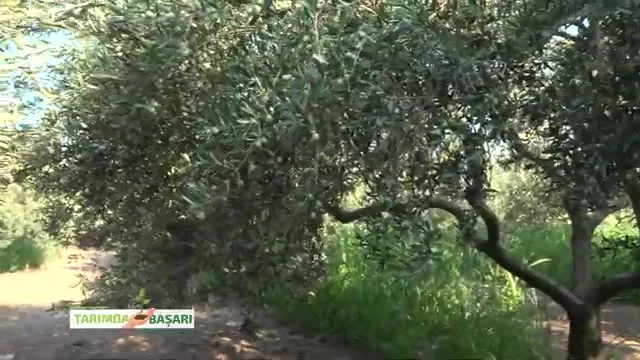
In this episode, the AgroTroia "Success in Agriculture" team gathered in the orchard of farmer Metin Uğur, well known to the olive community from social media, in Aydın's Kuyucak district. The filming, which took place within the framework of the AgroTroia olive nutrition program, was attended by AgroTroia board member Umut Dönmez, Nazilli dealer İlyas Sümbül (Sümbülova Tarım), İzmir Kemalpaşa dealer Cihan Öztosoğlu, and agricultural engineers Yusuf and Simge. An olive- and fig-dominated production pattern prevails in the region; for this reason, correct nutrition, disease management, and orchard establishment in olives directly determine the grower's earnings.
The State of Olive Growing in the Aydın Region
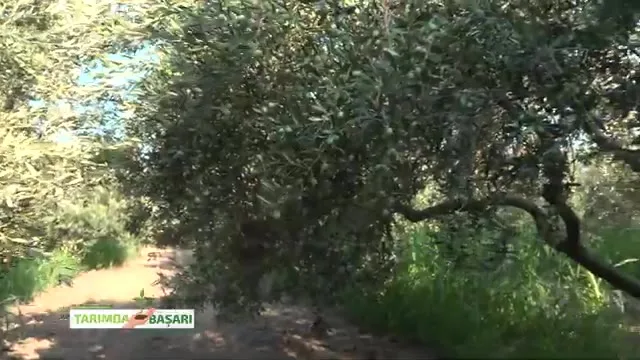
Metin Uğur is an olive grower who has been using AgroTroia products for seven years and is entering his eighth season. His greatest satisfaction is that periodicity—what the farmer calls "on-year, off-year"—does not occur in his orchard. He explains that when regular and programmed nutrition is done, yield runs steadily without fluctuation, and that the orchard's appearance clearly shows this. According to Uğur, the real problem comes not from his own applications but from the surroundings: because many orchard owners in the region view olives not as a livelihood but as a hobby, they do no care at all, which causes diseases and pests carried by wind and climate conditions to reflect onto the well-tended orchards.
The second big problem is irrigation. Growers without an independent water source in the region remain dependent on rainfall until harvest; those with drilling options can sometimes draw water from a depth of 90 meters. The presence of a water source is the most critical factor determining both yield and which variety will be planted. Table-olive purchasing generally begins in the last week of October, with the green early harvest. Growers try to stay afloat by lowering their costs in the face of low olive oil prices.
Regular Nutrition That Breaks Periodicity
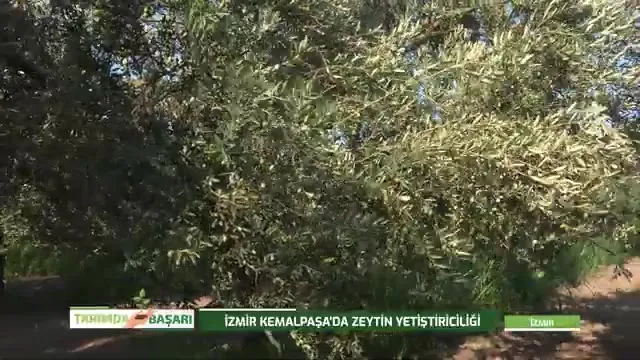
The program's fundamental message is that a regular and periodic nutrition program keeps yield steady. Agricultural engineer Simge emphasizes that AgroTroia products can be mixed with all plant protection products; thanks to this, the grower does not have to enter the field repeatedly, and fuel and labor costs are reduced. A regularly applied nutrition program strengthens the plant's immunity before disease arrives, forming a protective shield against many problems.
The point the engineers underscore most is preventing unconscious and unnecessary fertilization. Because each region has its climatic differences, applying the same program identically everywhere is not correct; Çukurova, the Aegean, and Marmara do not bear the same prescription. For this reason, the team prefers to go to the orchard in person and identify the shortcomings on site, writing a program accordingly, rather than guiding the grower remotely by phone. On the dealer side, prices being fixed everywhere and the cost being calculable clearly in advance provide the grower with planning convenience.
Fighting Verticillium Wilt
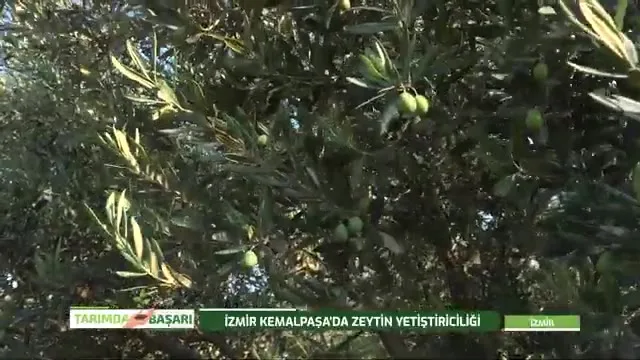
The region's most feared disease is verticillium wilt. This soil-borne disease clogs the tree's water-conducting bundles, drying out the tree, and can jump within a short time to the nearest trees from a neighboring orchard or from a tree within the orchard. İzmir dealer Cihan Öztosoğlu explains that this disease, called "incurable" in the literature, can in fact be saved with early intervention, and that apart from trees that have reached the fourth stage, trees can largely be recovered.
The recommended method is to apply from the trunk when the first symptom is seen. With the backpack sprayer, without raising the dose too much and while the air temperature is below 20 degrees, the part of the tree from the trunk up to the forking branches must be thoroughly washed with an Activo and phosphoric acid mixture; the effect of an application made above 25 degrees is largely lost. This application, which used to be recommended once a month, now saves the great majority of diseased trees when done once or twice a week. Metin Uğur, too, reports that he tried this trunk application together with an additional prescription on trees that had reached the point of dying, and that the trees returned to bearing olives again. The same approach is also used, with Activo and phosphoric acid support, to renew buds in trees whose buds and flower buds were damaged by cold.
Orchard Establishment and Sapling-Variety Selection
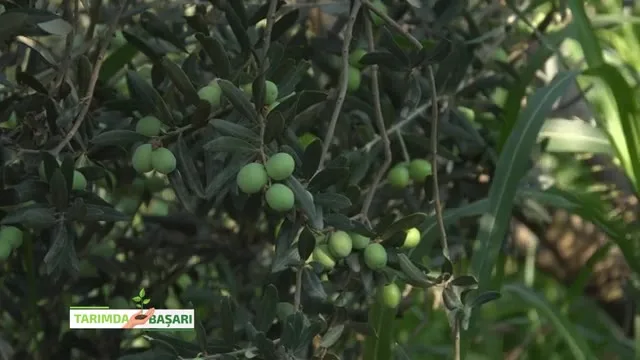
Agricultural engineer Yusuf states that with olive prices rising to record levels in recent years, an uncontrolled planting frenzy has occurred. Yet no uncontrolled orchard gives good results. The start of this business is the sapling; because in the end what earns the money is the tree itself, which gives the fruit. First, which region it is and the correct selection of the variety suitable for that region are needed. If there is no water source, they lean more toward oil varieties; if there is water, toward black olives such as Gemlik–Trilye that can be sold as early-season. In Aydın specifically, table varieties such as the region's coarse olive, the yamalak coarse, what people call tekir (Manisa tekiri), and kalamata stand out.
The presence of irrigation water, choosing certified saplings, and working with a reliable nursery are decisive. In sapling planting, altitude, bottomland structure, drainage, and the prevailing wind direction must be taken into account; dense planting in bottomland areas invites problems such as peacock spot and verticillium wilt. The team explains with an example that planting more saplings per unit area does not mean more yield: in an area of the same size, a 500-tree orchard can give more crop than the 1,000-tree orchard next to it, because in dense planting diseases start to unravel like a run in a stocking. An orchard established with the wrong variety or the wrong spacing costs the grower at least five years. Indeed, some incorrectly planted Edremit-type orchards were uprooted and reduced to a thousand trees, and in some parcels the variety was changed by grafting, returning the trees to Gemlik.
The Importance of Starting Right and Expert Support
The final point the episode dwells on is starting this business right from the very beginning. A mistake in orchard establishment turns into a process that is very hard and expensive to remedy later; a grower who plants the wrong variety, after losing five years, has to deal with additional costs such as uprooting or grafting. In an orchard started with the right variety, right spacing, right irrigation, and right nutrition, the problems that will arise later decrease markedly.
The AgroTroia team also makes an open call to growers who do not yet take products or who are about to establish a new orchard: even if you are not obliged to buy fertilizer, consult the technical team before establishing an orchard. The one with a single tree and the one with a thousand trees can receive the same support; across Turkey, regional dealers and agricultural engineers give advice on site, from orchard establishment to the nutrition program. The aim is for the grower to be able to receive the reward of his investment without wasting his years and labor. In Metin Uğur's words, for growers who see this business as a livelihood and do it with love, correct guidance is the shortest way back from a mistake.
Featured AgroTroia products in this episode
- Activo – a product that, with trunk application in verticillium wilt, opens the water-conducting bundles and supports the renewal of damaged buds.
- Copperas – the copper-based product the grower refers to as "Çanakkale Copper," which stands out in olives.
Source: AgroTroia – "Success in Agriculture" program, sponsored by AgroTroia.