
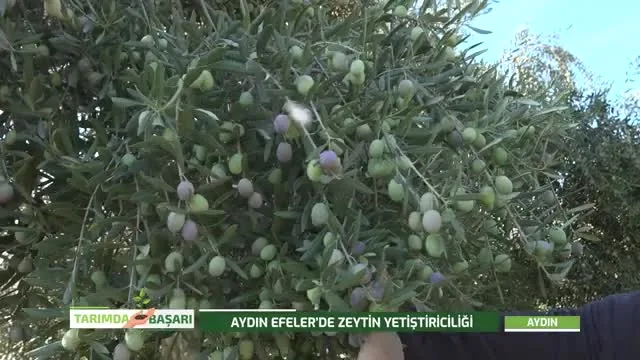
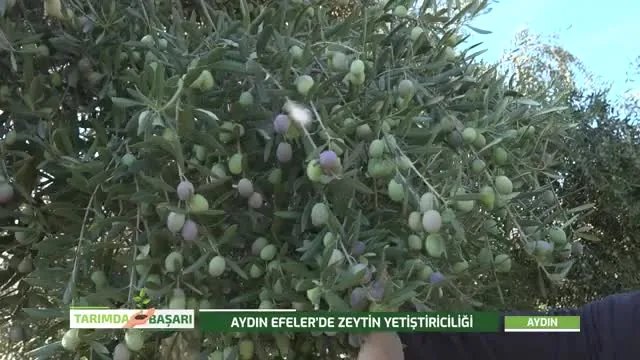
In this episode, the AgroTroia "Success in Agriculture" team is in the Efeler district of Aydın, in a pre-harvest Memecik olive grove. Host Cemil Bektaş is accompanied by AgroTroia Board Member Umut Dönmez, İzmir dealer Brother Cihan, and Yusuf from Muğla, one of the company's most senior engineers. Grove owner Mutlu Doğan's 16-decare grove of roughly 200-250 trees, which for years produced nothing because of peacock spot, now looks completely different with its full clusters. The topic is olive cultivation in Aydın; those who are curious can also review the detailed olive nutrition program.
The Continuity of Copperas in the Fight Against Peacock Spot
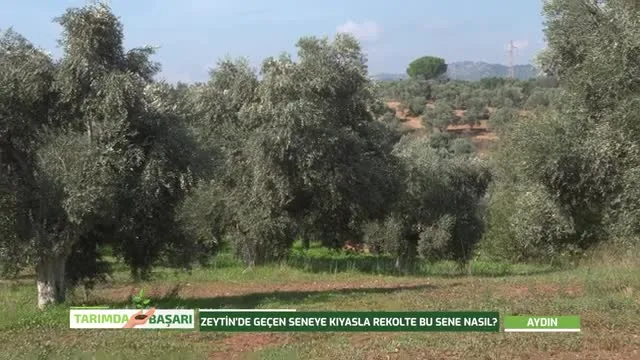
Because the grove is located in a hollow on the edge of a stream, it is extremely exposed to peacock spot. Brother Mutlu explains that in the difficult years he could not get any olives, and that no matter how much pesticide and copper were applied, the leaves dropped in the April-May period. With warming weather and mild winters, the disease peaked completely. İzmir dealer Brother Cihan emphasizes that the solution is not a single application but the use of Copperas with continuity and at certain intervals. Spraying once or twice and stopping does not yield results; in groves monitored regularly, much higher yields have been obtained over the last two years compared to past years, and no dry branches remain among the trees.
Pre-Harvest Grain Enlargement with Force
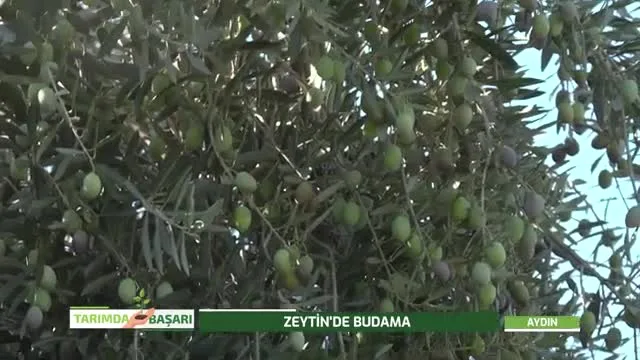
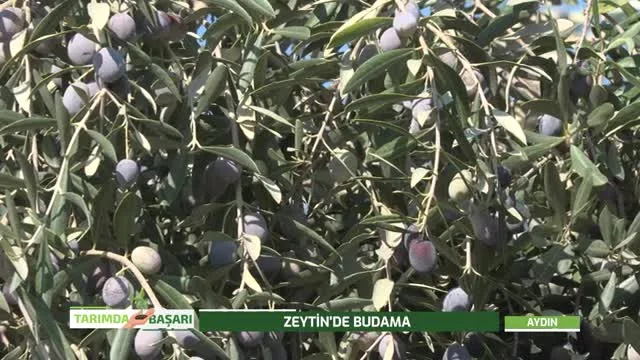
Due to drought lasting all summer, the grains remained as small as chickpeas; fruit of this size is also difficult to harvest by machine. Brother Cihan tried the Force application, which he had tried in a few places before, in this grove as well. With the effect of the first rains and the application, the grains reached three to four times the size of a chickpea in a short time. This was the first season the team used Force for grain enlargement in olives, and the result turned out visibly positive. The aim is to finish the harvest by mid-December; leaving the crop until after the new year both prevents the tree from resting and risks the following year's yield. Brother Cihan, by applying Copperas and Force together, provides both disease control and grain plumpness in the same period.
The Memecik Variety and Breaking Periodicity
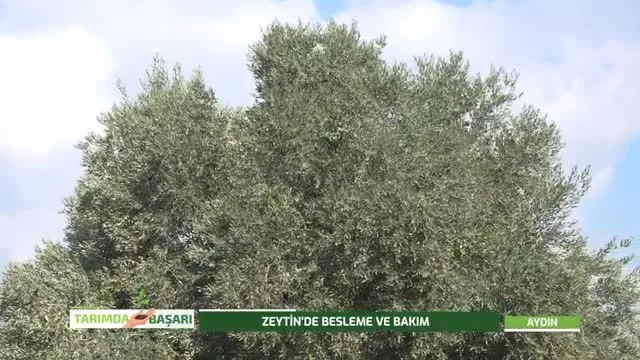
Memecik, the region's common variety, is by nature very prone to the periodicity known as on-year/off-year and is sensitive to peacock spot. Engineer Yusuf says that with a correct nutrition program this cycle can be broken, and that this grove is living proof of it: none of the trees are empty. The goal is, when a hundred percent yield is obtained one year, instead of remaining completely empty the next year, to sustain a balanced crop in the 40-60 percent band. The variety works mainly for oil; it is widespread in the Aydın, İzmir, and Muğla region and, region by region, can also be evaluated as table olive. This year, the low crop across the region due to agricultural frost and extreme heat leads to the grains setting more sparsely and larger, and therefore to the possibility of table evaluation.
Early Harvest, Cold Pressing, and Correct Storage of Olive Oil
The harvest calendar extending from the end of September to February-March affects the market, the price, and the producer. According to Yusuf, harvesting too early causes yield loss, while harvesting too late deepens periodicity; the healthiest approach is to determine the right date with an advisor who follows the grove. In early harvest, the color of the oil is dark green, while in late ripe harvest it is golden yellow; both are valuable, but he draws attention to the fact that the term "cold pressing" is often used for marketing purposes without a genuine cold pressing being done. Regarding storage, it is recommended that olive oil be kept in a glass bottle, never put in plastic, and consumed promptly after opening. For businesses producing a considerable amount of oil, chrome tanks in a closed warehouse are the healthiest solution for both filling and long-term storage; this preserves the acidity and taste of the oil.
Post-Harvest Nutrition, Pruning, and Water Management in a Non-Irrigated Grove
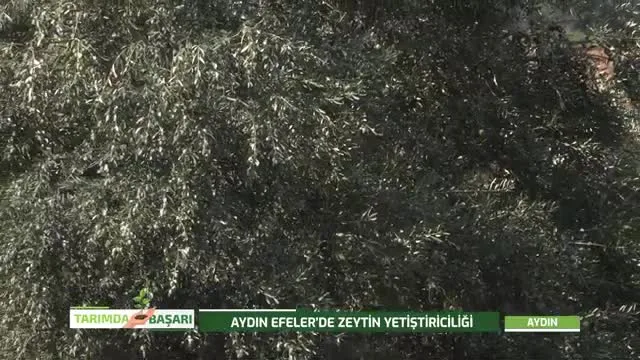
Umut Dönmez's pre-harvest advice is to apply a full dose of Copperas 15 days in advance in trees that set heavily, to prevent late ripening; this way the machine can shake the fruit in a single pass, and no extra labor cost arises. For producers whose harvest is finished, applying Copperas together with a product containing boron, zinc, and manganese immediately after harvest provides protection during this period when humid weather suitable for peacock spot forms. In pruning, Brother Cihan touches on an important point: the more leaves a tree has, the more benefit it gets from nutrition; for this reason, it is more productive to do one application, a second one 25 days later, and then move on to pruning. In the heat of Aydın, a non-irrigated grove, nutrition is the key to managing water stress: avoiding products with excessive potassium, not pruning hard, and using soil conditioners, leonardites, and zeolite-like products to bring the plant down to the minimum water level it needs. The fact that the olive is a species that can tolerate dry farming is the greatest advantage that makes this approach possible.
Featured AgroTroia products in this episode
- Copperas – a product that, when applied with continuity, supports the fight against peacock spot and pre-harvest ripening.
- Force – a fertilizer that accelerates pre-harvest grain enlargement and plumping.
This non-irrigated Memecik grove in Efeler, Aydın, shows that success in olives depends not on a single application but on the continuous Copperas fight against peacock spot, timely grain enlargement with Force, balanced nutrition that breaks periodicity, and a correct harvest calendar. The AgroTroia team seeing the grove on site and setting up the program accordingly makes it easier for the producer to survive despite drought and rising costs.
Source: AgroTroia – "Success in Agriculture" program, sponsored by AgroTroia.