
This special grove in the Muharrem area of Hatay's Kumlu district is home to the Arbequina (Spanish dwarf) olive variety, of which only a few have so far been established in Turkey. Agricultural engineer İsmail Cüneydioğlu from the Reyhanlı dealer ISC Tarım, the grove owner's proxy Celal Demirkol and AgroTroia agricultural engineers toured the 4-year-old, 1,600-tree solid-block grove and explained the real-world performance of this new variety in the field. In this episode we examine the results obtained with a balanced nutrition program in olive cultivation.
The prominent features of the Arbequina variety
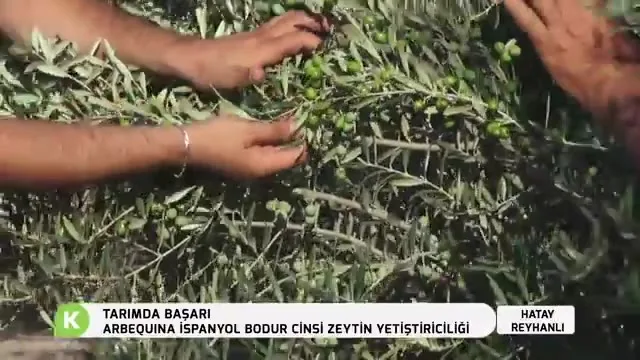
Although Arbequina is a dwarf, short-statured olive variety bred in Spain, the homeland of the olive is Turkey. Its most distinctive feature is that, unlike classic varieties, it can bear fruit at the same time as building up trunk thickness and makes dense shoots. While in our local varieties one or two fruits are seen per bud, in Arbequina it is quite easy to come across clusters of three to four fruits. Thanks to its dwarf structure, harvest and pruning labor is markedly eased; periodicity — that is, the tendency to give much fruit one year and little the next — is almost never seen. The observation of more than 30 kilos of fruit on the 4-year-old trees in the grove is a concrete indicator that the variety has entered early and regular yield.
Climate, soil and irrigation requirements
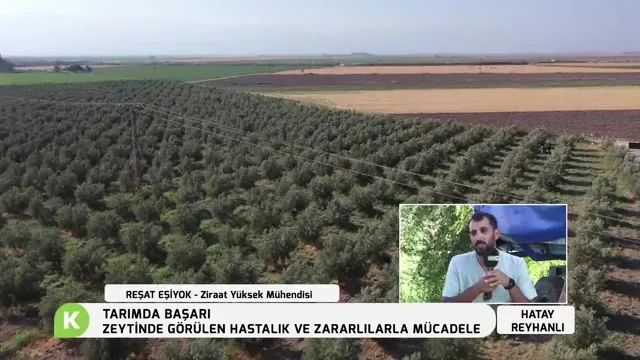
The olive is grown in 40-41 provinces in our country; Arbequina too can grow almost everywhere other olive varieties grow, except the Southeast, Eastern Anatolia and Central Anatolia. Because its chilling requirement is somewhat higher, it can also adapt to relatively high altitudes. The variety's most critical requirement is water; it is also called the "water olive." Because it puts out new shoots with every watering given, the irrigation interval is more frequent than for local varieties. Especially in sandy-loam soils, water is wanted every other day, or every two days depending on the soil structure, in small but short intervals. However, the point to be careful about here is the risk that excessive irrigation pushes the plant into shoot growth and drops the flowers on it. It is particularly emphasized that this variety should not be planted on mountainous and waterless land without irrigation possibility.
Oil quality and market value
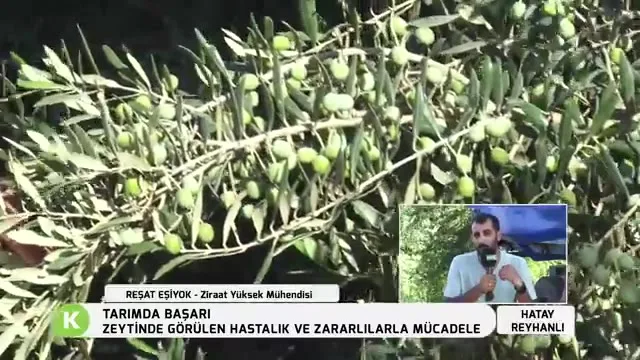
Arbequina is a variety evaluated predominantly for oil. Its aroma is different from our local varieties; although it offers a taste profile one needs to get used to at first, it is embraced over time. Because the calibration and double-system structure sought in table varieties are not prominent in this variety, production concentrates on the oil side. In this period, when, with the restrictions imposed on oil export and the decline of water resources, olive growing is turning toward solid-block groves and irrigated farming, every variety that gives quality oil finds itself a place in the market. Even though the oil quality falls a little behind some local varieties, with its regular and high yield Arbequina offers a strong alternative especially for broad, irrigable areas such as Reyhanlı and the Amik Plain.
Fighting diseases and pests
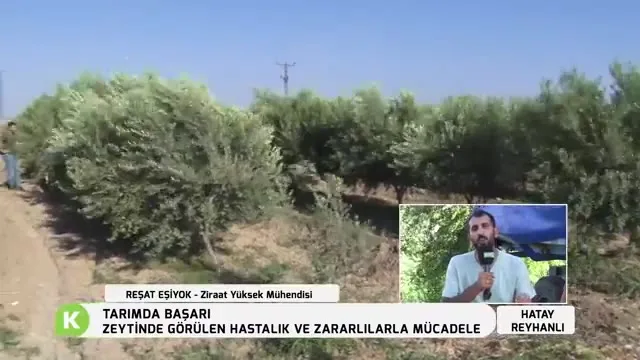
Arbequina's hard leaflet structure makes it more resistant than local varieties to diseases such as peacock spot, verticillium branch canker and anthracnose. Peacock spot is a fungal disease that, when humidity is high and the temperature is in the 18-22 degree range, forms ring-shaped spots on the leaves and leads to leaf drop. In bacterial-origin branch canker and soil-borne verticillium wilt, the diseased branches must be cut and the pruning tools disinfected, and even the leaves must be removed from the grove. On the pest side, the olive fly, olive moth, cotton aphid, flower stalk borer, shoot caterpillar and red spider are the main ones. When the flowers are 5% open, biological and cultural measures such as insecticide application, mass pheromone traps and collecting the fruit fallen to the ground must be carried out together.
AgroTroia nutrition applications and field results
Nutrition in the grove was started in winter and strong results were obtained throughout the applications. According to the dealer's field observation, Copperas, which fought the disease mechanism in the previous period, gave the strongest response among olive varieties in Arbequina; shoots reaching 40-50 cm were observed with a single application. The product, a systemic copper, is transported directly to the tree's conductive tissues thanks to the organic acids it contains, both supporting the plant's resistance to diseases and increasing shoot development and fruit set. In pruning, a single-trunk, spreading canopy that does not touch the ground is targeted. In the grove, where roughly 400 kilos of oil was obtained last year, more than double this figure is expected this year. It is clearly seen that when the right variety, irrigation and nutrition come together, Arbequina reveals its potential.
Featured AgroTroia products in this episode
- Copperas - systemic copper source; support against peacock spot and branch canker, strong shoots and fruit set.
- Activo - an organic acid-containing product that dissolves the soil and brings vitality to the plant.
- Fors - a nutrition product used in the development and yield period of the water olive Arbequina.
Still at the recognition stage in Turkey, Arbequina is a strong candidate for professional farming in solid-block groves with irrigation possibility. With correct region selection, regular irrigation and a balanced nutrition program, this Spanish dwarf variety offers the grower both labor convenience and early and steady yield. On the condition that it is not planted on waterless land, it is an alternative worth considering for farmers seeking change.
Source: AgroTroia - "Success in Agriculture" program, sponsored by AgroTroia.