
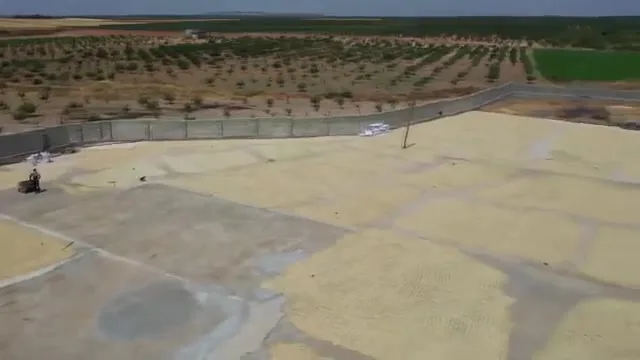
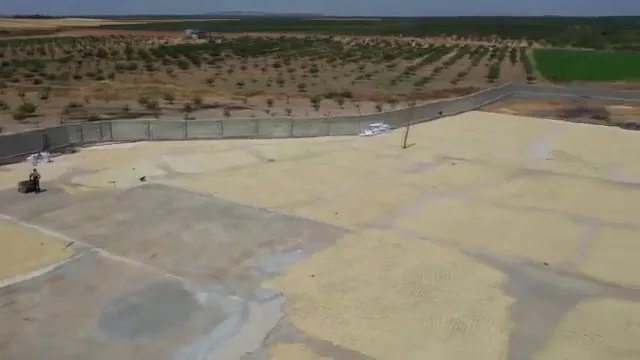
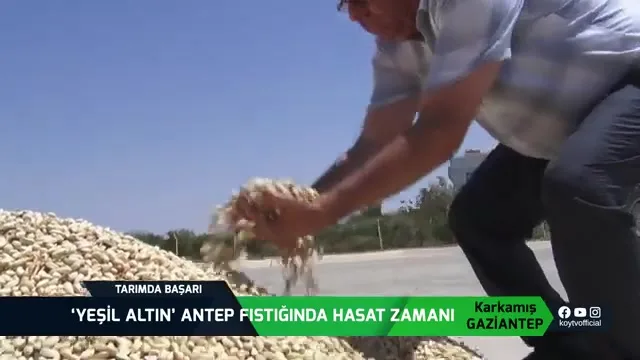
In this episode of the "Success in Agriculture" program we are in the Arıkdere village in the Karkamış district of Gaziantep; in the fertile orchards of the Barak Plain we coincided with the harvest of pistachio, known as "green gold." We came together with our regional dealer Hüseyin Bozgeyik from Oğuzeli (Bozgeyik Tarım) and the growers who have worked with AgroTroia for many years — Mehmet Güngördü, his elder brother Mustafa Güngördü and Erol Güngördü, who came from Ankara. The orchard owners explained that with a correct nutrition program the "on-year, off-year" distinction in pistachios disappears and that it is possible to take a regular crop every year.
The green gold harvest on the Barak Plain
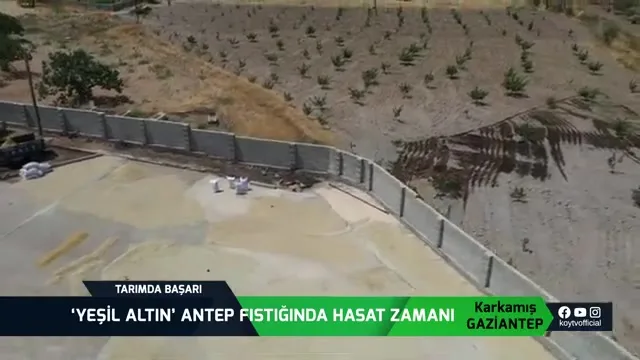
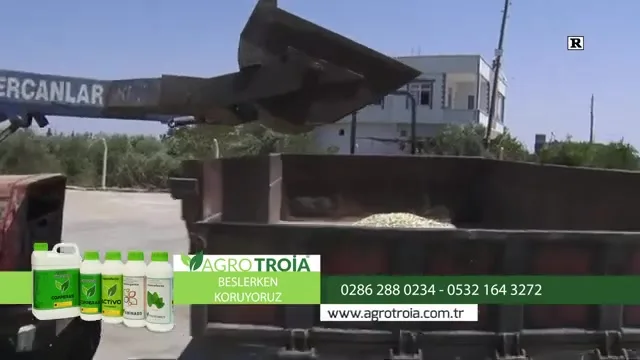
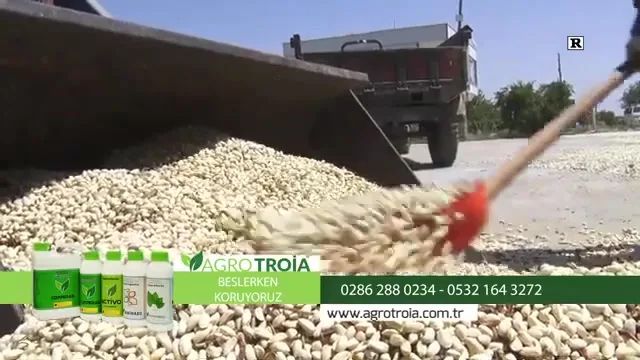
Arıkdere, where we filmed, lies right in the middle of the Barak Plain between Karkamış and Nizip. The growers' only source of income is pistachios; the economy of this region, stretching from Antep to Kilis, from Oğuzeli to Elbeyli, is entirely tied to this crop. Mehmet Güngördü said that after switching to AgroTroia applications in the orchard he has farmed jointly with his brother for 23 years, he reached high yield for the first time, and that the harvest this year exceeded 500 kilos. Noting that although it was an "off-year" in pistachios this year the buds opened abundantly, the growers reported that baklava-grade pistachio found buyers above 300 lira and fresh pistachio at around 110 lira. The region's biggest problem is water: even though the Euphrates passes right alongside, the Barak Plain struggles with drought, and it was stated that if irrigation were provided the crop would multiply.
Phytoplasma: dieback disease in pistachios
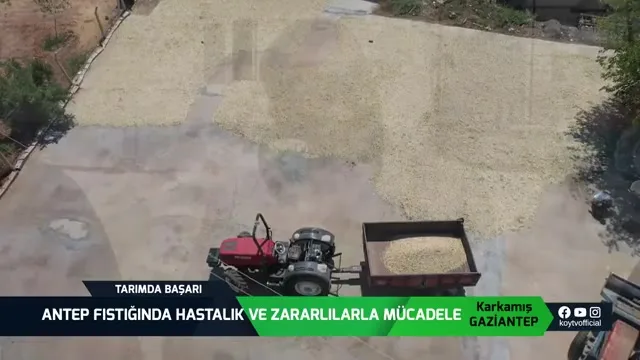
One of the most serious diseases that has started to appear in pistachios in recent years is phytoplasma. Just like verticillium in olives, this disease too dries the tree from the top down and leads it to death. When the plant's conductive tissues are blocked by bacterial causes, water and nutrient elements cannot be carried upward, and the tree slowly dries. The recommended method in orchards where this problem occurs is a trunk application: Activo is applied together with phosphoric, creating an angioplasty-like effect that opens the blocked conductive tissues. This application is made only twice a year, in March and November, in an effort to prevent the disease.
Fighting anthracnose with the trunk application
The biggest fungal problem in the region is anthracnose. It was emphasized that the solution effective against the fungal agents in olives also benefits the fungal diseases in pistachios, as has been tried and seen. Copperas, while protecting the tree from both fungal and bacterial diseases, also supports growth and makes the buds we call "Karagöz" form more pronounced and plumper; thus the tree prepares for the next season. The fundamental reason the buds in Mehmet Güngördü's orchard are this abundant was shown to be this application. Because Copperas and Activo are used in all applications made after harvest in November, January, March and April, these applications, which coincide with the anthracnose period, suppress the disease.
Psyllid, capnodis and twig moth: fighting pests
Among the prominent pests in pistachios, the psyllid leads. The psyllid, by feeding on the leaf, causes both leaf and bud drop; in heavily infested orchards white crystallizations are seen at the base of the trees, and one female can lay 120 to 150 eggs. Because continuous insecticide use also reduces beneficial insects, chemical control comes more to the fore for the psyllid. Against capnodis, that is the root borers, deep tillage at the base of the trees must be avoided; because a single larva laid on damaged roots can destroy a whole tree, so fighting the adult is important. The twig moth, on the other hand, starts in the shoots and feeds by boring galleries toward the trunk, dropping the fruit buds. At this point, the grower being the doctor of their own orchard and noticing the problem early stands out as the healthiest approach.
Sunscald, Karagöz buds and post-harvest nutrition
Due to water scarcity and temperatures exceeding 40 degrees, another fear of the region is sunscald. While early "unripe" cracking of the harvest reduces this risk, a kaolin clay application at a rate of 2 kilos per 100 liters is recommended for the crop left on the tree; however, because excessive kaolin can increase gumming and lower photosynthesis, work is done over demos. As an alternative, it was reported that no sunscald was seen in orchards where Vital was applied together with the amino acid source Aminado. Karagöz formation was left as a separate, detailed topic for the next episode. With the first application to be made in September, immediately after harvest, cleaning the broken branches, fighting the psyllid and bud borer, and balancing the excessive nitrogen-potassium need are recommended. It is critical for trees that, in the hot region, do not drop their leaves until December to go into early dormancy; to meet the 900-1000 hours of chilling requirement below 7 degrees Celsius for homogeneous waking in spring and the prevention of zinc deficiency. At the end of the conversation, it was also emphasized that pistachio growers organizing through branding and forming cooperatives is essential for the product to find its true value.
Featured AgroTroia products in this episode
- Copperas — protection against fungal and bacterial diseases, support for Karagöz bud formation
- Activo — trunk application together with phosphoric, opening the conductive tissues
- Aminado — amino acid source, application against sunscald
As the green gold harvest continued on the Barak Plain, we saw on site how a correct nutrition program and regular disease-pest monitoring multiply yield in pistachios. The shared wish was that, once the water problem is solved, the region's crop will rise much higher, and that with the growers organizing, the product will find the value it deserves.
Source: AgroTroia – "Success in Agriculture" program, sponsored by AgroTroia.