
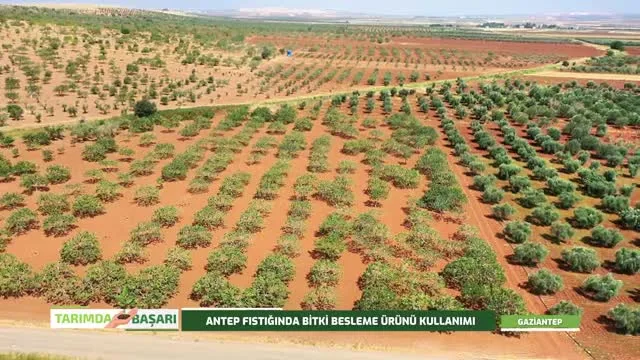
This episode of the "Success in Agriculture" program, sponsored by AgroTroia, was filmed in the village of Üç Kubbe in Gaziantep, at farmer Metin Çolak's pistachio grove of about 2,500 trees. This season, with frost, drought, and fires coming one after another, most of the region's groves were left with no crop, yet this grove—managed for six years with AgroTroia consultancy and a nutrition program—reaching harvest was the main subject of the broadcast. In the program, AgroTroia board member Umut Dönmez, agricultural engineers Cemal Kurt and Nuh Karacaoğlu, and grove owner Metin Çolak shared the details of the nutrition program applied to pistachios.
How frost and drought affected pistachios in Gaziantep
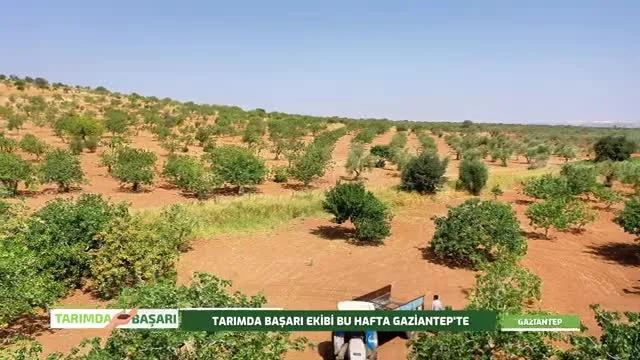
It was reported that the frost event experienced nationwide this year affected the grove groups by about 97 percent, and that drought and fires were added on top of this. According to the engineers, temperatures in the region dropped below -4, -5 degrees during Ramadan; along the line extending to Urfa, cold reaching -14 degrees was seen for eleven days. Because the sap froze during the period when the pistachio buds were beginning to open, the dark buds dropped. The most critical point is that this is not a disease or pest but a disaster; some farmers had been told this condition was mistakenly nitrogen deficiency or drought stress. It was emphasized that, unlike citrus, frost damage in pistachios cannot be overcome in the same year, and that its effect spreads over three years because of the dark-bud mechanism. Despite this, it was stated that in Çolak's grove—even though there are trees of the same age and care in neighboring fields—both this year's fruit and next year's buds were saved thanks to applications made at the right time.
Post-harvest leaf drop and winter care
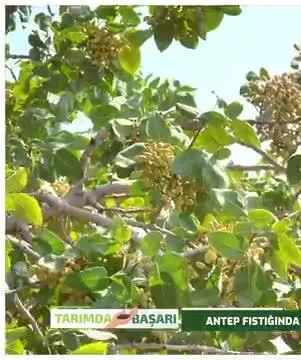
The calendar described in the program begins as soon as harvest ends. The first goal is to achieve homogeneous leaf drop; for this, Copperas and Nitrozinc, with its zinc content, are applied together. Proper leaf drop prepares the ground for stronger flowering and healthy leaf formation in the flowering period. The engineers explained that Copperas is not a fungicide but a nutrition product, that despite the low copper ratio on its label its content works differently from metallic copper or Bordeaux mixture, and that it provides protection even during the frost period by keeping the sap at a stable temperature. In the winter period, a one-percent copper application is recommended against fungal infections in the tree. The more resistant the plant is made, the more strongly it stands against diseases; as the tree wakes in spring, foliar support is provided with Copperas and phosphoriko.
The nutrition program from flowering to fruit fill
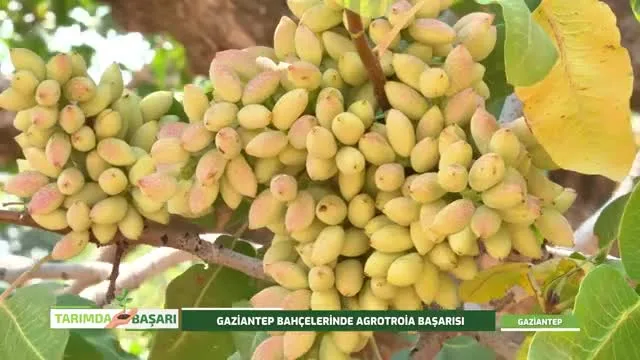
It was noted that application is not done at full flowering, and that even operations such as tillage and hoeing are avoided at this stage. The right time is the five-percent flowering stage called "cat's ear"; at this stage application is done together with Activo Florista, and at the same time the fight against the bud beetle is also carried out at this stage. When the fruit reaches chickpea size, the second application comes into play. In the next stage, nitrogen is given to support dark-bud formation for next year's shoots, and potassium for the fruit's internal fill. The engineers stated that during this period they use available nitrogen products together with potassium. Calcio is used to strengthen the stalk and reduce drop; against sunscald, support is provided with a product containing nitrogen, phosphorus, potassium, and aloe vera. The basic logic of the program is to keep the fruit on the tree during the period when the pistachio is filling internally while also preventing dark-bud drop.
Fighting pests in pistachios
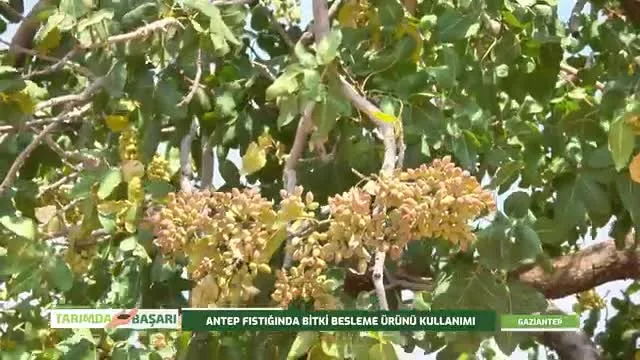
The broadcast also addressed pests that have increased in the region in recent years. It was stated that application against the sunn pest should be done when wheat sowing begins and when wheat is harvested. The pistachio psylla, although its adults are about 1 to 1.8 millimeters long, is a pest that causes great damage; the adults lay eggs on the leaf, and the nymphs that emerge from the eggs that hatch within four to seven days suck the leaf and secrete a sweetish substance, creating an appearance as if powdered sugar has been spilled on the tree and soil. The psylla prevents internal fill and causes leaf and dark-bud drop; it is recommended to begin its control from mid-May. The capnodis is a pest resembling a cockroach that lays its eggs at the root collar; the larvae that emerge feed on the roots and can kill even an aged tree. It was emphasized that the fight against it should target the adults at the end of harvest, that the ground beneath the trees should not be tilled, and that the roots should not be damaged.
Pollination, irrigation, and correct variety selection
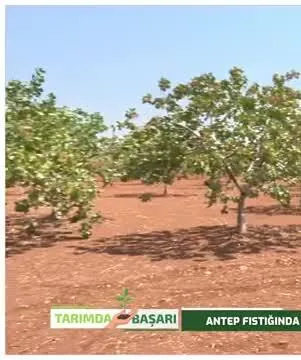
It was recalled that the pistachio is a dioecious plant, meaning male and female reproductive cells are found on separate trees, and that pollination occurs externally. In extreme drought, male trees opening early and shedding their pollen while females are late can lead to fertilization deficiency and fruit drop; bringing forward the development of the females through correct nutrition facilitates this synchrony. For irrigation, it was recommended to avoid flood irrigation and the sprinkler method, and instead use furrow irrigation; it was explained that irrigation done with sprinklers during the frost period freezes the tree further and increases the damage. It was stated that pistachios need about 400 cubic meters of water per season and that irrigation should be done during the internal fill period. On the matter of variety, it was emphasized that in waterless conditions California-origin freak varieties struggle, and that in places without water one should return to local rootstocks such as mastic, terebinth, or wild pistachio.
AgroTroia products featured in this episode
- Copperas – nutrition product for leaf drop, winter care, and frost protection.
- Nitrozinc – for homogeneous leaf drop and strengthening the buds with zinc support.
- Activo – use during flowering at the cat's-ear stage and during the bud beetle control period.
- Calcio – calcium support to strengthen the stalk and reduce fruit drop.
Grove owner Metin Çolak related that he has applied the same program day by day for six years, that while there was no crop in the surrounding relatives' groves his own pistachio and olive trees set fruit, and that he also obtained a yield of about 800 kilograms per decare in wheat. The engineers underlined that what really matters is correct diagnosis and application at the right time, that frost should be accepted as a disaster and the grove should not be abandoned. The broadcast concluded by emphasizing that protecting the plant while reducing costs in difficult conditions is possible with programmed and sustainable nutrition.
Source: AgroTroia – "Success in Agriculture" program, sponsored by AgroTroia.