
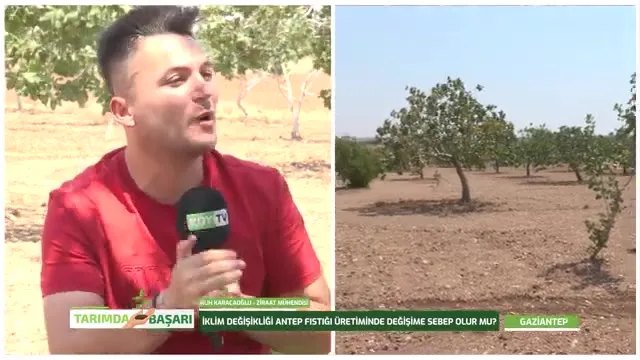
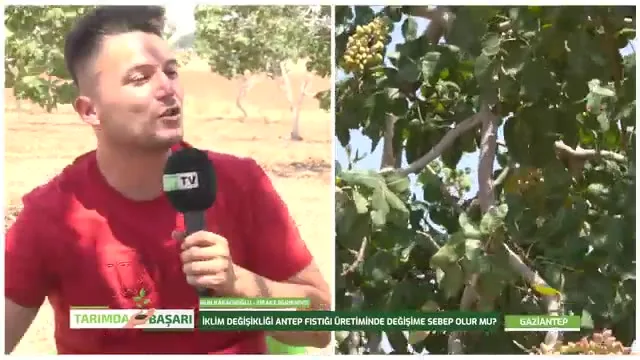
In this episode, AgroTroia's "Success in Agriculture" program was a guest in the pistachio orchard in the village of Tüzel, belonging to the father of agricultural engineer Nuh, in the Barak Plain of the Oğuzeli district of Gaziantep. With AgroTroia board member Umut Dönmez, agricultural engineers Nuh and Cemal, and the participation of orchard owner Hacı Baba and his son Şaban, how the "on-year, off-year" cycle is broken with a correct nutrition program was addressed. This season, when pistachios were almost nonexistent from Antep to Urfa due to extreme drought and frost, the noteworthy yield in this regularly fed orchard drew attention.
The Main Disease of Pistachio: Alternaria Blight
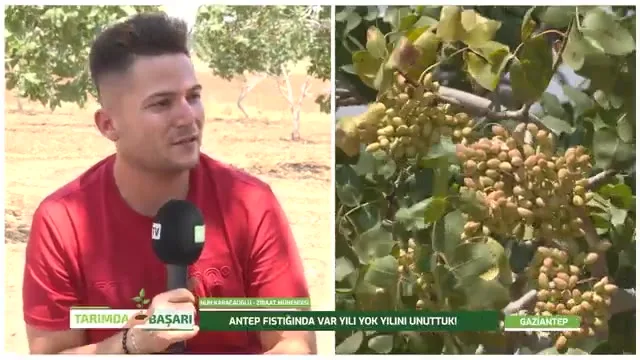
The biggest disease in the region is alternaria-based blight. The disease, which forms black spots on the leaves, keeps its spores in the tree cavities alive throughout winter when no application is made after harvest; when the soil temperature rises above 15 degrees, the infection climbs to the leaves and adversely affects photosynthesis. As a result, the kernel filling rate drops and the fruit buds of the following year weaken. As a cultural measure, it is recommended to avoid crowning close to the ground, to do dry thinning well, and to remove pit shoots during the summer. It was reported that for six years no fungicide has been used for alternaria blight in the orchard, and that the disease is kept under pressure thanks to the copper-based sterilization provided with Copperas during winter.
Phytoplasma or Iron Deficiency?
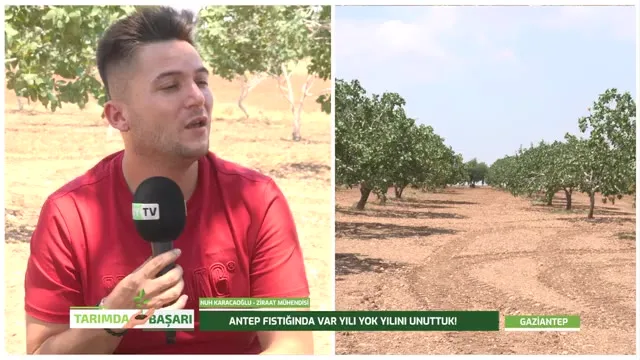
One of the most valuable parts of the program was distinguishing the dieback-causing phytoplasma disease from iron deficiency (chlorosis). In phytoplasma, regional dieback and leaf drop are seen on the tree, whereas in iron deficiency the whole tree yellows, the leaf veins stay green, and the leaves do not drop. Growers confusing these two and giving excessive nitrogen to a phytoplasma-infected tree aggravates the disease. In soils with a pH above 7.5, such as the Barak Plain, iron uptake is already difficult; for this reason, making the correct diagnosis and, when necessary, having a leaf or branch analysis carried out is of great importance.
Delaying Bud Break Against Frost
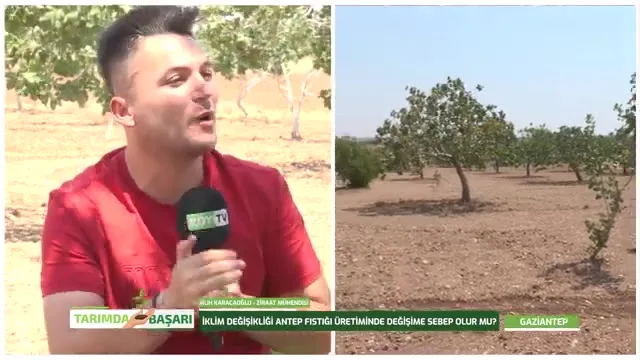
This season, the frost that followed a drought lasting 60-65 days caused heavy damage in local varieties. Early-breaking varieties are more affected by late spring frosts. In the AgroTroia approach, to delay bud break it is recommended to prune in mid-winter rather than early, to delay spring fertilizers, and to focus on zinc-boron applications while avoiding nitrogen. In addition, with a full dose of Copperas applied close to full bud break, the plant is kept physiologically vigorous; because turgor pressure is balanced, sudden bursting and the resulting cold damage are reduced.
Post-Harvest Nutrition Program and Pruning
In pistachios the program starts after harvest. First, homogeneous leaf drop is achieved with a boron-zinc application, then Copperas is applied against fungal infections; this is followed by an available phosphite supplement. At flowering, it is emphasized that the orchard should be entered not at 100% bloom but at 5% bloom, considered the cat's ear stage; at this stage, flowering is supported with Activo together with control of the bud worm. After fruit set, nitrogen and potassium both swell this year's fruit and prepare next year's shoots; to ensure stem thickness and prevent fruit drop, Calcio is applied. In pruning, the rule is recalled to be simple: only dry branches and overlapping branches should be removed, and excessive pruning should be avoided; because the pistachio is a plant whose shoot mechanism works slowly.
AgroTroia products featured in this episode
Copperas - copper-based sterilization and condition against alternaria blight
boron-zinc - homogeneous leaf drop and balanced bud break
Activo - support for flowering and fruit set at 5% bloom
Calcio - stem thickness and prevention of fruit drop
This orchard, which has borne fruit every year for six years, shows as an example that the "on-year, off-year" claim can disappear with correct nutrition. Even in trees damaged by frost and drought, by raising condition and turgor pressure, next year's buds have been secured. Success in pistachios passes through correct diagnosis and a programmed nutrition carried out on time and with the right products.
Source: AgroTroia - "Success in Agriculture" program, sponsored by AgroTroia.