
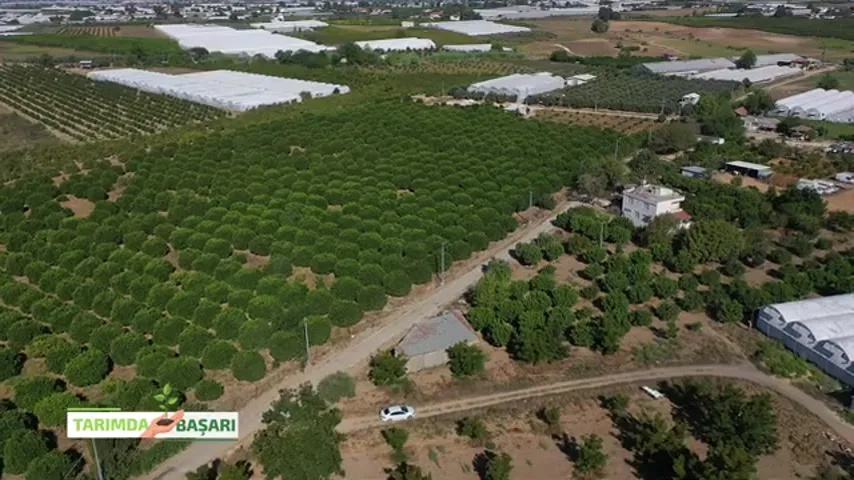
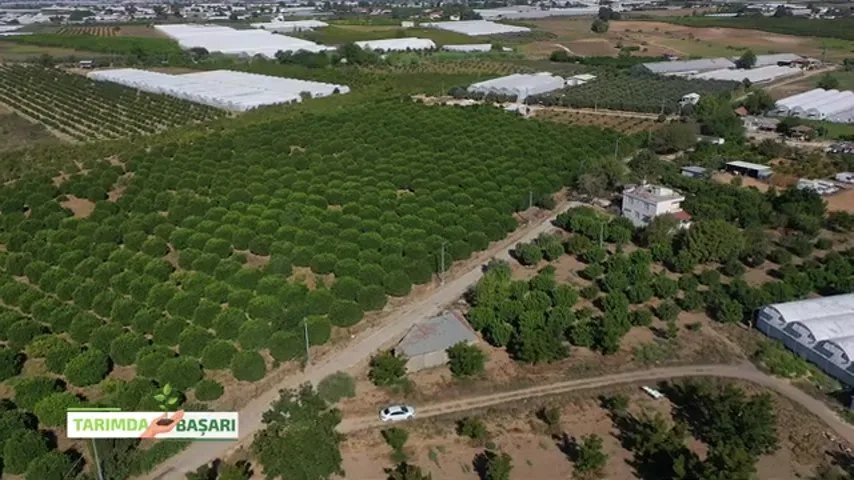
In this episode, the AgroTroia "Success in Agriculture" team is in the Ürünlü area of the Serik district of Antalya, in the orchard of walnut producer Hasan Kirlioğlu. The pecan walnut grown in the orchard is a delicate variety of Texan-American origin, different from the classic walnut we are used to in our country. AgroTroia board member Umut Dönmez and agricultural engineers Nuh Karacaoğlu and Simge Şen explained both this orchard's story from the past and the care intricacies of the pecan walnut along with its nutrition program.
The Place of the Pecan Walnut in Turkey and the World
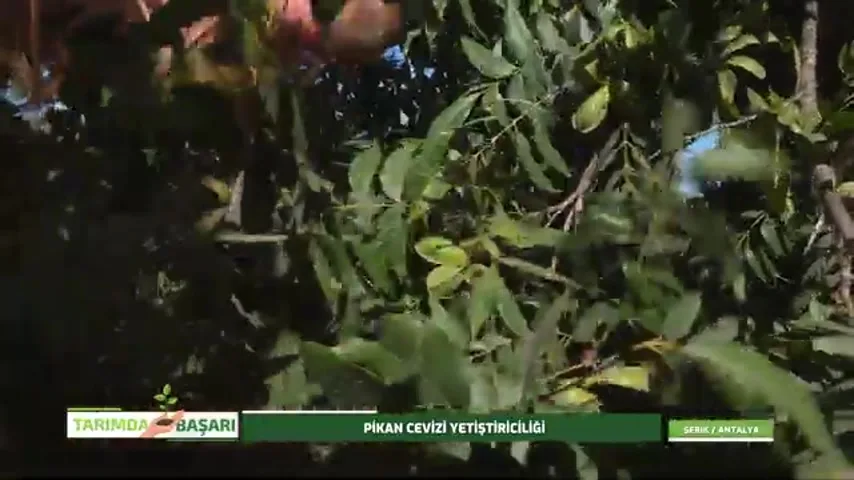
The pecan walnut is a variety with high oil content and strong fruit quality, whose homeland is the Texas region of America. Because its crude protein and oil content is at roughly 19-20 percent, it is considered extremely high quality. It takes its name from the fact that the inner membrane of the fruit opens lengthwise rather than crosswise; its shell is also thinner than that of other walnuts.
This variety is a plant with somewhat higher annual cold and heat requirements; it wants a temperature level of around 15-20 degrees on average, at least above 13 degrees, and generally grows in areas above 150 meters altitude that do not exceed 400-500 meters. Because it can be produced in parts of Antalya and Mersin, especially around Serik, it is also called the Serik walnut. Although Turkey ranks among the top in the world in walnut production, because of incorrect practices, while sapling planting increases, the crop cannot rise at the same rate.
Orchard Establishment, Dense Planting, and Water Management
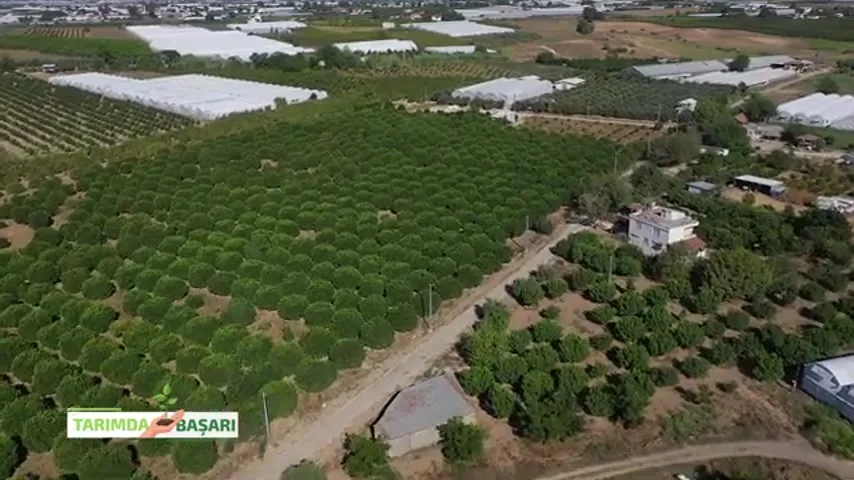
One of the most common mistakes in walnuts is dense planting. When trees are too close to each other, air circulation cannot be achieved; this lowers the plant's resistance to fungal diseases and increases losses. For this reason, wide and airy spacings such as 8 by 8, 9 by 9, or even 10 by 10 are recommended for the pecan walnut. Because the branch structure in pecan is brittle and the leader turns into a triple-vase system after a while, in dense plantings the spaces between trees remain empty and the risk of sunscald increases.
Water management is a critical issue in pecan. The pecan is much more sensitive to moisture than other walnut varieties; because moisture means conditions where fungal infection increases. Over-irrigation leads to trunk cracking and tissue damage. One of the biggest problems of walnut growing in our country is poorly drained land; in pecan it is not possible to compensate for excess water given. Irrigation should be done not close to the root but toward the canopy drip projection, in a way that feeds the fibrous roots.
The Fight Against Dieback Disease and Bacterial Blight
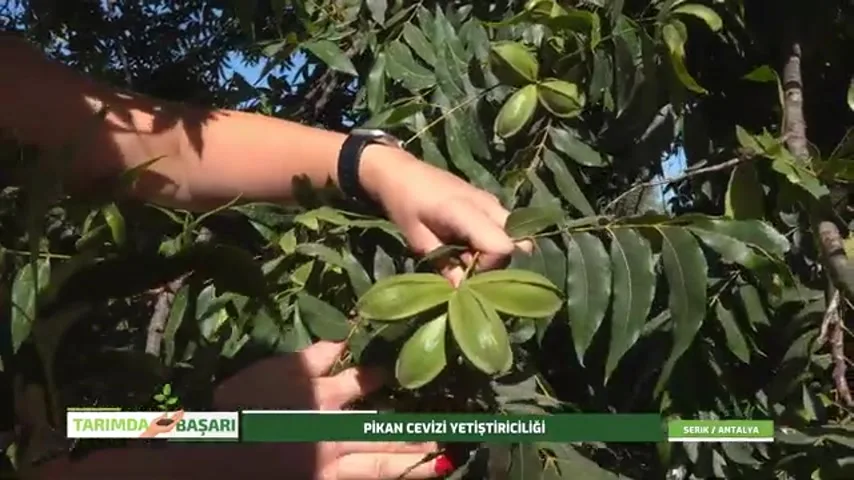
Hasan Kirlioğlu's orchard has a story going back to 2020. The producer, who struggled for years with a dieback disease he could not overcome and knocked on many doors from the provincial agriculture directorate to BATEM and private laboratories, could not stop the dieback of the trees. After meeting AgroTroia, this dieback disease was overcome with the applied program; today the trees in the orchard have recovered and come into fruit again.
While anthracnose in walnuts is a fungal-agent disease, at a more advanced stage a bacterial-origin bacterial blight can appear, and this is a difficult problem that can go as far as uprooting. Because there is no direct solution in the crop protection products database, AgroTroia proceeds with a different method, a trunk application. After the trunk application, the problem is tried to be brought under control with Copperas and Activo against the root collar. The most important point emphasized here is to manage the orchard as a whole — its pruning, irrigation, fertilization, and disease control together — rather than panicking in the face of disease and uprooting the tree.
Correct Fertilization: The Nitrogen Trap and Its Relationship with Disease
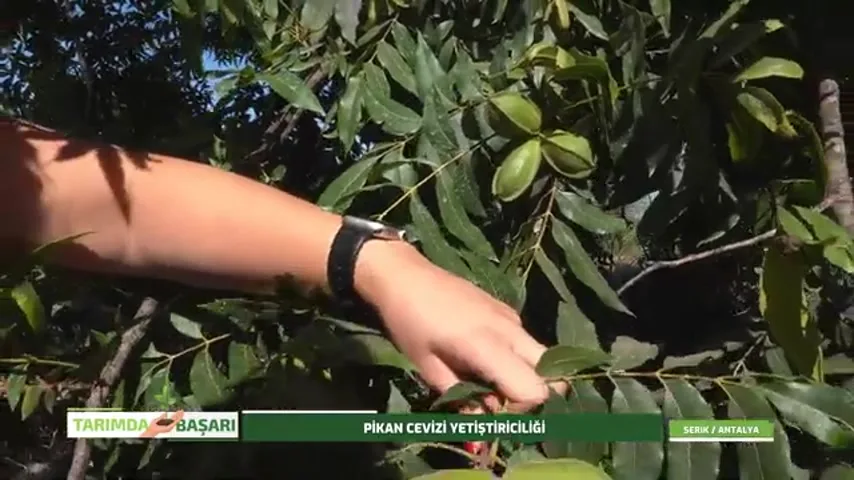
The most common mistake in fertilization is applying the classic "nitrogen-phosphorus-potassium" sequence to walnuts by rote as well. Yet in walnuts, nitrogen given early wakes the tree not homogeneously but too quickly; it adversely affects female-male synchronization and pollination, leading to fruit drop. Moreover, because nitrogen physiologically lengthens the internode, fruit thins out when a triple fruit structure could have been obtained.
More importantly, nitrogen increases disease; in the experts' words, it is rather like feeding sugar to yeast. For this reason, it is recommended to approach nitrogen use cautiously in diseased areas, and even to halt nitrogen use in the orchard until the disease ends. Because the sulfur given from the soil takes about 45 days to show its effect, and the uptake of most elements can take up to 60 days, timing is decisive. It is advised that sulfur supplementation be done with Liquid S80 in the February period, as the buds wake. When the soil pH and lime level are high, phosphorus is locked up, and magnesium and iron uptake are also suppressed; for this reason, foliar applications made with low-pH products come to the fore.
The Fruit-Filling Period and the AgroTroia Program
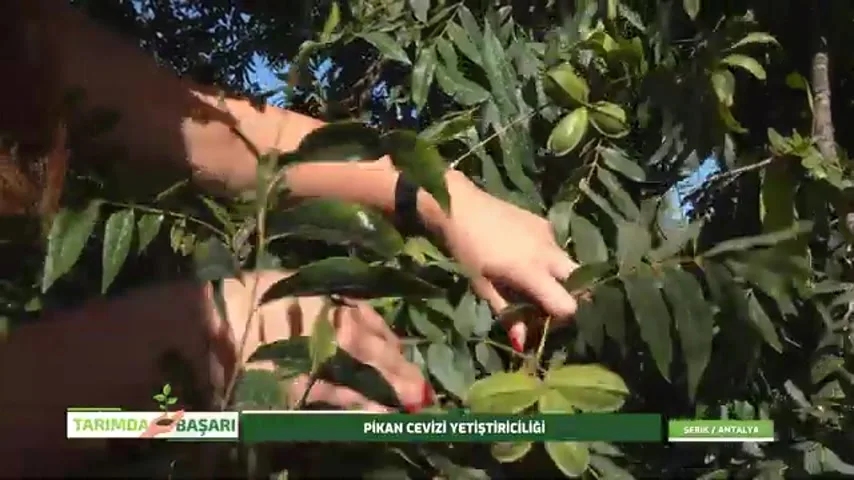
After the plant sets fruit, the filling period begins in walnuts. The pecan walnut is not like the olive; it is a plant that wants more water to fill its kernel. In this period, along with regular and periodic irrigation, potassium applications fill the kernel of the walnut. In lands where irrigation is possible, products such as Fors come into play. Because the pecan's response to fertilizer is low, the goal is not to leave a lot of fruit on the tree but to form a healthy, quality kernel; the crop is brought down to about 30-35 percent to obtain full, sound fruit.
Systemic phosphoriko-type products containing a high proportion of potassium phosphite, applied foliarly throughout the summer, both provide protection in places where fungal infection is heavy and positively affect the next season's fruit eyes; together with copper, they also provide support against frost. The fact that the leakage problem commonly seen in pecan walnuts, which producers call "Basra," did not appear in Uncle Hasan's orchard stood out as the result of this disciplined program spread over five years.
Featured AgroTroia products in this episode
- Copperas – support in the fight against root collar and bacterial blight.
- Activo – use in root collar applications together with Copperas.
- Liquid S80 – sulfur supplementation in the February period, as the buds wake.
- Fors – fruit-filling support in lands where irrigation is possible.
This episode in Ürünlü, Serik, Antalya, showed why the pecan walnut is a "delicate" variety and that correct orchard management consists not of individual applications but of a whole, from planting spacing to irrigation, from fertilization to disease control. Uncle Hasan's once dying-back trees coming into fruit again became the concrete reward of a patient and scientific approach.
Source: AgroTroia – "Success in Agriculture" program, sponsored by AgroTroia.