
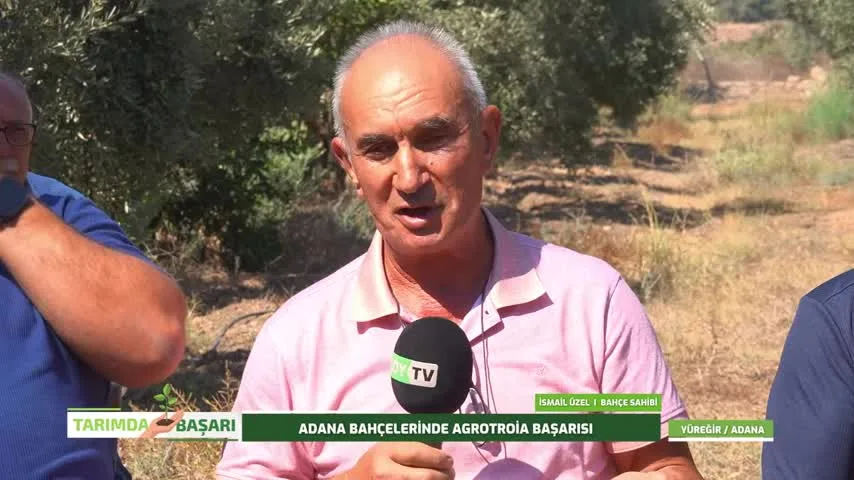
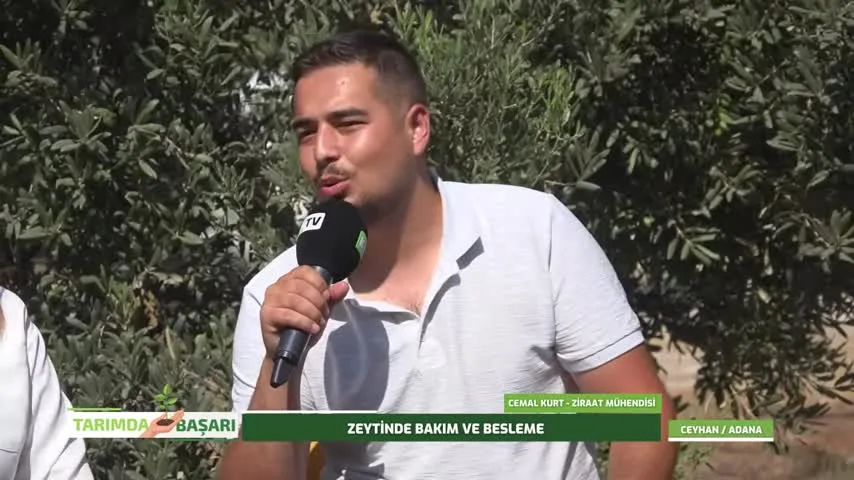
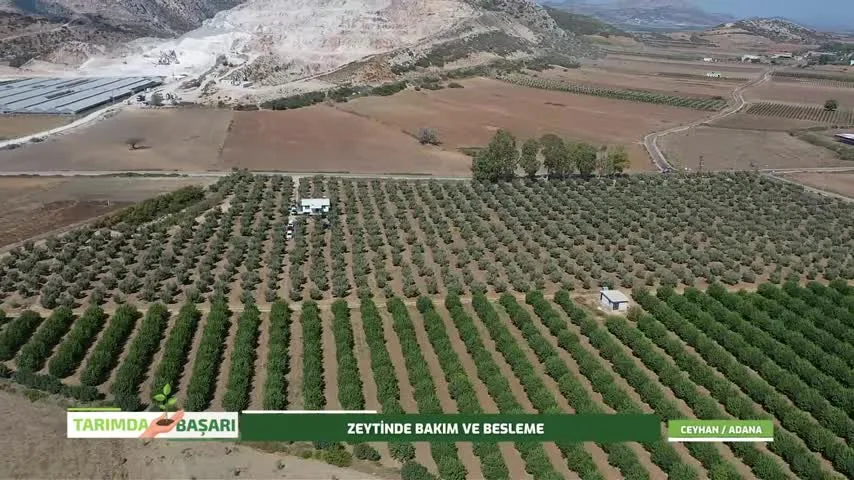
In this episode, AgroTroia's "Success in Agriculture" program was a guest in the olive and walnut orchard of İsmail Üzel in the village of Çelemli, Yüreğir district of Adana. With AgroTroia board member Umut Dönmez, agricultural engineers Cemal and Nuh, and the participation of the region's well-established olive growers Uncle Osman and brother İsmail, the key points of olive growing in Çukurova were addressed. The entire orchard is managed under the AgroTroia olive nutrition program.
Çukurova's Main Problem: Peacock Spot
The region's biggest trouble is peacock spot. The humid, damp environment and heavy dew keep this fungal disease constantly active in the orchard. The disease, which forms round spots on the leaves, can over time lead to leaf drop, the tree turning bushy, and even dieback. Growers explain that to prevent the disease they apply Copperas three times up to the bud period, and that when they neglect this it becomes almost impossible to continue olive growing in the region. Thanks to the copper in its content, Copperas keeps the plant resistant to fungal agents while also supporting shoot and fruit set with its nutritional properties.
Fighting Red Spider Mite and Cottony Cushion Scale
Another pest to watch out for in table varieties is the red spider mite. It causes deformities in both the leaf and the fruit, reducing table value. For this, the repellent property of sulfur in the form of Liquid S80 is used in the orchard; in very hot periods it can be supported with acaricides when needed. Another major trouble for the region is cottony cushion scale. This pest, which causes damage by sucking, leads to sooty mold formation and drop from the fruit stem; because it spreads rapidly in a humid climate, it is fought with rotating applications of products with two active ingredients.
Sapling Selection and Orchard Establishment
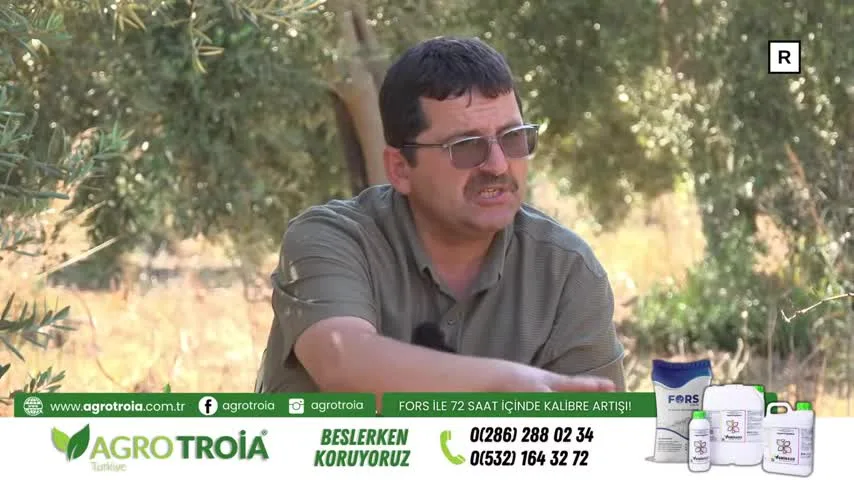
Umut Dönmez emphasized that the belief common among farmers that "an older sapling takes better" works in reverse for olives. Young, slender saplings that have not yet completed their root activity adapt more easily to the soil at a young age; saplings 2-3 years old can lag behind in adapting to the climate. In regions where peacock spot is intense, such as Çukurova, the spacing between and within rows must be set correctly in orchard establishment. Planting too many saplings per unit area does not increase yield; on the contrary, dense planting reduces air circulation, triggering disease and flower burn during hot periods. The recommended spacing is at least 6x5, ideally 6x6 meters.
The Effect of Pruning on Yield
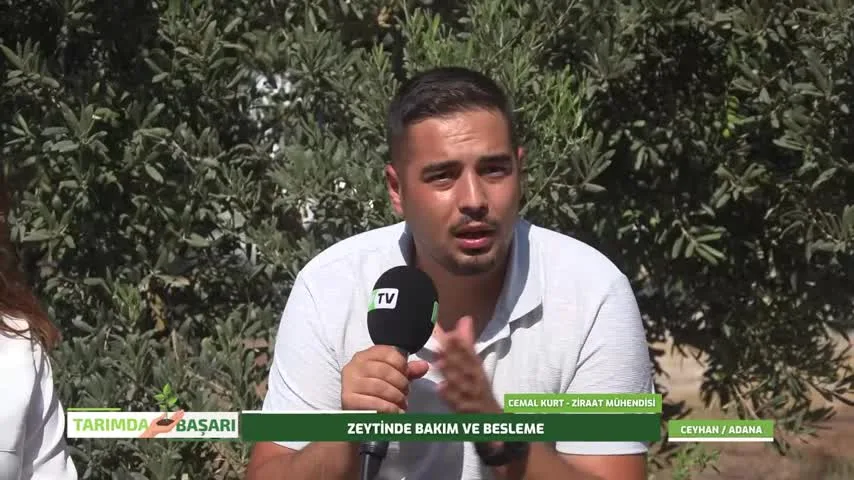
One of the topics most dwelled upon in the program was pruning. Because the water pump in olives works from top to bottom, the fruit first sets on the upper branches; controlling the olive moth and peacock spot is also easier on the upper branches. Despite this, with the belief that "olives are at the skirt, honey is in the comb," growers cut the upper branches, and this incorrect practice both doubles the cost and halves the yield. The correct approach is to crown the tree at 1.20-1.30 meters so that it has a single trunk, to remove branches growing straight up at the base, and to avoid excessive topping. This way mechanical operations become easier, and fertilization and fruit quality become more uniform. In the literature, a yield of about 12.5 kilograms per tree is given as a target for table olives in Çukurova.
AgroTroia products featured in this episode
Copperas - copper nutrition against peacock spot and fungal agents
Liquid S80 - repellent effect on red spider mite with liquid sulfur
İsmail Üzel's 1,500-tree orchard is an example of the result when correct pruning, regular peacock spot control, and a balanced AgroTroia nutrition program come together. Moreover, the grower, who adds value by processing his olives both green and black, voluntarily shares pruning and nutrition knowledge in his region. Despite adverse climate conditions, a healthy, productive orchard is possible; the key is to work consciously and according to a program.
Source: AgroTroia - "Success in Agriculture" program, sponsored by AgroTroia.